Black Forest Road Trip: Germany’s Most Scenic Drive
A Black Forest road trip brings together forest roads, high viewpoints, lakes and towns that a few days can be built around.
The route can start in Baden-Baden, climb onto the Schwarzwaldhochstrasse and work south towards Triberg, Titisee and Freiburg. Along the way, the roads move between open ridgelines, dense woodland and valleys.
It is a strong choice for drivers who want a European road trip with plenty of character, without needing to spend every day on high Alpine passes. Give it three to five days and you can combine the Black Forest High Road with quieter routes and an easy link to Alsace or Switzerland.
For more ideas beyond Germany, see our best European road trips.
The Black Forest as a driving destination
The Black Forest is a good fit for a road trip that balances driving with time out of the car.
You can cover useful distance on the main roads, then turn off towards smaller villages, forest sections and viewpoints without adding hours to the day. The north feels higher and more open around Baden-Baden and the High Road, while the southern Black Forest brings deeper valleys, lakes and a closer connection to Freiburg and the Swiss border.
A long weekend is enough for the northern and central parts of the region. With four or five days, you can travel south at a slower pace, add the Rhine valley or cross into Alsace and Switzerland.
The roads are generally straightforward, but the higher sections can bring changing weather, cyclists and busy periods around the main viewpoints. A route that looks short on the map may take longer once you factor in photo stops, walks and roads that are worth taking slowly.
The Black Forest High Road (B500) explained
The Schwarzwaldhochstrasse, or Black Forest High Road, is the signature drive.
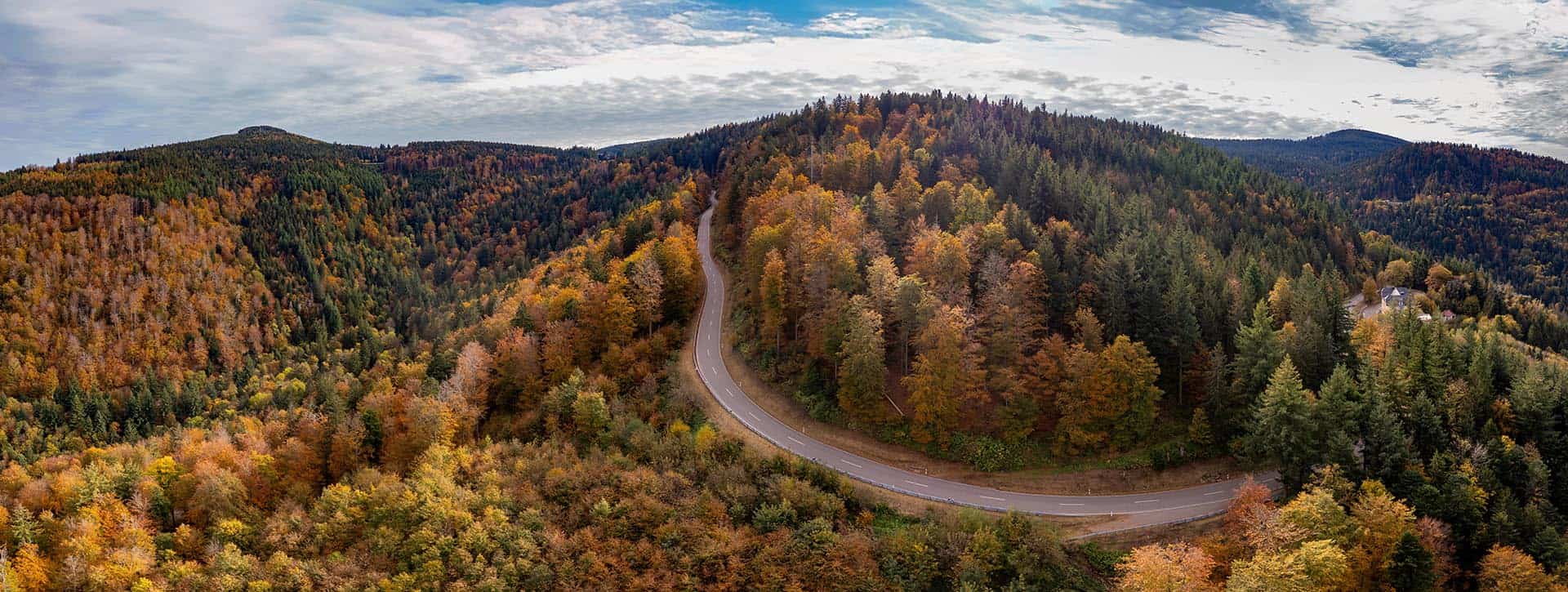
The most famous section of the B500 runs between Baden-Baden and Freudenstadt through the northern Black Forest. It is widely regarded as one of Germany’s oldest touring roads and takes in higher forest sections, broad views and well-known stops including Mummelsee, the Hornisgrinde and Ruhestein.
It is not a route to race through. The appeal comes from the changing scenery between the stops: open stretches along the ridge, darker forest sections and roads that dip towards quieter valleys. The B500 is a useful backbone for the trip, but it works best when you pair it with a few smaller roads and overnight stops rather than treating it as a single out-and-back drive.
Start in Baden-Baden if you want the route to build naturally from town roads into the forest. From there, head south via Mummelsee and Ruhestein towards Freudenstadt, then decide whether to continue through the central Black Forest or use the town as an overnight stop.
Standout stops: Baden-Baden, Triberg, Titisee and Freiburg
Baden-Baden is a practical northern start point, with a good mix of hotels, restaurants and access to the B500. It suits a first evening before the road starts to climb, particularly if you are arriving from France or the Rhine valley.
Triberg is worth adding if you are travelling south through the region. The town is known for its waterfalls and makes a useful stop between the higher roads and the central valleys. It is also a suitable place to break up a driving day without needing to travel far from the main route.
Titisee brings a different feel, with the lake, surrounding woodland and easy access to the southern Black Forest. It can work as an overnight base if you want a calmer day with a lake walk, a shorter drive or time to explore the smaller roads nearby.
Freiburg is a strong final stop. It gives you a more lively city base close to the forest, with the Rhine valley and French border nearby. Park the car, explore the old town on foot and use it as a place to reset before heading south towards Switzerland or west into Alsace.
The southern Black Forest and the Swiss border
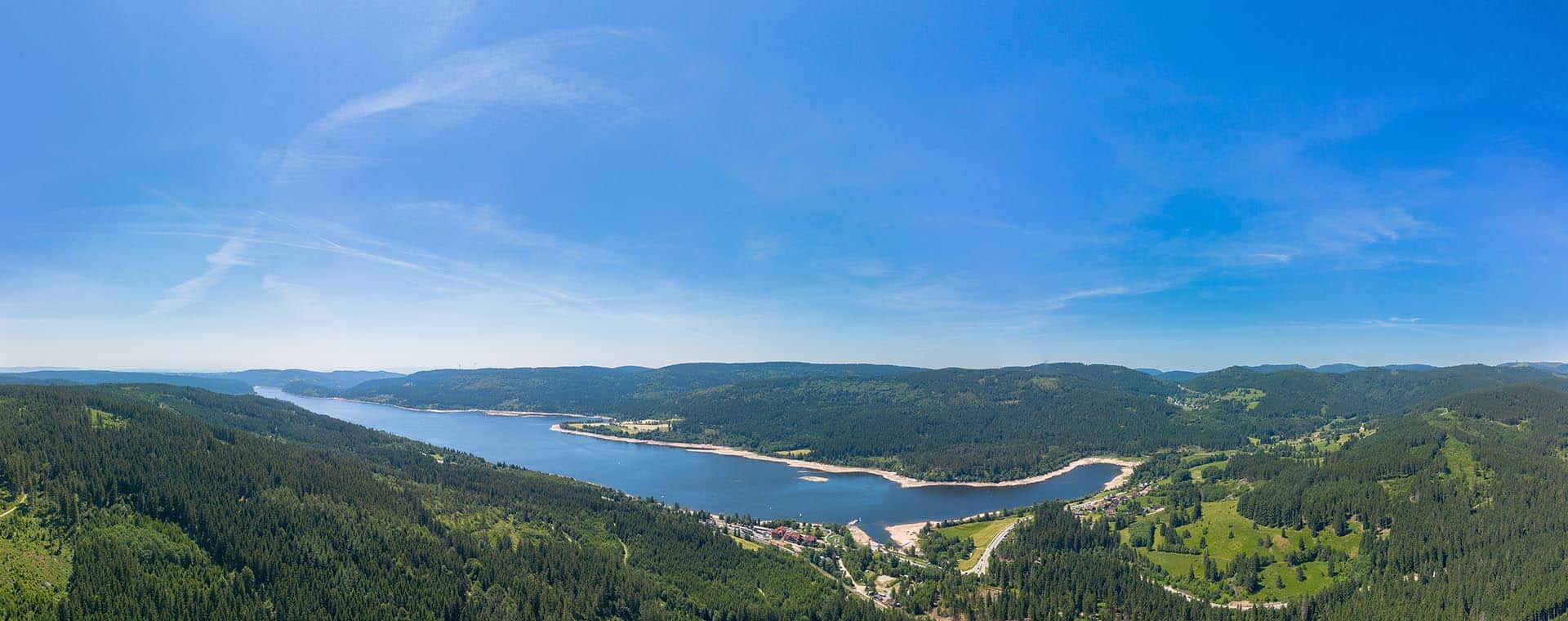
The southern Black Forest is where the route becomes less about one named road and more about linking together the places that suit your trip.
From Titisee and Freiburg, you can head towards Schluchsee, St Blasien and the roads closer to the Swiss border. The scenery remains wooded and hilly, but the route opens up with more lakes and valleys.
This part of the region works well for drivers who prefer a flexible plan. You might set out for a lake, find a road through the forest that looks worth following and end up in a village you had not planned to visit. Keep your mileage lighter and choose accommodation with parking, particularly if you are travelling in a low, wide or classic car.
Switzerland is close enough to become part of the route, but check border requirements, motorway vignette rules and local road information before crossing. For more ideas, see our Switzerland road trips.
Combining it with Alsace, Switzerland or the Romantic Road
The Black Forest works well as part of a bigger European loop.
A short drive across the Rhine takes you into Alsace, where vineyard roads, French villages and rolling countryside offer a natural contrast to the forest. You could start in Strasbourg, cross into Germany near Baden-Baden and then follow the Black Forest south towards Freiburg.
Switzerland makes sense if you are carrying on towards the Alps, Lake Constance or northern Italy. The Black Forest can offer a gentler opening section before the bigger climbs and longer mountain days further south.
To the east, the Romantic Road offers another side of Germany. It is less about forest roads and viewpoints, and more about linking historic towns and countryside into a slower route. See our romantic road Germany route planner for ideas on extending the trip.
When to go and practicalities
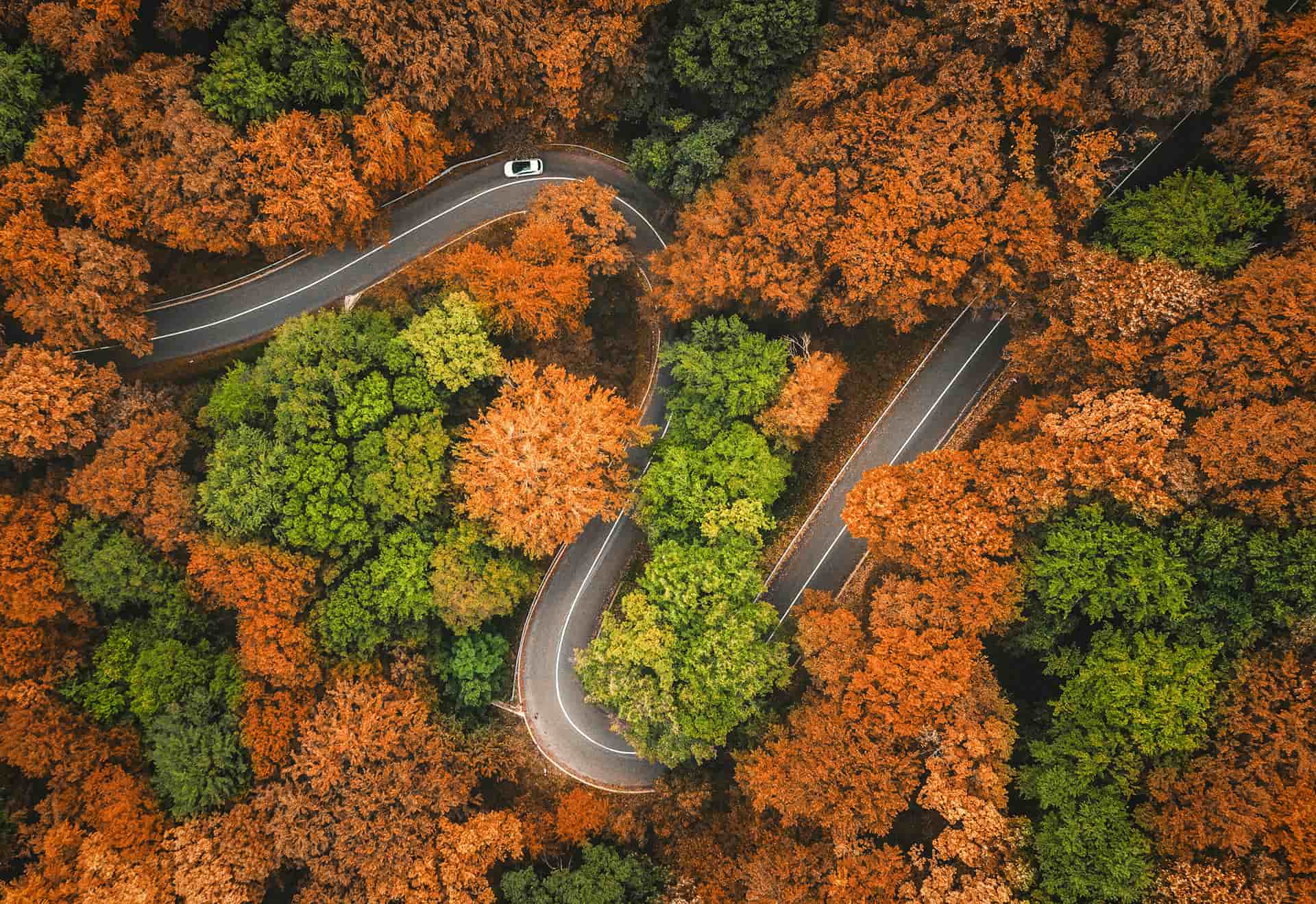
Late spring to early autumn is the easiest time to plan a Black Forest road trip. Summer brings longer days and greener scenery, while September and early autumn can be particularly good for cooler driving temperatures and changing colours in the forest.
Winter brings a different sort of trip. Higher roads can see snow and ice force temporary restrictions, so check the weather, local road information and winter-equipment rules before setting off. The same applies after heavy rain or storms.
When driving in Germany, check your route for low-emission zones in towns and cities, parking arrangements at your accommodation and any local access rules. The Black Forest itself is more straightforward than a major city centre, but Freiburg, Baden-Baden and nearby destinations can have their own requirements.
Build your Black Forest route with New Roads
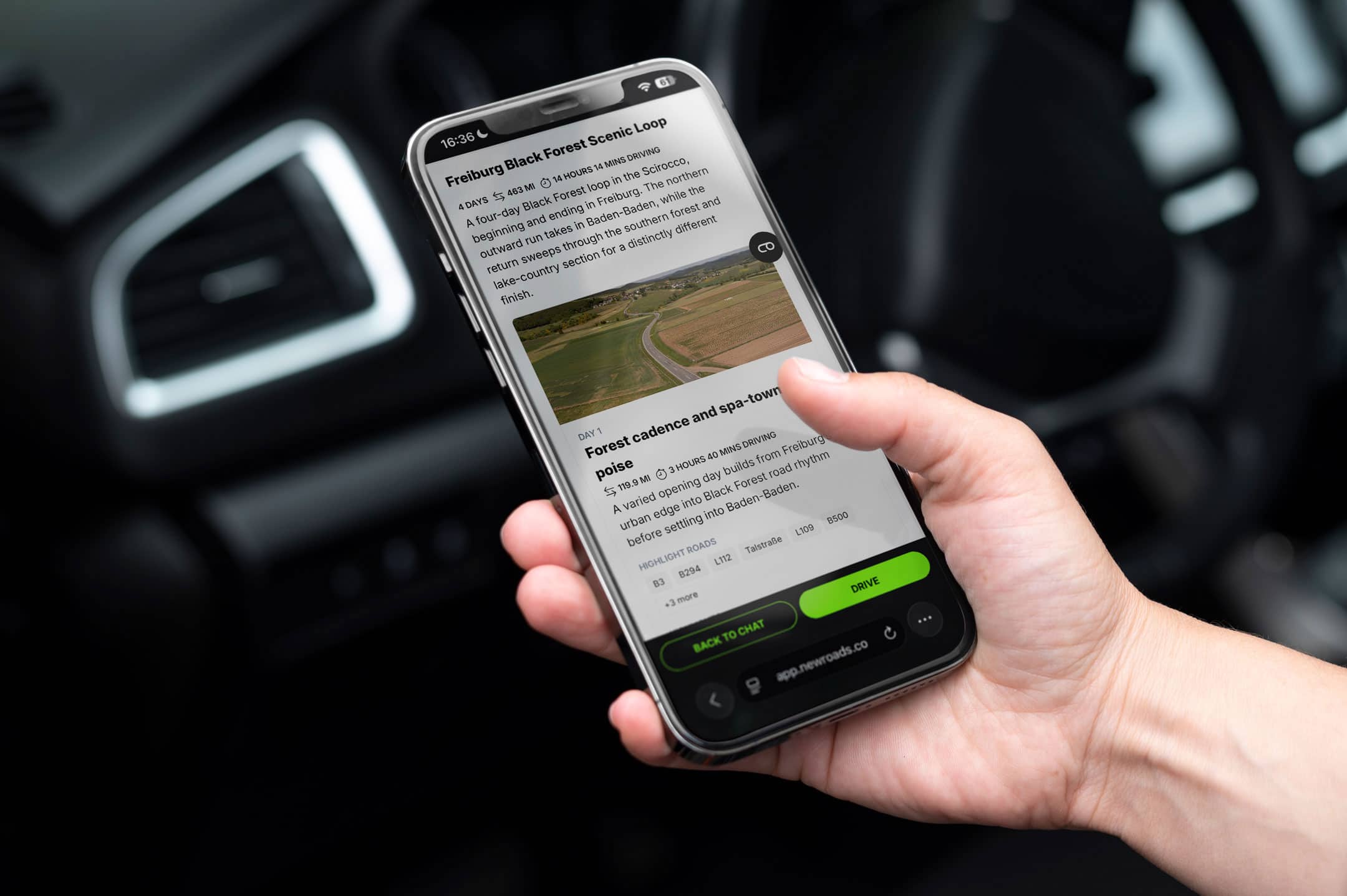
A Black Forest road trip can be shaped around the car you are taking and the kind of days you want behind the wheel.
Tell New Roads where you are starting, how much time you have and whether you want to focus on the High Road, smaller forest routes, lakes or a wider loop through Alsace and Switzerland. It will then build a bespoke itinerary with driving routes, places to stop, accommodation suggestions and petrol or electric vehicle information.
Before adding smaller roads, mountain sections or border crossings, review the vehicle suitability report as an advisory check. You can adjust the route in the AI chat, save it in My Trips and export it to Google Maps or GPX where available.
Check out New Roads features, then build a Black Forest road trip around the roads, lakes and overnight stops you want to make time for.
AI can make mistakes. Always check routes, parking, access, weather, tides, local restrictions, accommodation and vehicle suitability before travelling.
Frequently Asked Questions
- What is the best Black Forest road trip?
A strong Black Forest road trip starts in Baden-Baden, follows the B500 Black Forest High Road towards Freudenstadt, then continues south through Triberg, Titisee and Freiburg. Allow three to five days to include the main driving roads, lakes, forest stops and time in the towns along the way.
- What is the Black Forest High Road?
The Black Forest High Road, or Schwarzwaldhochstrasse, is the best-known section of the B500 between Baden-Baden and Freudenstadt. It passes through higher parts of the northern Black Forest, with forest scenery and viewpoints including Mummelsee, Hornisgrinde and Ruhestein.
- How long is the Schwarzwaldhochstrasse?
The main Black Forest High Road section runs for around 60 km between Baden-Baden and Freudenstadt. Give yourself at least half a day to enjoy it properly, with time for viewpoints, walks and other stops around Mummelsee and Ruhestein.
- How many days do you need in the Black Forest?
Three days is enough for the Black Forest High Road and a few key stops around Baden-Baden, Triberg and Titisee. Four or five days gives you more time to continue south towards Freiburg, Schluchsee, the Swiss border or Alsace.
- When is the best time to drive the Black Forest?
Late spring to early autumn is usually the easiest time for a Black Forest road trip. Summer brings longer days, while September can offer cooler driving temperatures and early autumn colour. Always check local weather and road conditions before setting off.