Part 1: Valle d’Itria to Lecce – Road Testing in Puglia
Puglia might not scream “driving destination” in the way the Alps or the Dolomites do, but for the kind of road trip we set out to test, real-world distances, usable roads, and varied terrain, it turned out to be the perfect place to begin. Long straights, quiet switchbacks, clean surface quality, and just enough complexity to keep things interesting.
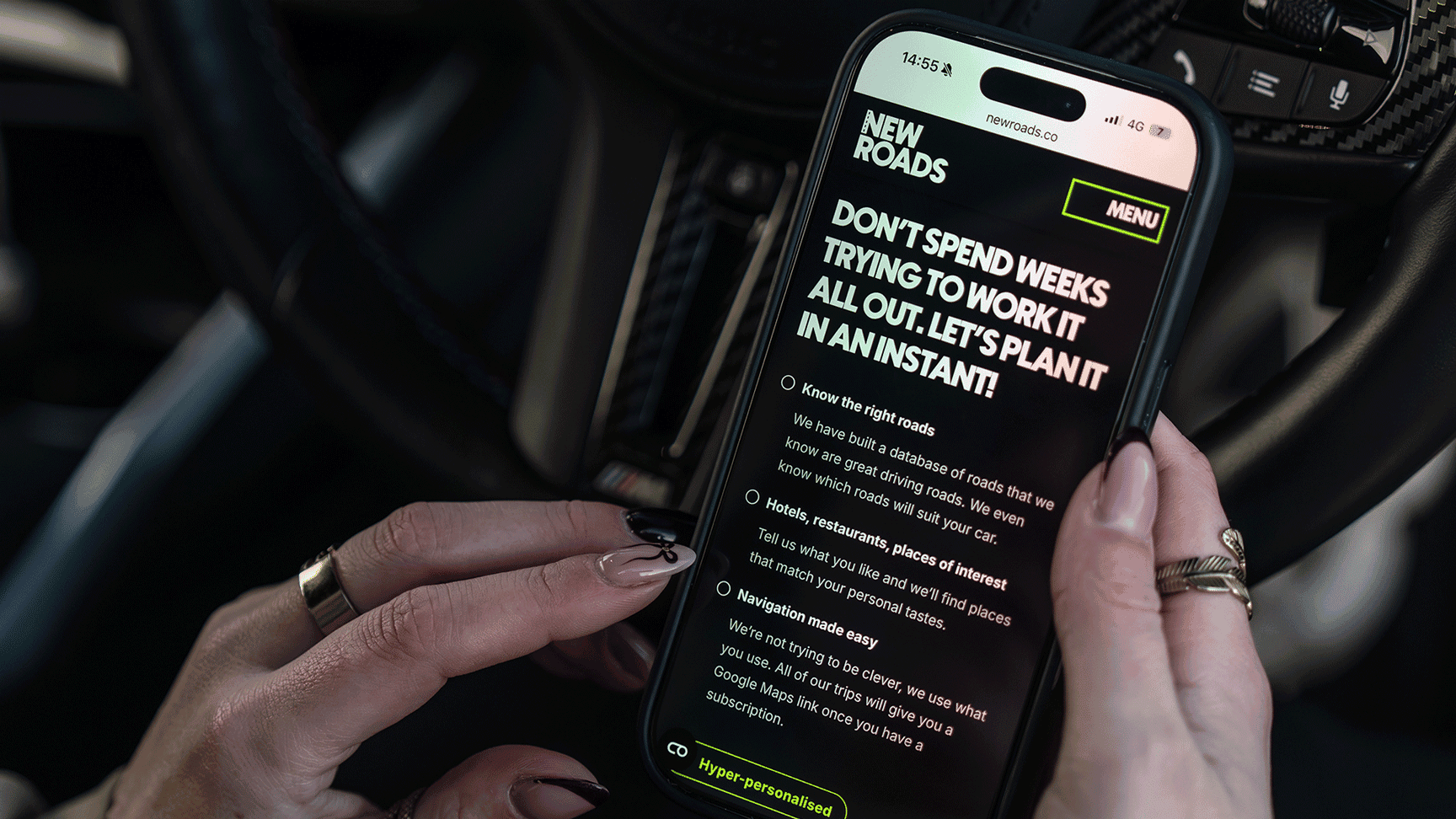
Over four days based out of Alberobello, we explored the Valle d’Itria (the heel of Italy), looped out to the coast, and took a long-range drive to Lecce and back. A balanced mix of local and scenic driving, it gave us the time and space to pressure-test how New Roads could adapt in real time, serve up relevant route options, and help guide the flow of the trip without dictating it.
Day 1: Valle d’Itria Loop
Start/End: Alberobello
Stay:Trulli Magravì – Apparthotel
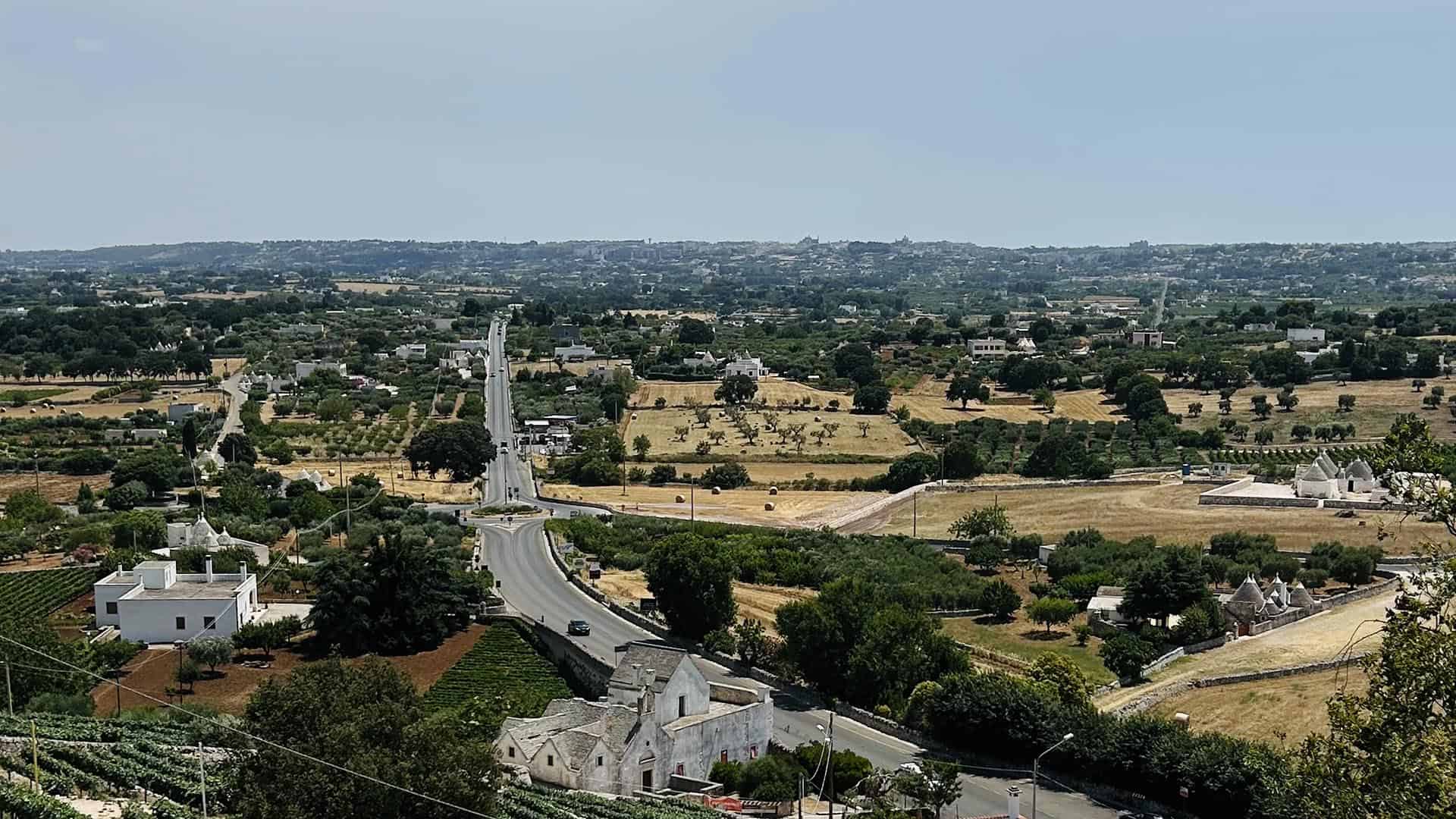
The SS172 “dei Trulli” is the main artery through this part of the region, a two-lane, well-maintained route that threads from Alberobello through Locorotondo to Martina Franca. Surface quality is great, sight lines are good, and while it’s not built for pace, it allows a relaxed, flowing drive, the kind that’s enjoyable without requiring too much effort.
Locorotondo is one of many whitewashed towns in the area perched on a hilltop just high enough to offer long views across the valley. There’s a broad terrace near the centre that’s ideal for a coffee stop, and we found parking easily, even mid-morning.
A short drive down the SS172 and you reach Martina Franca. A larger, busier town, less postcard-perfect but far more lived-in. Baroque facades, a few lively piazzas, and plenty of options for lunch or a slow walk. From a driver’s perspective, it’s not a place to pass through quickly, but it’s worth dropping into and using as a reset before heading back out.
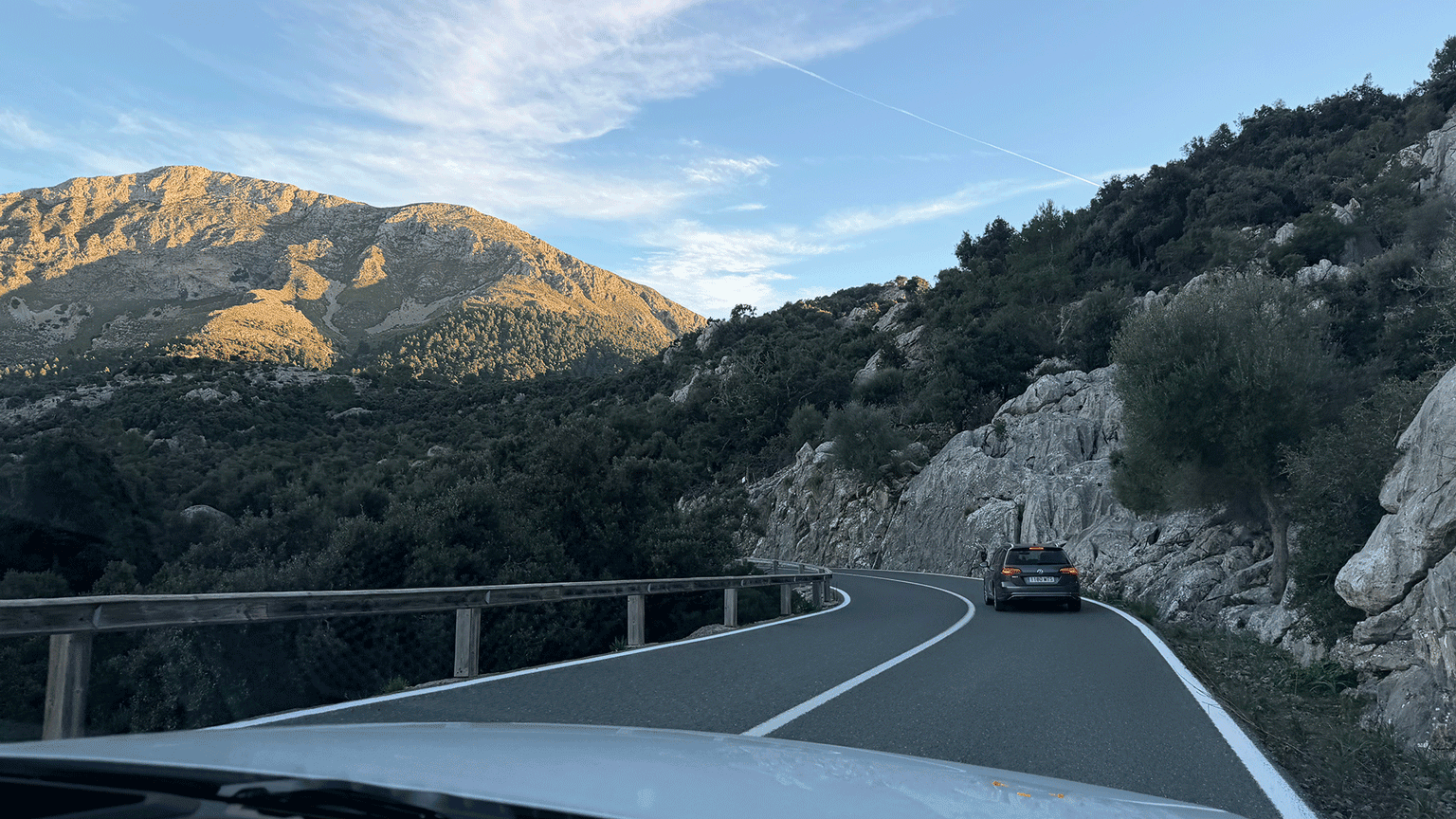
We looped back to Alberobello via the SP58, which turned out to be one of the more enjoyable local roads. Wide enough to keep pace, with a flowing series of bends and subtle elevation changes. It’s not technical, but it is satisfying, and the surrounding countryside, all olive groves, vineyards, and dry-stone walls, gives it character.
Day 2: Polignano a Mare and the Coastal Roads
Next we drove north from Alberobello via SP113, which quickly gives way to SP96 — a long, clean stretch of road with enough visibility and space to stretch the car’s legs properly. It’s the kind of road that gives you confidence early in the day, especially when the traffic is light.
There’s an optional detour through Castellana di Grotte, which is well worth a visit. This network of underground caves is simply mind-blowing and a welcome cool down in high summer. One point, don’t be put off when you arrive. The little town is a bit run down but find the car park to the left opposite the Taverna Degli Amici – which serves a great grantina – and then walk back to the visitor centre, get your tickets and take the hour long tour.
After your stop, pick up the SP120 road up to Polignano a Mare. This section is busier but still moves well, and the coastline begins to open up as you approach the town.
Polignano is built dramatically into the cliffs and the approach from the south gives you that full reveal. It’s a tight town to get into, but New Roads plotted a parking option just outside the central zone that saved us time. Lunch overlooking the sea was a highlight — fresh seafood, local wine, and that classic Adriatic breeze coming off the water. Pack your swimming costume and be sure to jump into the sea in the heart of the town – its quite an experience!
From there, we headed along the coast towards Monopoli via SS16. A simple, flowing road with breath-taking views of the sea to your left. Monopoli itself looked promising from Instagram, but we actually missed the old town because we were put off by the surrounding new town. Shame to have missed it, but energy levels were low so we headed down the SP113 back to Alberobello.
Day 3: Lecce via the Scenic Route
We set off from Alberobello heading east on the SS172 toward Locorotondo, then veered north on the SS172DIR, a mountain road that delivered the goods. Smooth tarmac, gentle sweepers, and elevated views of the Adriatic and forested hills. We pulled over at a panoramic viewpoint to soak it all in before dropping down to the coast and joining the SS379 (E55). This was driving nirvana. A two-lane expressway with barely a car in sight and endless views of olive groves and turquoise sea. From there, it was a seamless run onto the SP16, then the SS613, all the way into Lecce.
Lecce is a knockout. Known as the “Florence of the South,” it hits you with its flamboyant baroque. Highlights? The Basilica di Santa Croce, where the facade is so ornate you could stare at it for hours. The Piazza del Duomo feels like a film set, and the Roman Amphitheatre near Piazza Sant’Oronzo gives you a sense of the city’s ancient soul. Quick detour? The Porta Napoli arch is worth a photo.
We lunched at Trattoria Nonna Tetti, the fave e cicoria is the move. Though Osteria degli Spiriti would be a top choice if you’re after a slower, courtyard affair. And don’t leave without a pasticciotto from Caffè Alvino.
For the return, we changed our plans. It had been a long day and energy levels were low. Instead of heading back cross country, we asked the platform to take us back the way we’d come but find a town worth stopping at for dinner. After retracing to the E55, we cut across on the SP21 to Ostuni, a whitewashed dream. It was the perfect wind-down after a day of driving. We didn’t rush dinner, Ostuni invites you to slow down and just take it all in. With plenty of great spots to choose from, we grabbed a table at a tucked-away trattoria and tucked into simple but brilliant plates, orecchiette, grilled vegetables, a carafe of local vino bianco.
Day 4: Transition to Matera
The drive from Alberobello to Matera isn’t long and there’s not a lot to report on the roads. We left via SP239, passed briefly through Noci, then continued on SP51 and SP140, both rural, well-surfaced, and very quiet.
The only warning note was the SP22, which was flagged by New Roads as poor. We confirmed that within minutes, large potholes and patchwork repairs made it unsuitable for anything with a low ride height, and we quickly detoured.
The approach into Matera is visually impressive. Feeling like James Bond (No Time To Die had that famous scene filmed here) you drop down into the gorge then climb again, with the old city gradually revealing itself as you rise. We left the car outside the centre and checked in at Locanda Di San Martino Hotel & Thermae Romanae. This hotel was spectacular. Our room was in a cave and the spa is in an underground network of caves. Very cool.
Summary
Puglia delivered exactly what we needed in the first stage of this road test. The roads weren’t extreme, but they were consistent, clean, and characterful. The balance between flowing routes and technical sections gave the platform room to prove its worth, and it handled navigation, rerouting, and local discovery without a hitch.
New Roads didn’t just provide the route, it added confidence to the experience. The kind of quiet assurance you want when you’re exploring unfamiliar terrain and trying to keep the focus on the drive, not the directions.
Look out for the next journal Part 2 where we head south into Calabria. More altitude, longer distances, and a few mountain passes that push the car, and the platform, a little harder.