Part 3: The Road to Sicily – Autostradas, Ferries and Sunset Mountain Passes
The final leg of the journey took us from mainland to island. A clean run down the Calabrian coast, across the Strait of Messina, and into Sicily, a place where even the major roads feel designed for drivers. If the early days in Puglia were about charm and rhythm, and Calabria was about range and variety, this section was about momentum. Covering serious distance while still finding time for the little moments that make a road trip.
The platform continued to deliver. From pinpointing the best ferry timing to offering warnings about signage quirks at the dock, to route alternatives and hidden delights. As the roads got faster, the decisions got simpler.
Gizzeria Lido to Villa San Giovanni
Leaving Gizzeria Lido, we joined the SS18 south towards Lamezia Terme. It’s a smooth dual carriageway that traces the coast, providing a clean link onto the E45 (A2) — also known as the Autostrada del Mediterraneo.
This section of motorway deserves mention. It’s toll-free, fast-flowing, and scenic in the way most motorways aren’t. From the Calabrian hills to the glimpses of the Ionian Sea, it’s a constant switch between inland drama and open sea.
The highlight stretch comes around Pizzo Calabro and Vibo Valentia, where the autostrada climbs into the hills and cuts through a string of long tunnels. Every exit brings another elevated bend, every clearing gives you another perspective. It’s one of those rare motorways that doesn’t feel like compromise.
We arrived at Villa San Giovanni just after 11am. From here, you follow signs for Imbarco per Sicilia, the ferry terminal for Messina. It’s well signed, but be alert: if you’re pre-booked, you’ll bypass the ticket barriers and continue straight through, and this is where the signage gets confusing. Our advice? Don’t take the right-hand turn at the first crossroad — it’s a left. Look for the tucked-away sign, partially hidden by trees. Easy to miss.
Messina to Trapani (via Brolo, Cefalù)
Welcome to Sicily — where the driving, somehow, gets even better.
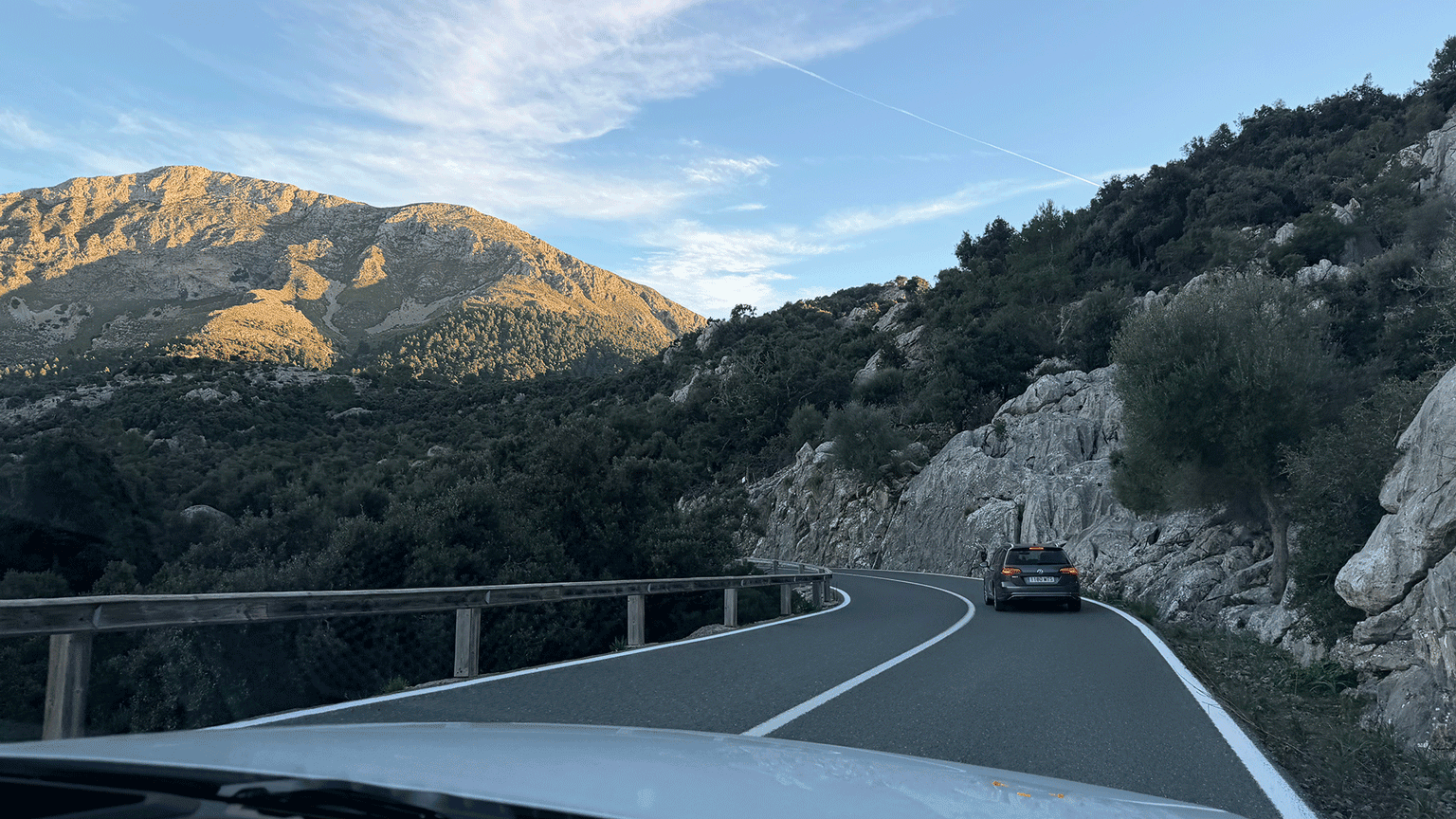
We took the E90, also marked as A20/A19, westbound from Messina. This is Sicily’s main artery, running along the northern coast and passing through endless tunnels. It’s toll-based, but worth every cent. Two-lane motorway, consistently good surface, little traffic. You’re either in a tunnel or on a viaduct for much of it, cutting through mountain ridges that tumble into the sea.
Our first stop was Brolo, just over an hour from the ferry. Small lido, pretty old town, and Antonio Raffaele — a classic Sicilian gelateria and café. Granita al caffè with a brioche, a strong shot of espresso, and back on the road.
Next came Cefalù, about two hours out of Messina. This was a planned lunch break, and it did not disappoint. We parked on the beachfront, walked to the broadwalk and sat down to lunch with the waves in view. The town itself is classic Sicilian — narrow lanes, stone archways, and the Norman cathedral rising over the rooftops. If you’re stopping anywhere on this route, make it here.
Back on the E90/A29, the drive changes again. The inland stretch skims the edge of the Zingaro National Park, with rolling hills to the left and coastal glimpses to the right. Viaducts at Fontazza near Caronia offer panoramic views — worth slowing for.
The only downside is the Palermo bypass, where traffic piles up and the road quality drops sharply. Tree roots have lifted the surface in places and lane markings are faded. Once past that, though, the A29dir opens up again, cutting across to Trapani with big-sky views and soft hills. Vineyards, olive groves, and ochre fields — the classic Sicilian palette.
Coastal Drives and Mountain Mornings
Sicily gave us some of the finest drives of the entire trip. Here’s a few of the standouts.
San Vito Lo Capo via SP16
The run to San Vito Lo Capo along the SP16 is an essential drive. It starts with festoon-lit streets through Castelluzzo, then gradually rises and twists toward the sea. At sunset, this route becomes a slow-burn spectacle. You crest a ridge just before the town and catch full west-facing views of the sea. On the night we went, the water was turquoise, the sky orange, and the roads practically empty.
During the day, the mountains give way for beautiful turquoise seas and empty beaches. It became one of our favourite roads and destinations in Sicily so we drove it several times in the week.
Erice Mountain Pass: SP3 and SP31
SP3 Route Map
SP31 Route Map
This was the early start. A dawn run to the top of Erice, an ancient town sitting above Trapani.
We drove two routes on different days. First up, the SP3. Tight, cobbled in places, with extreme gradients and technical switchbacks. It’s not suited for anything low or wide, and the one-way system through the town centre is as tight as it gets. Park by the ski lift and walk to the castle viewpoint — the sunrise across the valley is worth the effort.
Alternative: SS113 Coastal Route
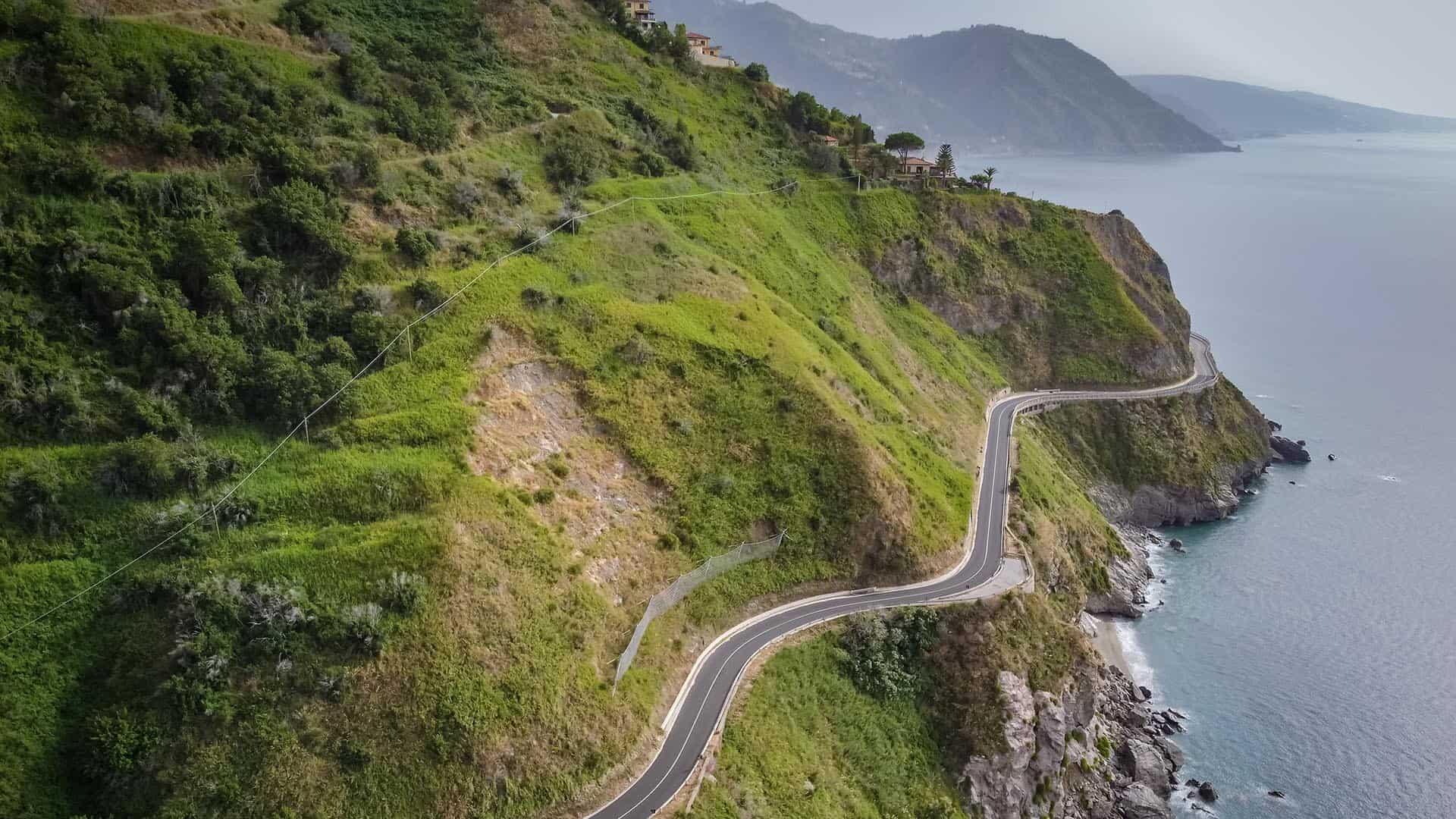
The SS113 between Messina and Palermo is a classic coastal road, hugging the Tyrrhenian edge of the island. Unlike the motorway, this one’s about pace and presence. Narrow through villages, tight around cliff edges, and variable in surface — but utterly beautiful.
If you’re planning to enjoy it without frustration, take the motorway for speed, then drop down onto the SS113 near Tusa or Cefalù, enjoy a scenic blast, then rejoin the A20. This combo gives you the best of both — mileage and magic.
Closing Thoughts
Sicily gave us contrast. Fast motorways, slow sunsets. Tight mountain climbs, open coastlines. It was also the point where the platform proved its flexibility — from ferry ports to car parks, sunrise timing to gelato suggestions, it didn’t just give us suggestions, it contributed to making the entire trip so much better.
The longer the trip went on, the more we trusted it. The routes were smarter, the recommendations more intuitive, and the rhythm of driving felt less about decision-making and more about just enjoying the road. So did it serve its purpose? Yes, in spades! It has given us confidence in the platform to push on and open it up to the world so we can make everyones road trips that much easier to plan and even more enjoyable.