The smarter way to road trip: Why one hotel might be all you need
The romantic idea of a road trip is deeply ingrained: a new destination every day, fresh roads under the tyres, fresh views out the window. It sounds adventurous — and it is. But talk to those who’ve done it often, and you’ll hear something unexpected: the best road trips aren’t always about how far you go, but how well you experience the roads around you.
We’ve spoken to countless experienced drivers — from seasoned tourers to track-day veterans — and one planning strategy comes up again and again: stay in one place, and explore outwards.
It’s a shift in mindset — from “touring” to “looping.” And it might just change the way you plan every future trip.
The challenge with point-to-point road trips
There’s a certain glamour to a new hotel every night. But reality paints a different picture. The ritual of arriving late, tired, with just enough time to eat and crash before doing it all over again, wears thin quickly. You end up spending more time getting there than enjoying where you are.
Here’s what that constant movement can mean:
- You’re always driving to somewhere, not through it.
- You carry the full load — bags, tools, maybe even spares — in the car every day.
- You’re checking maps, confirming bookings, and chasing daylight instead of chasing corners.
- Fatigue sets in. Golden hour becomes just another deadline to beat.
That magical stretch of road you saw on Instagram? You’ll may well drive it exhausted, stressed, and hungry.
Enter: The one-hotel strategy
Instead of stringing together ten locations in ten days, choose one (or maybe two) great bases. Stay for several nights. Each day, go exploring in a different direction — morning out, lunch somewhere beautiful, afternoon back. A loop, not a line.
It’s less about ticking off cities or countries, and more about building rhythm into the drive. You’re no longer surviving the road trip. You’re enjoying it.
And here’s why it works.
1. You drive lighter — Physically and mentally
The boot’s empty. You’re not carrying every bit of luggage, every tool, every what-if scenario. That makes a difference — especially in older cars or stiffer chassis. Suspension breathes better. Handling sharpens. Every kilo counts.
Mentally, you’re clearer too. You’re not running checklists in your head: “Where’s the booking email? Did I lock the last hotel room? Where’s tonight’s dinner going to be?”
Your only job is to drive. And that’s what road trips are about.
2. More flexibility, less pressure
One of the most underrated benefits of the one-hotel model is group harmony. In point-to-point road trips, if someone in the group needs a rest day, they throw the schedule. With one base, they can stay behind, take the day off, or rejoin mid-loop — no stress, no FOMO, no detours.
It also means less ego on the road. No one’s pressured to “keep up” because they don’t know the next stop. Everyone’s got the same map. Everyone ends up at the same dinner table.
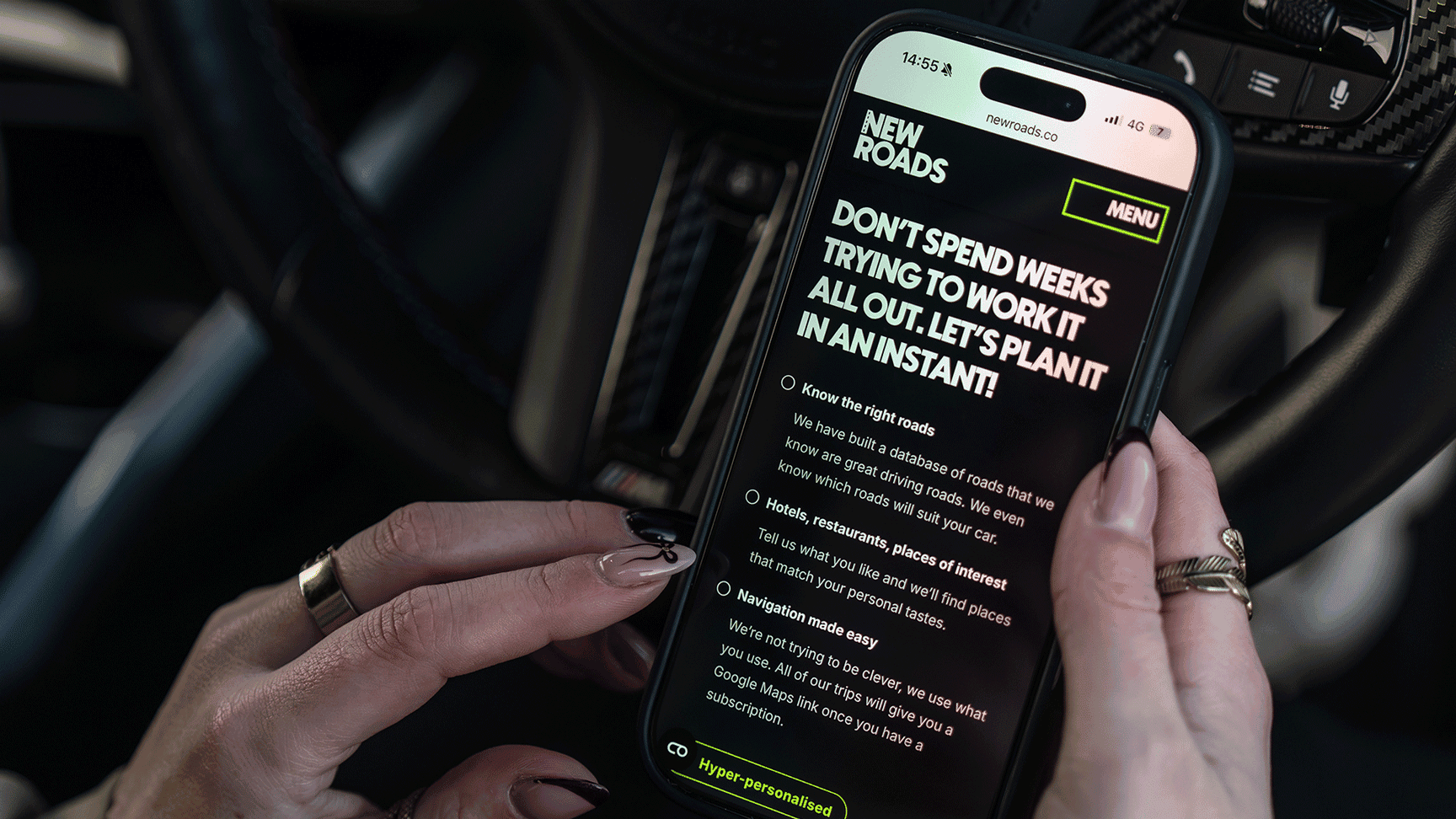
That’s where New Roads comes in. Every loop route we build includes downloadable Google Maps links and your online itinerary, so no one’s flying blind.
3. Driving becomes the experience — Not the admin
You stop seeing roads as links between hotels and start seeing them for what they are: the point of the journey. The route becomes the event, not just the means. The pressure lifts. The rhythm settles in.
You might do fewer miles, but you’ll take more corners. See more. Remember more.
4. Time for real rest — and real moments
Returning to the same place each night gives you time to breathe. To have that extra glass of wine. To sit on a balcony and watch the light fade over the mountains. To talk cars, life, anything but route planning.
These are the moments people remember. Not the rushed hotel check-in or the missed sat nav turn. The stillness. The laughter shared over breakfast. The relief of a car parked up, cooling in the shade, ready for tomorrow.
Real roads, real advice
In the Rennigneering podcast, experienced road tripper Frank Cassidy talks about how during a Porsche-led multi-community Alpine tour, one of the most experienced drivers shared his best tip: Stay put. He’d done both. Tours with a new place every night. And tours based in one hotel.
His verdict? The one-hotel model made for safer, more enjoyable, more memorable trips. Less fatigue. Fewer accidents. More room for spontaneity. More space for the unexpected moments — the ones you can’t plan for, but never forget.
Where to try it
Some of Europe’s most incredible driving destinations lend themselves perfectly to this model:
- The Dolomites – Base yourself in Cortina d’Ampezzo. From there, loop into the Sella Ronda, Giau Pass, Falzarego, and Val Gardena — all within 60 minutes.
- Lake Annecy, France – Stay lakeside and venture into the Bauges, Aravis, and Chartreuse. Mix alpine routes with lakeside cafés.
- Graubünden, Switzerland – Choose a chalet near Davos or St. Moritz. Access the Albula, Julier, and Flüela passes with ease.
- The Yorkshire Dales, UK – Stay in Grassington or Settle. Loop out into Buttertubs Pass, Tan Hill, and the Forest of Bowland.
- The Scottish Highlands – Use Inverness or Fort William as a base. Each day reveals a new glen, loch, or lonely ribbon of tarmac.
New Roads makes it effortless
This is exactly what New Roads was designed to do. Our platform lets you pick a base, define your preferences, and tells our AI what kind of drive you’re after — spirited, scenic, technical, or relaxed. You’ll get back a collection of beautifully mapped routes, complete with hotel, lunch, and fuel stop suggestions — all tailored to your car, your trip length, and your driving style.
We’ll even factor in weather, road surface quality, congestion, and seasonal access. So if that perfect pass is closed in November, you won’t find out the hard way.
And it all comes with shareable Google Maps links, so everyone in the group knows the plan. No stress. No “Where are we going again?” Just drive.
The final gear
There’s a time and place for the big epic, the border-to-border blitz. But most road trips don’t need to be marathons. They just need to be meaningful.
So next time you’re planning a drive, think loops not lines. Let the road rise to meet you each morning — and your hotel welcome you back each evening. Lighten the load. Lift the pressure. Drive for the joy of it, not the checklist.
Because when it comes to road trips, more miles doesn’t always mean more meaning. Sometimes, the shortest routes take you the furthest.