Scotland Road Trip Itinerary: 7 Days in the Highlands That Isn’t the NC500
Mention a road trip through the Scottish Highlands and the North Coast 500 is usually the first route that comes to mind. There is nothing wrong with the NC500, but Scotland does not need to be driven as one prescribed loop.
Some of the roads I remember most vividly sit well south of its traditional starting point. Others take you onto Skye, through Glencoe or over the mountains to Applecross before the idea of completing a named route matters at all.
This seven-day itinerary starts around Aberfoyle and the Trossachs, heads north through Glencoe and across to the Isle of Skye, then follows the west coast through Applecross, Torridon and Assynt. It reaches Durness and Tongue before turning south through the interior of the Highlands towards Inverness.
I have driven much of this route myself, although in considerably fewer than seven days. Travelling off-season also meant that hotel availability occasionally sent us in directions that made very little geographical sense. Given a full week, this is a much better way to join the same roads together.
You will inevitably drive a few sections associated with the NC500. They are included because they are great roads, not because there is a loop to complete.
The route at a glance
Day 1: Aberfoyle – Duke’s Pass – Callander – Glencoe
Day 2: Glencoe – Glen Etive – Glen Shiel – Eilean Donan – Portree
Day 3: Isle of Skye loop – Sartle – Skeabost – Dunvegan – Caroy – Sligachan
Day 4: Skye – Lochcarron – Bealach na Bà – Applecross – Fearnmore – Shieldaig – Torridon
Day 5: Torridon – Kinlochewe – Loch Maree – Poolewe – Achmelvich – Lochinver
Day 6: Lochinver – Kylesku – Durness – Tongue
Day 7: Tongue – Lairg – Inverness
If you are driving up from southern England, arrive around Aberfoyle the evening before. Treat the journey north as the positioning day and start the road trip properly the following morning.
Day 1: Aberfoyle to Glencoe
Start in Aberfoyle and take the A821 over Duke’s Pass.
It is a much better introduction to a Highland road trip than immediately joining a major road and pointing north. The road climbs away from Aberfoyle through the forest before opening into the Trossachs, with a mixture of tight corners, elevation changes and views that immediately slow the pace of the trip down.
You do not need a particularly powerful car to enjoy it. In fact, that is true of much of this itinerary. Duke’s Pass is the sort of road where linking a few corners together in a small sports car or hot hatch can be far more entertaining than trying to deploy hundreds of horsepower.
Continue towards Kilmahog and Callander before working north-west towards Crianlarich and the A82.
The landscape starts to become much larger as you cross Rannoch Moor, before the road eventually drops into Glencoe.
This is one of those places where the road is almost secondary to what surrounds it. Mountains rise steeply on either side and the weather can completely change the atmosphere in minutes.
Keep the mileage sensible and leave time to stop. Scotland rewards the people who are prepared to get out of the car occasionally.
Overnight: Glencoe area.
Day 2: Glen Etive and the road to Skye
Before heading north, make the detour into Glen Etive.
It is best known to many as THE Skyfall road, but you do not need to care about James Bond to understand the appeal. The narrow single-track road leaves the A82 and disappears into a valley surrounded by mountains, eventually reaching Loch Etive.
It is an out-and-back road, so allow more time than the map initially suggests.
This is also your first proper introduction to Highland single-track driving. Use the passing places, expect walkers and wildlife and resist the temptation to treat an empty-looking road as a special stage.
Once back on the A82, continue north through Fort William and eventually turn onto the A87 towards Skye.
The road through Glen Shiel is one of my favourite parts of the journey. It feels more flowing than Glen Etive and carries you beneath huge mountain scenery towards the west coast.
Pause around Eilean Donan before continuing towards Kyle of Lochalsh, crossing the Skye Bridge and heading north to Portree.
By this point, you have already had a substantial driving day. Park the car and explore Portree on foot. I can recommend The Marmalade Hotel, a quaint, yet modern 4* with ample parking.
Overnight: Portree.
Day 3: A full day on the Isle of Skye
Skye deserves a day rather than a quick detour.
The roads are slower than they look on a map, the weather changes rapidly and there is always another reason to stop. Trying to cram the island into a couple of hours misses much of what makes it worthwhile.
From Portree, this loop works north and west through the quieter parts of the island, taking in Sartle, Skeabost and Dunvegan before heading south through Caroy and returning via Sligachan.
Do not worry about ticking off every famous Skye viewpoint.
Some of the best moments come between the landmarks: sheep wandering across a single-track road, the Cuillin suddenly appearing through the cloud or finding a quiet spot beside the water simply because it looked interesting from the road.
Caroy Jetty is exactly that sort of stop. It is not a major attraction, just somewhere worth pausing for a photograph and a few quiet minutes beside the loch.
Sligachan provides the more recognisable Skye scenery, with the Cuillin rising behind it.
The weather should have some influence on your plans here. If you get a clear spell, use it. If the mountains disappear into cloud, change the route rather than spending the day chasing views that are not there.
Return to Portree for a second night.
Overnight: Portree.
Day 4: Skye to Torridon via Applecross
Leave Skye and head towards Lochcarron before turning for one of the most famous driving roads in Scotland: the Bealach na Bà.
The old mountain pass to Applecross is steep, narrow and largely single track, with tight hairpins towards the top. It is spectacular, but this is not a road to attack.
The weather can change quickly, visibility can disappear at the summit and meeting another vehicle in the wrong place requires patience. Large motorhomes and caravans are better using the alternative route into Applecross.
On a good day, though, the climb is one of the defining drives of the trip. Drop into Applecross and take some time to stop before continuing north. For me, the road after Applecross is just as memorable as the mountain pass itself.
The coastal route through Fearnmore and towards Shieldaig is narrow, slow and constantly changing direction, with huge views across the water towards Skye and Raasay.
It is not about speed. You will most likely stop for sheep, move into passing places and occasionally have to reverse because somebody else has misjudged the situation! That is all part of driving here.
Continue through Shieldaig and into Torridon, where the landscape becomes increasingly dramatic again.
Overnight: Torridon.
Day 5: Torridon to Lochinver
Leave Torridon towards Kinlochewe before joining the road around Loch Maree.
After the drama of Applecross, this section has a slightly easier rhythm. The road works its way between mountains, woodland and water towards Gairloch and Poolewe.
It is worth stopping around Loch Maree rather than simply treating it as scenery through the windscreen.
From Poolewe, continue north through Wester Ross and into the increasingly sparse landscapes of Assynt.
The scenery changes noticeably again here. Mountains such as Suilven rise almost independently from the surrounding moorland, giving this part of the Highlands a character all of its own.
Before finishing in Lochinver, make the detour to Achmelvich.
The road in is narrow and progress can be slow, but the reward is a beach of pale sand and clear water that can look surprisingly un-Scottish when the weather plays along.
Do not be fooled by the mileage. A short road in the Highlands can take significantly longer than expected once passing places, campervans and unplanned photo stops become involved. Return to Lochinver for the night.
Overnight: Lochinver.
Day 6: Kylesku, Durness and Tongue
From Lochinver, continue north towards Kylesku.
The landscape around Assynt is some of the most distinctive of the entire week, with stretches of open ground punctuated by isolated mountains and lochs.
Kylesku Bridge provides one of the natural landmarks of the route. Its sweeping concrete structure has become almost as recognisable as the landscapes around it, and there are proper places nearby to stop for photographs. From here, continue towards Durness.
This is where it becomes sensible to think ahead about fuel and food rather than waiting until you need either. Services are more spread out and opening hours can be limited, particularly outside the summer season.
Durness makes a natural stopping point before the road turns east along the north coast towards Tongue.
By this stage you are technically travelling on part of the NC500. The point of this route is to use the best roads where they make sense rather than drive the entire loop simply because somebody gave it a name.
The road towards Tongue feels exposed and remote, with big views over the northern coastline and long stretches where progress is dictated more by the road and the weather than by the distance.
Overnight: Tongue.
Day 7: Tongue to Inverness
For the final day, leave the coastline behind.
Rather than continuing east towards Thurso and John o’ Groats to complete the NC500, turn south through the interior towards Lairg. You’ll see why…
It immediately changes the character of the trip. After several days of sea views and rugged coastline, the road runs through a quieter landscape of lochs, moorland and sparsely populated countryside. This is also the part of the itinerary that best explains why it is not simply another NC500 guide. There is no need to complete the circle.
Once the roads and places you came to experience are behind you, take the route that makes sense.
Continue south through Lairg and eventually towards Inverness.
By the time normal two-lane roads and heavier traffic begin to return, they can feel strangely unfamiliar after several days of single-track tarmac.
Finish the trip in Inverness, either staying overnight or starting the journey home.
A note on driving Scotland off-season
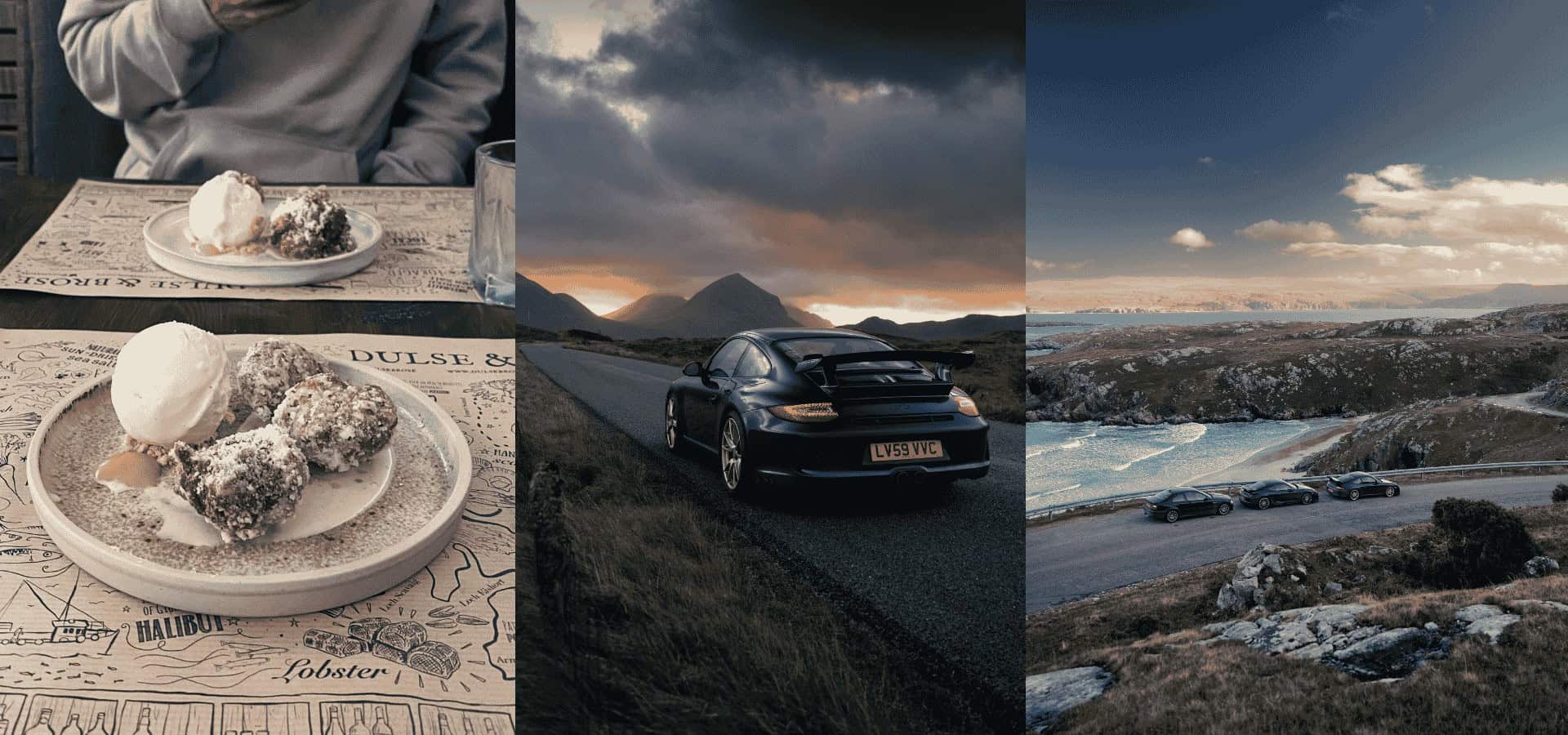
I originally drove a much more compressed version of this route outside the main tourist season.
There were obvious advantages. The roads were quieter and there were moments when large parts of the Highlands felt almost deserted.
The trade-off was accommodation.
Hotels and restaurants that look perfectly placed on a map are not necessarily open all year. On our trip, finding somewhere to stay occasionally sent us much further east than the driving route naturally required, only for us to head west again the following morning, that is why I think this seven-day version works better! It keeps the roads that made the trip memorable without reproducing the strange detours that were dictated by where we could find an open hotel
If you are travelling in autumn, winter or early spring, check accommodation and restaurant opening dates before building the route around them, I had imagined amazing seafood and hotels on the shore of a Loch, being off-season meant this was not possible.
Why this route rather than the NC500?
Because some of Scotland’s best driving happens before you reach it. Starting in the Trossachs adds Duke’s Pass. Glencoe gives you Glen Etive and heading west introduces Skye. Bealach na Bà leads naturally into Applecross and Torridon, before Wester Ross and Assynt take the route north towards Durness.
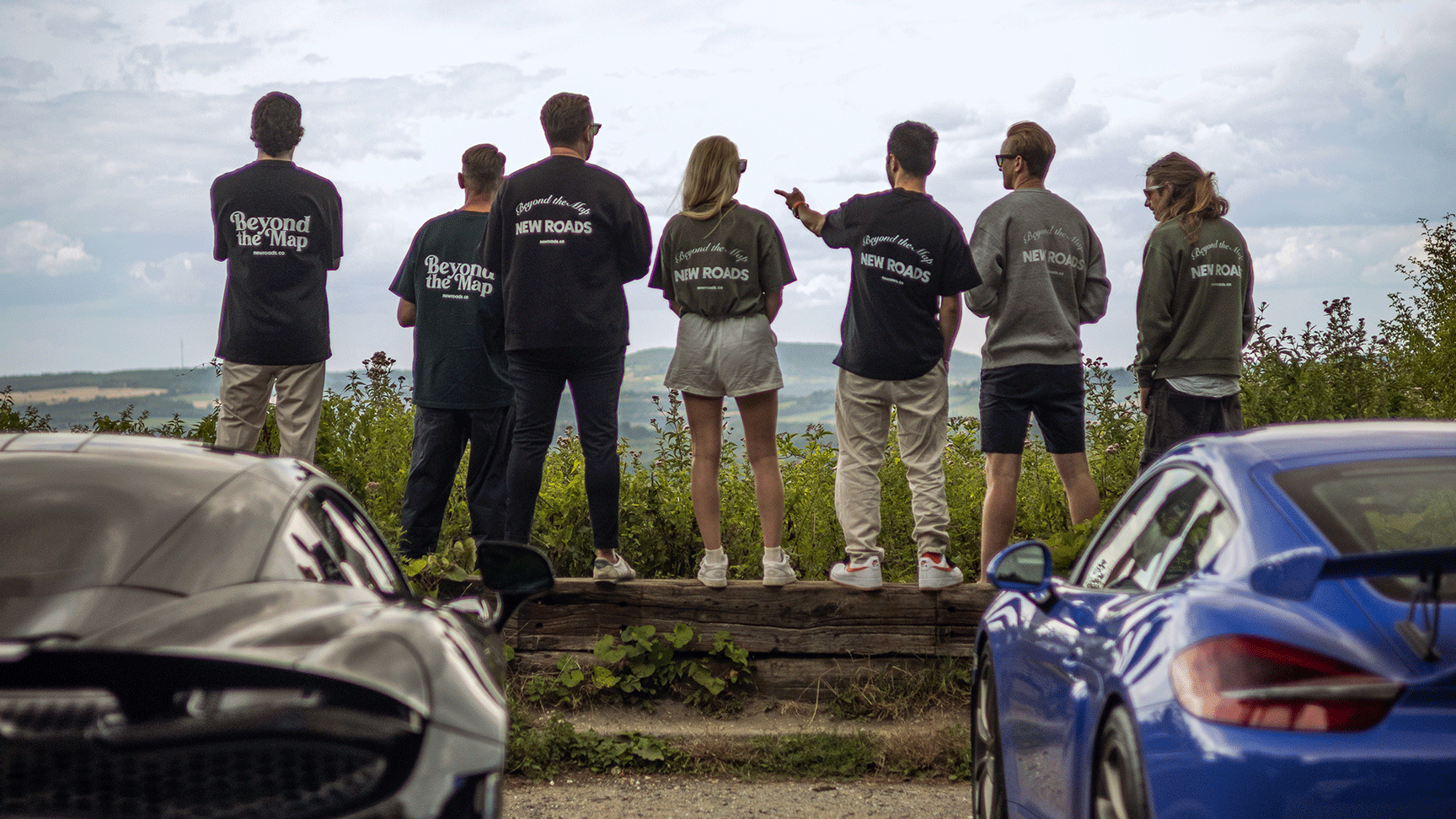
You then use the north coast as far as Tongue before turning inland. The result includes some famous NC500 roads, but the trip is built around the places and driving rather than completing a branded circuit. It may be less tidy on a T-shirt, but I think it makes for a better road trip!
What should you drive?
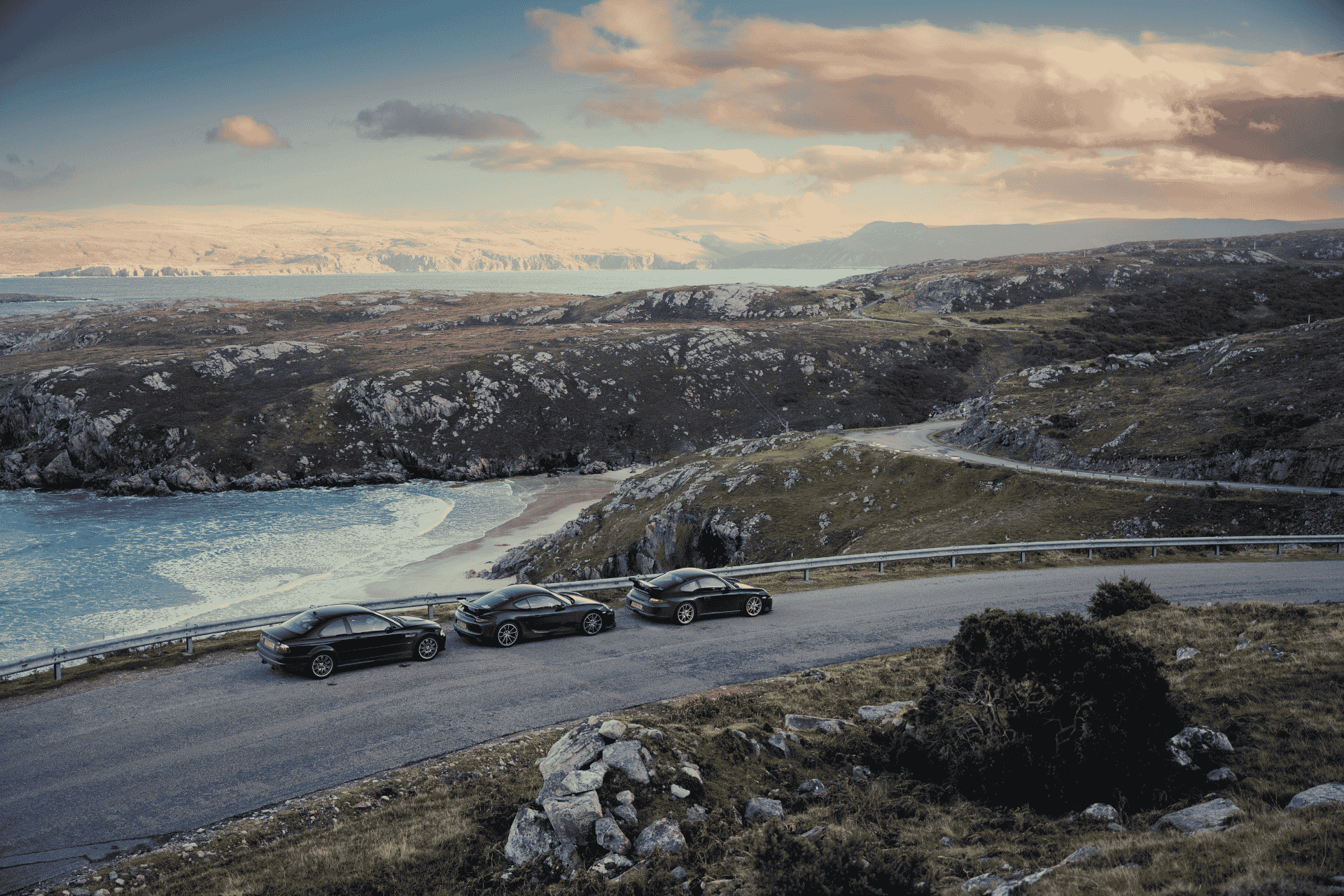
There is no single ideal Highland road-trip car. A small sports car or hot hatch makes enormous sense on Duke’s Pass and the tighter west-coast roads. A GT gives you more comfort on the longer days, while an SUV becomes appealing when the weather deteriorates or luggage starts to accumulate, you can’t really go wrong, but avoid taking a Ferrari Monza SP1/2 or similar… a roof is very much required to allow for the Scottish weather. But huge power is rarely the deciding factor. A lot of the enjoyment comes at fairly modest speeds, particularly on single-track sections where visibility and road width matter far more than acceleration.
Very wide or very low cars require more care, and larger motorhomes should avoid roads such as the Bealach na Bà, but Newroads will always take your car’s size into account. Whatever you bring, make sure you are comfortable spending several hours in it.
Single-track road etiquette
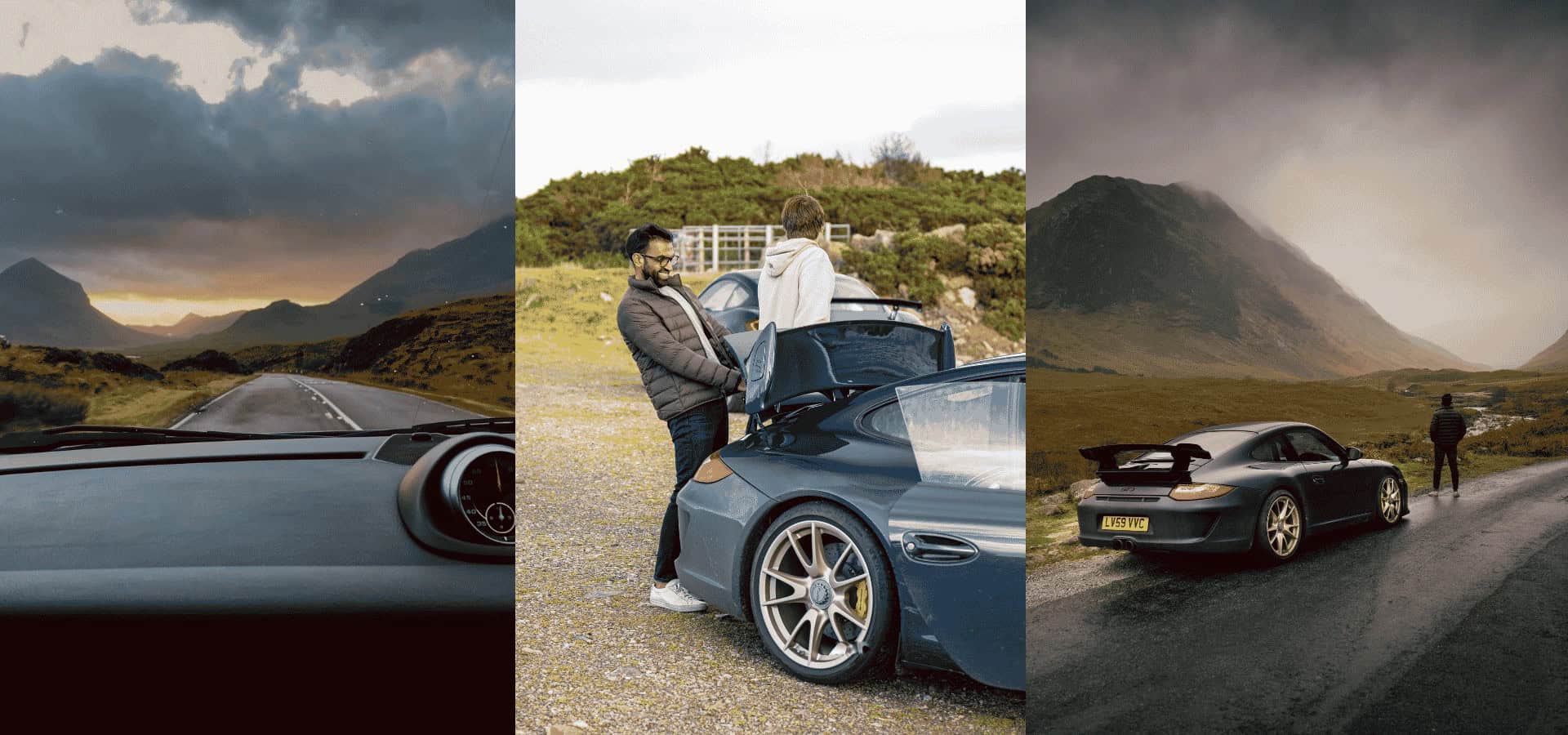
You will spend a meaningful part of this trip on single-track roads. Passing places are part of the road system and not parking spaces.
If one is on your side, pull into it for approaching traffic. If it is on the opposite side, stop alongside it and allow the approaching car to use it.
If somebody catches you from behind, let them pass when it is safe. Expect cyclists, walkers, sheep and other livestock, particularly on the quieter roads, and don’t forget to wave when somebody lets you through.
When is the best time to go?
Late spring and early autumn offer a good compromise. The days are long enough to make the most of the route, more seasonal businesses are open and you avoid some of the heaviest summer traffic.
Summer gives you extremely long daylight hours but also brings more tourists, motorhomes and cyclists… and midges
Winter can be spectacular, but higher roads and passes become much more weather-dependent and accommodation choices reduce significantly. Whatever the season, build some flexibility into the itinerary. If the Bealach is buried in cloud, use the lower route. If Skye suddenly gives you a clear afternoon, make the most of it, and it is raining sideways at Achmelvich, there is no requirement to stand on the beach pretending you are having a wonderful time.
Build this seven-day Scotland route with New Roads
A Highlands road trip works best when the itinerary can adapt around the car, weather and places you genuinely want to spend time.
This route uses Aberfoyle, Glencoe, Skye, Applecross, Torridon, Lochinver, Durness and Tongue as its backbone before finishing in Inverness.
Tell New Roads where you are starting, what you are driving and how many days you have. You can then adjust the route around accommodation, road conditions and the stops that matter most.
The seven-day itinerary gives you structure without turning the trip into a checklist.
Frequently Asked Questions
- Can you tour the Scottish Highlands without doing the NC500?
Yes. The NC500 is one route through the north Highlands. This itinerary incorporates some of its strongest western and northern sections while also including the Trossachs, Glencoe, Glen Etive and the Isle of Skye.
- How long should I allow for this route?
Seven days gives you enough time to enjoy Skye, Applecross and the north-west without turning every day into a long transfer. It can be driven more quickly, but the slower pace suits the roads.
- Is Glen Etive on the way to Skye?
Not directly. Glen Etive is an out-and-back detour from the A82, so you return the way you entered before continuing north. It is worth allowing the extra time.
- Is Bealach na Bà suitable for every vehicle?
No. It is narrow, steep and single track with tight bends. Large motorhomes and caravans are better using the alternative road into Applecross, while poor weather can make the pass challenging for any vehicle.
- Is one full day enough for Skye?
It gives you a good introduction. Staying two nights in Portree means you can spend the middle day exploring without having to move hotels or combine it with a long mainland transfer.
- Do you need to complete the NC500 once you reach the north coast?
No. This itinerary follows the coast as far as Tongue before turning south towards Lairg and Inverness.
- What is the best time for a Highlands road trip?
Late spring and early autumn give a strong balance of daylight, traffic and seasonal openings. Summer is busier but offers very long days, while winter requires much more flexibility around weather and accommodation.