Scotland road trip guide: choose the best route for your time and car
A Scotland road trip can take many forms.
It might be a long weekend through the Borders, several days among the mountains and forests of the Cairngorms, a slower journey along the western coast or a complete circuit through the North Highlands.
That variety is what makes Scotland so rewarding by car. There is no single route you have to complete and no fixed itinerary that suits every driver. The strongest journey is the one shaped around your available time, the vehicle you are bringing and the landscapes and roads you genuinely want to experience.
This guide will help you compare Scotland’s main road-trip regions before moving into detailed daily itineraries. It explains what each area offers, how much time to allow, what the roads are likely to feel like and which route may suit a first visit.
Already decided on the northern loop? Begin with our NC500 road trip guide.
Still comparing the Highlands, western coast, islands and southern Scotland? Start here.
Why Scotland is such a rewarding driving destination
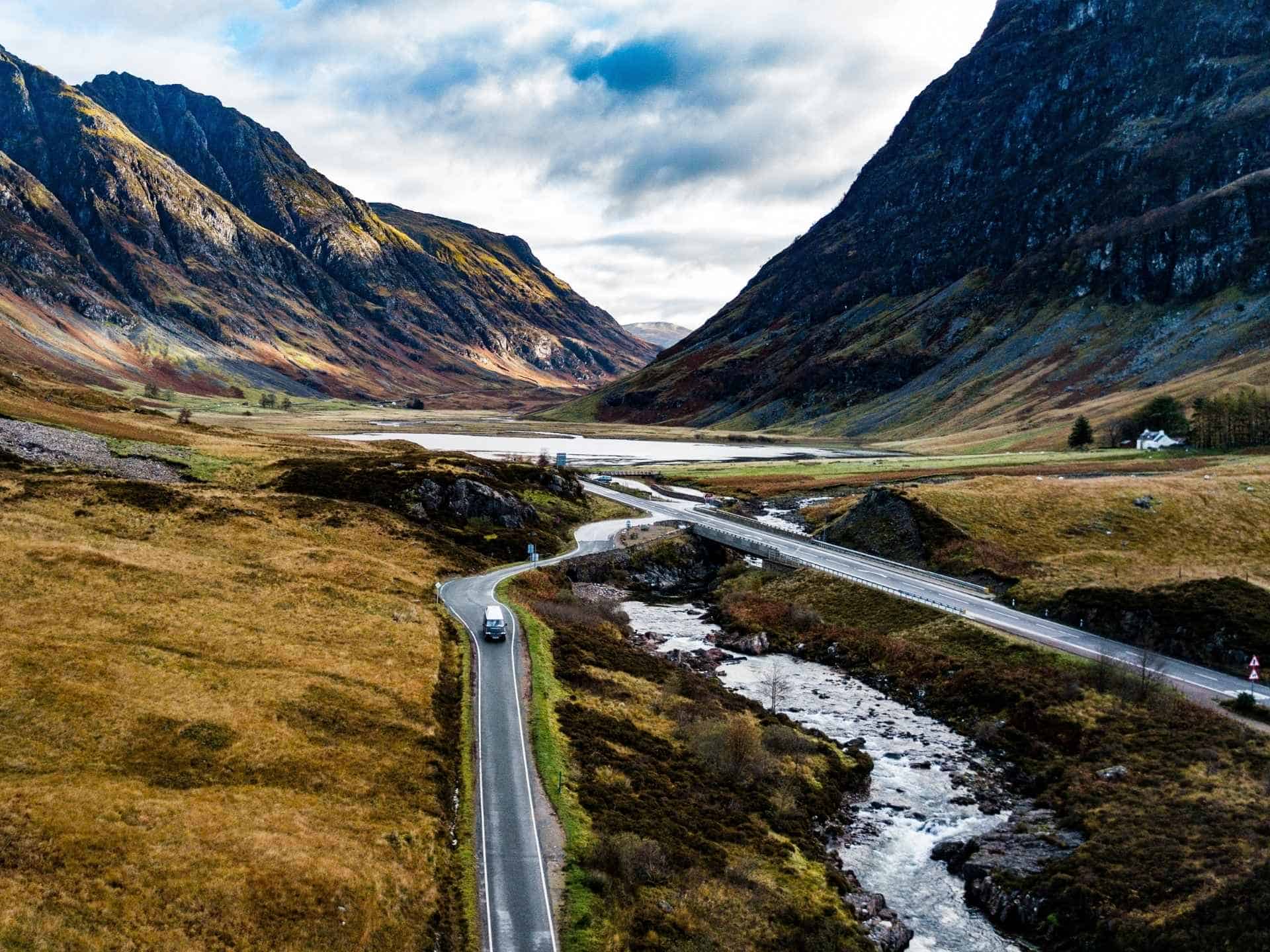
Scotland works particularly well by car because the landscape changes quickly.
You can leave a city in the morning and find yourself beside a loch, crossing open moorland or driving between mountain slopes before lunch. One journey can bring together broad A-roads, single-track sections, ferry crossings, harbour towns, forest routes and long stretches where the road feels inseparable from the landscape around it.
The distances can be deceptive.
A modest number of miles may still occupy most of the day once you account for:
- Narrow or winding roads
- Single-track sections
- Ferry timings
- Villages and local traffic
- Viewpoints and walks
- Petrol or charging stops
- Changing weather
- The places that make you want to stop
That is the real appeal of a Scottish road trip. The drive is not simply the space between destinations. It is part of the experience.
The best days often leave room for a lochside pause, a longer lunch or a road that turns out to deserve more time than the map suggested.
Scotland road trips at a glance
| Route or region | Best for | Suggested time | Road character | Main planning consideration |
| Scottish Highlands | First visits, mountains and varied scenery | Four to seven days | Main roads mixed with rural and mountain sections | Choosing which regions to combine |
| West coast of Scotland | Sea lochs, ferries and slower touring | Five to ten days | Coastal, lochside and single-track roads | Ferry timings and limited accommodation |
| NC500 | A recognised northern touring loop | Seven to ten days | Remote, varied and narrow in places | Distance, traffic and services |
| North East 250 | A compact circular journey with variety | Three to five days | Mountains, countryside and coast | Seasonal attractions and route priorities |
| Scottish Borders | Shorter trips and accessible countryside | Two to four days | Rolling roads, towns and open landscapes | Choosing a compact loop |
| South-west Scotland | Coast, forests and quieter touring | Three to six days | Rural, coastal and forest roads | Limited services in quieter areas |
| Skye and the islands | Ferries, coast and slower travel | Four days onward | Narrow, exposed and varied | Crossings, accommodation and vehicle suitability |
The times are broad starting points rather than fixed rules. Your ideal duration will depend on how much time you want outside the car, the roads you choose and how frequently you change accommodation.
The Scottish Highlands
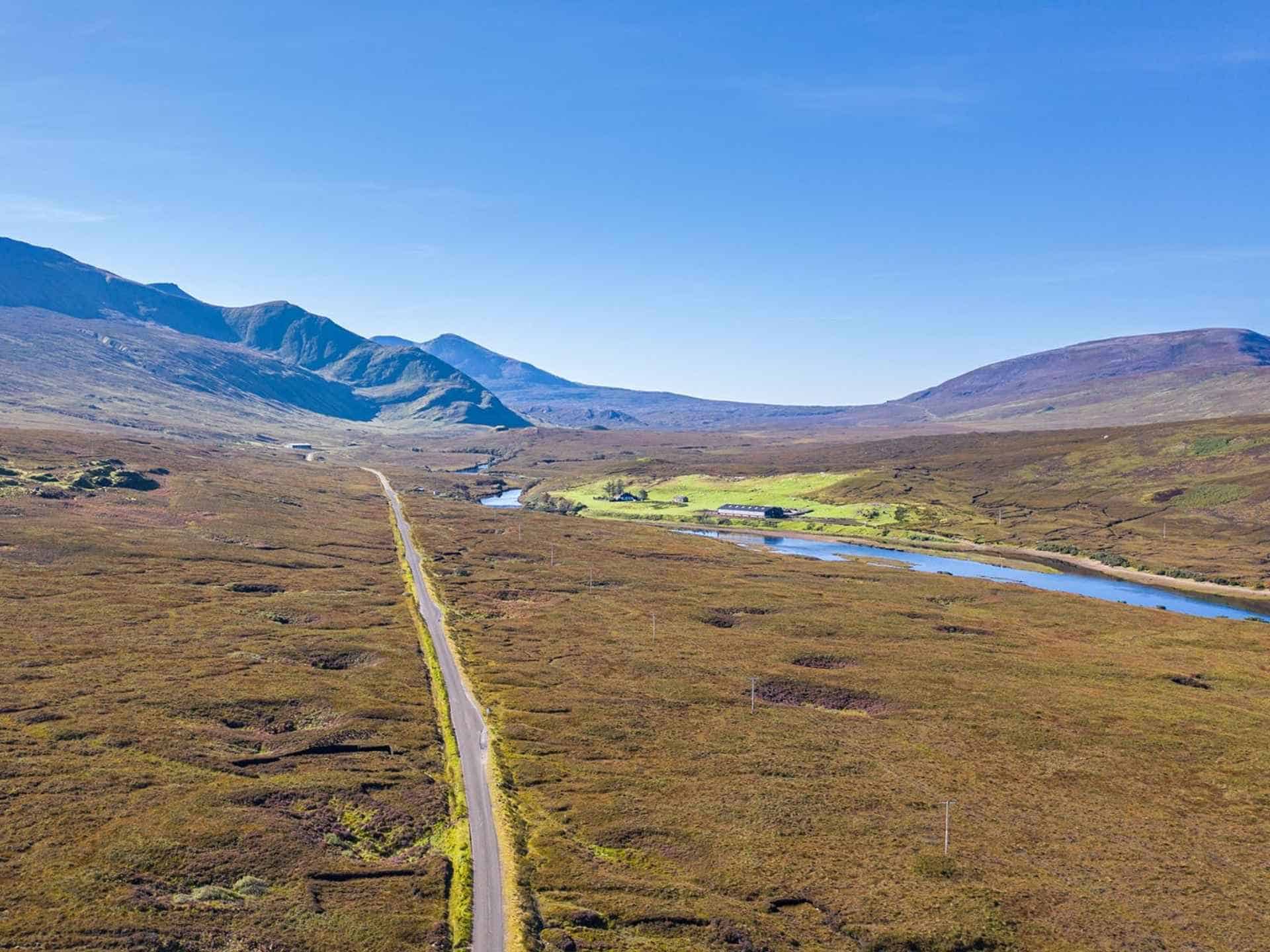
A Scottish Highlands road trip gives you more freedom than a named loop.
Rather than following one prescribed line, you can shape a journey around places such as:
- Glencoe
- Fort William
- The Great Glen
- Loch Ness
- The Cairngorms
- The Road to the Isles
- Inverness
- Wester Ross
This makes the Highlands one of the strongest choices for a first Scottish road trip.
You can combine dramatic mountain landscapes with established roads and practical overnight bases, without committing the entire journey to the remoter sections of the far north.
What the roads feel like
The Highlands include everything from busy trunk roads to narrow rural routes.
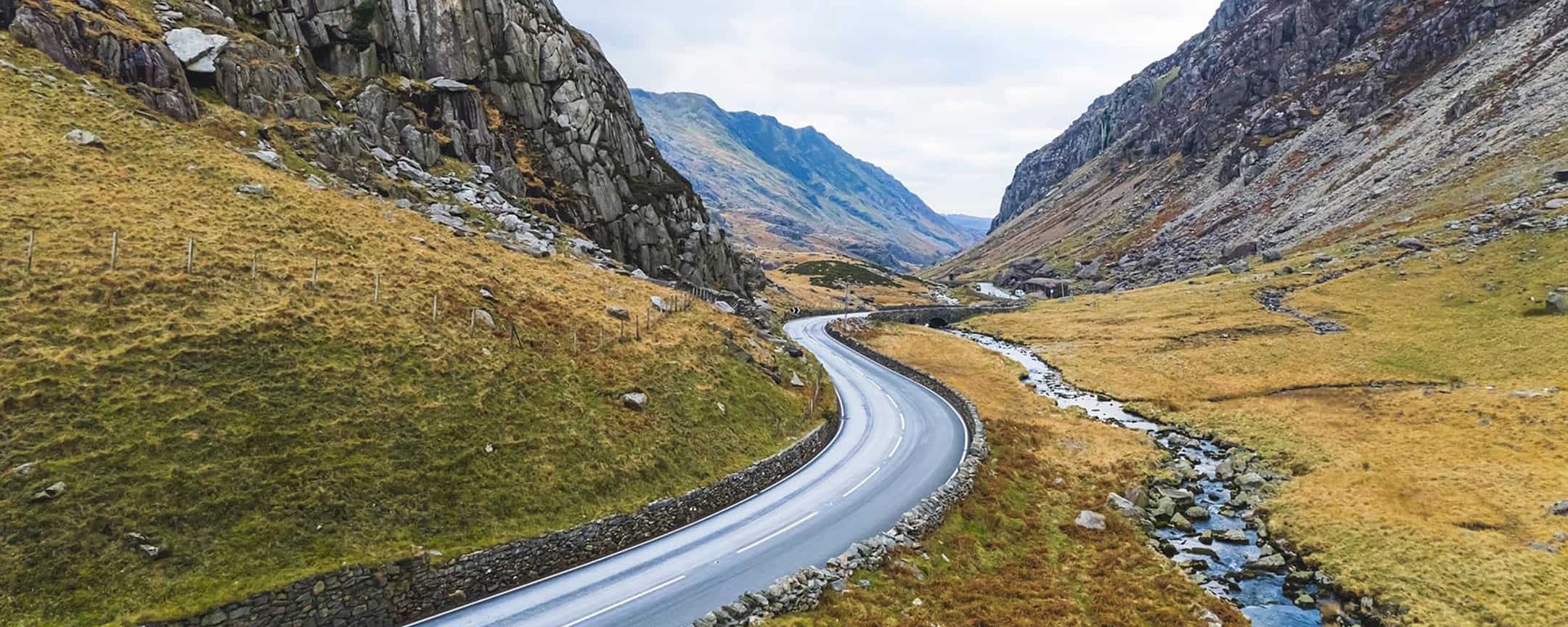
The A82 through Glencoe is one of the most recognisable journeys in the region. Travelling north, the landscape opens across Rannoch Moor before narrowing between steep mountain slopes around Glencoe.
It is a working main road rather than a controlled scenic drive, so traffic, coaches and slower sections should be expected. Its appeal comes from the scale and progression of the landscape, not from uninterrupted speed.
The wider Glencoe and Glen Etive area also appeared in Skyfall, including a driving sequence filmed near Buachaille Etive Mòr and Buachaille Etive Beag.
Farther east, the Cairngorms offer a different experience. The scenery becomes broader, with forests, rivers, high ground and open landscapes around places such as Aviemore, Braemar, Ballater and Grantown-on-Spey.
Choose the Highlands when you want
- A strong introduction to Scottish landscapes
- A flexible route rather than a fixed loop
- Mountains, lochs and inland roads
- Established bases and visitor facilities
- A journey beginning in Glasgow, Edinburgh, Aberdeen or Inverness
- The ability to adjust the plan around weather
Consider another route when you want
- A full coastal journey
- Several ferry crossings
- A recognised loop with a clear beginning and end
- The most remote sections of northern Scotland
For more detail, explore our Scottish Highlands road trip guide.
The west coast of Scotland
A west coast road trip has a slower rhythm.
The landscape is shaped by sea lochs, peninsulas, islands, working harbours and roads that repeatedly turn inland before returning to the water.
A western route might include:
- Argyll and Kintyre
- Inveraray
- Oban
- Fort William
- The Road to the Isles
- Mallaig
- Skye
- Wester Ross
- Ullapool
The west differs from a broader Highlands journey because the coast and ferry network become central to the experience.
You are not simply crossing the region. You are moving around water, linking peninsulas and allowing fixed sailing times to shape the day.
What the roads feel like
Western routes can include flowing main roads, woodland sections, narrow coastal lanes and single-track stretches.
Progress may be slower than expected because of:
- Ferry check-in and sailing times
- Limited parking
- Campervans and working traffic
- Narrow roads
- Coastal detours
- Frequent stopping opportunities
- Accommodation spread across smaller communities
The journey works best when the timetable contains breathing room.
Choose the west coast when you want
- Sea lochs and coastal landscapes
- Ferry travel as part of the journey
- Harbour towns and island extensions
- A slower touring pace
- Argyll, Kintyre or the Road to the Isles
- More time for food, walks and coastal stops
Consider another route when you want
- A short, tightly timed trip
- Predictable daily progress
- Minimal ferry planning
- Mostly wider and more direct roads
Use our west coast Scotland road trip guide for a closer look at Argyll, Kintyre, Lochaber, Wester Ross and the island connections.
The NC500
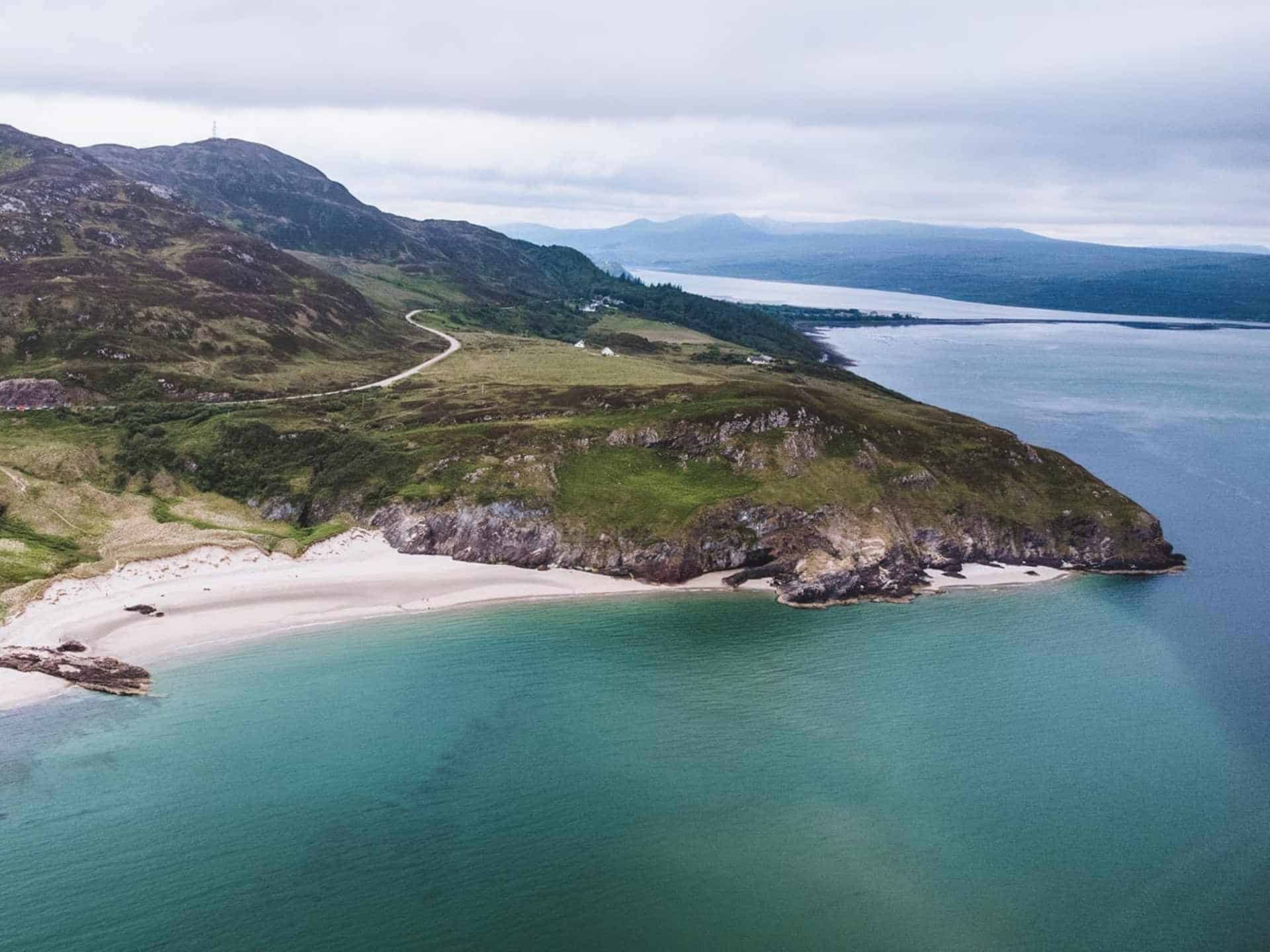
The North Coast 500 is Scotland’s best-known touring route.
It forms a recognised loop through the North Highlands, generally beginning and ending in Inverness. The journey links the eastern coast, the far north, Durness, Assynt, Wester Ross, Torridon and Applecross.
Its appeal lies in the sense of progression.
The east provides a relatively measured introduction before the route moves into more remote landscapes, slower roads and the mountain-and-coast combinations of the west.
What the roads feel like
The NC500 includes:
- Main A-roads
- Single-track sections
- Passing places
- Exposed coastal roads
- Remote stretches between services
- Busy villages and viewpoints
- Optional mountain roads requiring additional care
It is not a private driving route. The roads are used daily by residents, agricultural traffic, delivery vehicles, cyclists, motorhomes and other visitors.
Choose the NC500 when you want
- A recognised circular structure
- A complete northern touring journey
- Coast, mountains and remote landscapes
- Seven days or more
- A route that rewards careful advance planning
- A stronger sense of travelling through several distinct regions
Consider another route when you
- Have only a long weekend
- Prefer flexible bases to a fixed circuit
- Are uncomfortable with extensive single-track driving
- Want long walks and slow mornings every day
- Do not want to book accommodation ahead during busy periods
The NC500 deserves its reputation, but it is not automatically the best Scottish road trip for every driver.
Use our NC500 road trip guide for the main route hub. First-time visitors should also read our NC500 beginner guide.
The North East 250
The North East 250 offers considerable variety within a relatively compact circular route.
It brings together:
- The eastern Cairngorms
- Royal Deeside
- Aberdeen and the surrounding coast
- Speyside
- The Moray coast
- Castles, distilleries and rural landscapes
This makes it a strong option when you want mountain roads, countryside and coast without travelling to the far north.
What the roads feel like
The route combines broader main roads with rural sections and mountain landscapes. It can feel more varied than its compact scale suggests, with a noticeable change between Deeside, Speyside and the coast.
The journey also benefits from easier access from Aberdeen and eastern Scotland.
Choose the North East 250 when you want
- A circular route for three to five days
- Access from Aberdeen
- Mountains, whisky country and coast
- A mixture of driving and attractions
- A recognised route without the scale of the NC500
- More established towns and facilities
Consider another route when you want
- Extensive single-track or remote driving
- Ferry travel
- The western Highlands
- A journey lasting more than a week without adding other regions
The North East 250 is not simply an alternative for people avoiding the NC500. It offers a distinct Scottish journey in its own right.
The Scottish Borders
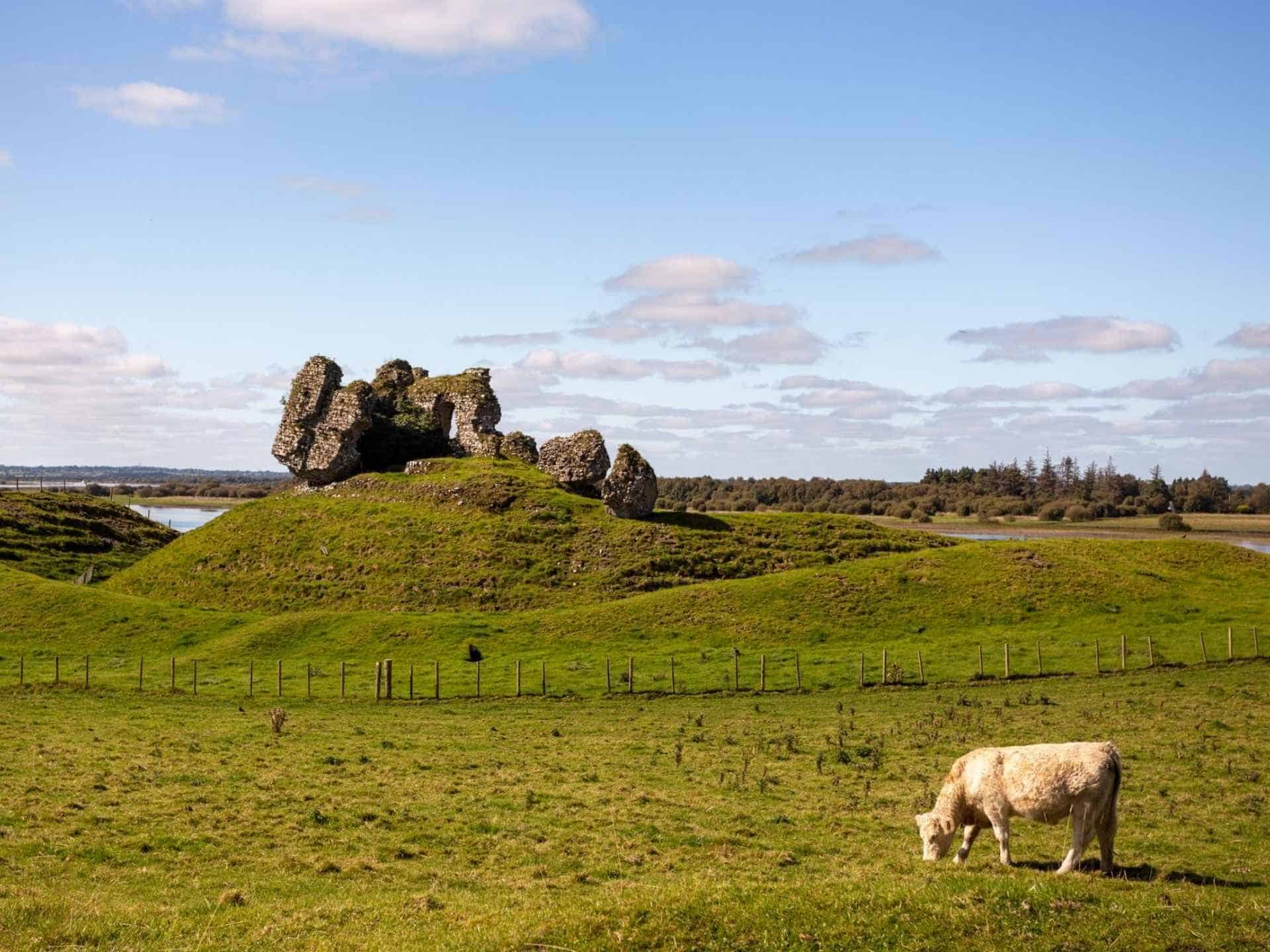
The Scottish Borders are among the most accessible places to begin a Scottish road trip.
The region combines rolling countryside, river valleys, market towns, abbeys and roads that can feel spacious compared with the remoter Highlands.
It is particularly convenient for travellers approaching from northern England, Edinburgh or central Scotland.
What the roads feel like
The Borders offer a mixture of:
- Open A-roads
- Rural cross-country routes
- Moorland sections
- Village roads
- River valleys
- Quieter alternatives to major northbound routes
The driving is often less demanding than in the far north, making the area suitable for a first road trip, a shorter escape or a journey in a special car where narrow roads and limited parking are less appealing.
Choose the Borders when you want
- A two to four-day journey
- Easier access from England or Edinburgh
- Rolling landscapes and historic towns
- A route with less remote-road planning
- A shorter first experience of Scotland
Consider another route when you want
- Highland mountain scenery
- Islands or ferries
- Long coastal sections
- A week-long touring loop without combining regions
The Borders can also form a satisfying beginning or end to a longer Scottish journey.
South-west Scotland
Dumfries and Galloway offers a different kind of Scottish road trip.
This is a landscape of coast, forests, hills and quieter communities, with routes that often receive less attention than the Highlands.
The South West Coastal 300 provides one possible framework, linking coastal and inland landscapes through the region. You can also shape a more flexible journey around the Galloway Forest, Solway coast and local towns.
What the roads feel like
South-western routes may include:
- Coastal roads
- Forest landscapes
- Rolling countryside
- Smaller towns
- Quiet rural sections
- Longer gaps between some facilities
The region can work particularly well for drivers travelling from northern England or looking for a Scottish journey without the distances involved in reaching the Highlands.
Choose south-west Scotland when you want
- Three to six days
- Coast and forest in the same trip
- A quieter alternative to the headline northern routes
- Easy access from north-west England
- Flexible loops rather than a fixed northern circuit
Consider another route when you want
- Scotland’s highest mountain landscapes
- Island travel
- The most recognisable Highland scenery
- A large number of major visitor attractions
The Borders and south-west should not be treated as one interchangeable region. Each offers a different landscape and road-trip character.
Skye and Scotland’s islands
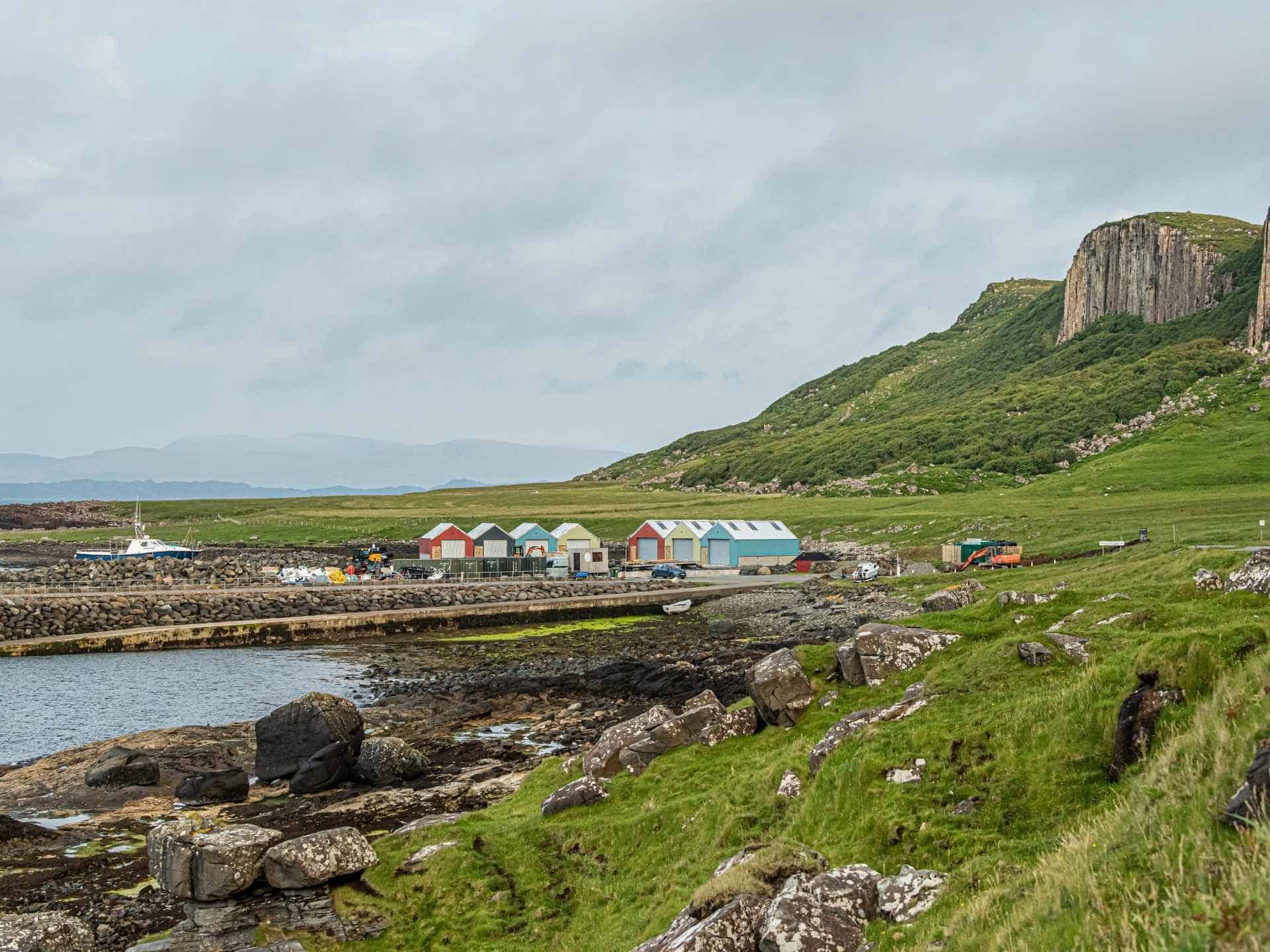
Scotland’s islands can make the journey feel particularly distinct, but they require more structure.
Skye is the simplest major island to include because it can be reached by bridge as well as ferry. Other island groups depend more heavily on sailings, accommodation and carefully timed connections.
It helps to think of island road trips in four broad categories.
Skye
Bridge and ferry access make Skye easier to combine with Glencoe, Fort William, the Road to the Isles or the Great Glen.
The island can become busy, and its roads, parking areas and accommodation come under considerable pressure during peak periods.
Inner Hebrides
Mull, Islay and other Inner Hebridean islands generally require ferry planning.
These trips work best when the crossing is treated as a central part of the itinerary rather than another minor booking.
Outer Hebrides
Lewis, Harris and the wider island chain suit slower journeys with fewer miles each day.
The roads can be narrow and exposed, while ferry connections may shape the entire trip.
Northern Isles
Orkney and Shetland involve greater travel time and a different logistical commitment. They are best treated as substantial journeys rather than extensions added casually to a mainland tour.
Choose an island road trip when you want
- Fewer miles and more time outside the car
- Ferry travel as part of the experience
- Coastal landscapes
- Distinct communities and local culture
- Walking, food and slower exploration
- A journey where the destination matters as much as the roads
Consider another route when you want
- Long daily driving sections
- Complete freedom from fixed timings
- Easy accommodation changes
- Roads consistently suited to low or wide vehicles
Vehicle reservations, service status and check-in requirements should be confirmed directly with the relevant ferry operator.
Which Scotland road trip suits the time you have?
Time is one of the clearest ways to eliminate unsuitable routes.
Two to three days
Choose one compact area.
Strong options include:
- The Scottish Borders
- Loch Lomond and the Trossachs
- Perthshire
- One Highland base
- A focused section of south-west Scotland
- A short Cairngorms trip
Avoid trying to complete:
- The NC500
- Several Highland regions
- A multi-island journey
- Skye combined with much of the mainland
A short trip feels more complete when you explore one region properly.
Four to six days
Scotland begins to open up.
Consider:
- Glencoe, Fort William and the Great Glen
- The North East 250
- Argyll and part of the western coast
- Skye with one carefully chosen mainland approach
- The Cairngorms and Speyside
- The South West Coastal 300
- A Highlands route with two bases
Five days can be enough for a focused NC500 itinerary, but it will sit at the faster end of the scale.
Seven to ten days
This is a strong duration for:
- The NC500
- A larger Highlands circuit
- The western coast and one island
- Glencoe, Skye and the Great Glen
- The Cairngorms combined with the west
- A slower road trip through several bases
The additional days allow time for weather, walks and roads that deserve more than a hurried pass.
Two weeks or more
With two weeks, you can connect several regions without making every day a transfer.
A longer journey might combine:
- Glencoe and Fort William
- The Road to the Isles
- Skye
- Wester Ross
- Part of the NC500
- The Cairngorms
- Speyside
- Edinburgh or Glasgow
- The Borders on the journey south
Do not assume more time means you need more destinations. Additional days are equally valuable when used to reduce daily mileage and spend longer in one place.
Which route is best for a first visit?
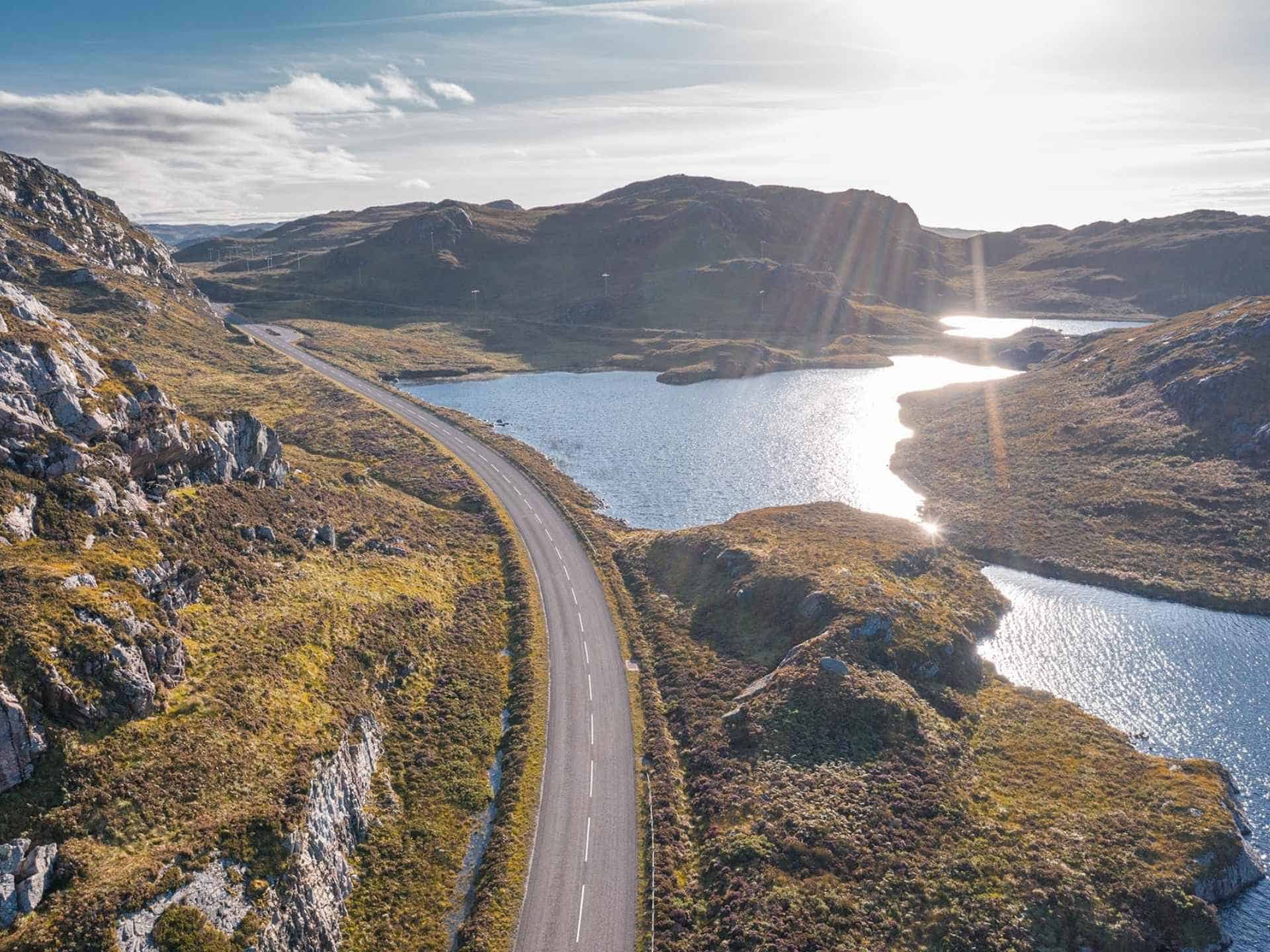
For many first-time visitors, a journey through Glencoe, Fort William, the Great Glen and the Cairngorms offers the strongest balance.
It provides:
- Recognisable Highland scenery
- Established roads
- Practical accommodation
- Flexible route options
- Access from Glasgow, Edinburgh or Inverness
- Enough variety without committing to the full NC500
A possible first route could include:
- Loch Lomond and the Trossachs
- Glencoe
- Fort William
- The Road to the Isles or Loch Ness
- Inverness
- The Cairngorms
- A return through Perthshire
Add the western coast when you have enough time for its slower roads, ferry possibilities and coastal detours.
Choose the NC500 for a first visit only when you genuinely want the structure of the northern loop and can give it enough time.
The most famous route is not automatically the right route.
When is the best time for a Scotland road trip?
There is no single perfect month. Each season changes the rhythm and practical demands of the journey.
Spring
Spring can bring:
- Increasing daylight
- Less visitor pressure than summer
- Lower midge activity than later in the year
- Quieter accommodation outside holiday periods
- Potentially wintry conditions on higher roads
March may still feel like winter in parts of the Highlands. April and May often offer more daylight, but weather remains changeable.
Summer
Summer provides the longest days.
That is valuable when driving times are difficult to predict or when you want to combine roads with walks, ferries and longer stops.
It also brings:
- Greater traffic
- Higher accommodation demand
- Busy viewpoints and car parks
- More pressure on Skye, the NC500 and western routes
- Midges in suitable conditions
Book ahead during July and August, particularly around the Highlands, islands and western coast.
Autumn
September can offer a good balance of daylight, scenery and reduced pressure after the main school-holiday period.
As autumn progresses:
- Days shorten
- Weather becomes more changeable
- Wet leaves and debris can affect rural roads
- Seasonal attractions and ferry schedules may alter
- Some accommodation and food options become more limited
Build more flexibility into the route as daylight reduces.
Winter
Winter can be striking, but it is rarely the easiest choice for a first Scottish road trip.
Expect:
- Short daylight hours
- Ice or snow in some areas
- Storms and strong winds
- More limited services
- Greater exposure on higher and coastal roads
- A higher chance of changing plans
On exposed passes, conditions can change quickly, so keep a backup route and avoid treating any winter itinerary as fixed.
A winter itinerary should be shorter, more flexible and checked carefully before each day’s drive.
Driving in Scotland: what to expect
Driving in Scotland is not difficult if you are patient, prepared and realistic.
Most problems come from planning too many miles, rushing rural roads or assuming remote areas work like motorway services.
Single-track roads are common in the Highlands, islands and parts of the west coast.
Use them properly:
- Use passing places to let oncoming vehicles pass
- Do not park in passing places
- Let faster local traffic pass when safe
- Be ready to reverse if needed
- Watch for cyclists, walkers, sheep, deer and farm vehicles
If the passing place is on your left, pull in. If it is on your right, wait opposite it so the oncoming vehicle can use it.
Passing places are for keeping traffic moving, not for photos, picnics or parking.
Fuel and electric vehicle charging
Fuel and charging gaps are a real part of driving in Scotland, especially in remote areas.
Do not wait until the warning light comes on in the far north, on an island or late in the evening. Petrol stations can be spread out and opening hours may not fit your plan.
Check opening times and keep an alternative option, particularly in the far north, on islands and during evenings or Sundays.
Drivers requiring super-unleaded petrol should confirm that the planned station sells the appropriate grade.
Electric vehicle drivers should check:
- Charger availability
- Connector type
- Charging speed
- Access arrangements
- Backup locations
- Whether charging fits naturally into the day
Charger availability, speed and access vary, so build in backup options and check availability and compatibility before relying on a stop.
Treat charging as part of the itinerary rather than a problem to solve later.
Weather, ferries and live information
Before each day, check:
- Weather
- Road incidents and closures
- Ferry status
- Petrol or charging stops
- Daylight
- Parking and attraction access
- Whether the route still suits the vehicle and driver
Navigation and itinerary tools should not be treated as live conditions reports.
Follow current official information, local signs and your own judgement. Roads that are central to the journey should be checked during planning and again on the day.
Should you base yourself or tour?
A fixed base and a touring itinerary each offer different advantages.
Choose a base when you want
- Less packing
- Greater flexibility around weather
- A shorter trip
- Easier parking arrangements
- Several good loops nearby
- More time outside the car
Fort William, Inverness, Aviemore, Oban and selected Borders towns can all work, depending on the region.
Tour from place to place when you want
- A stronger sense of progression
- To connect several regions
- A recognised loop
- Island or ferry travel
- A different landscape each morning
Touring requires more careful accommodation planning because every overnight stop affects the next day.
For many trips, the strongest solution is a combination: two nights in one base, followed by one or two nights elsewhere.
Account for the journey into Scotland
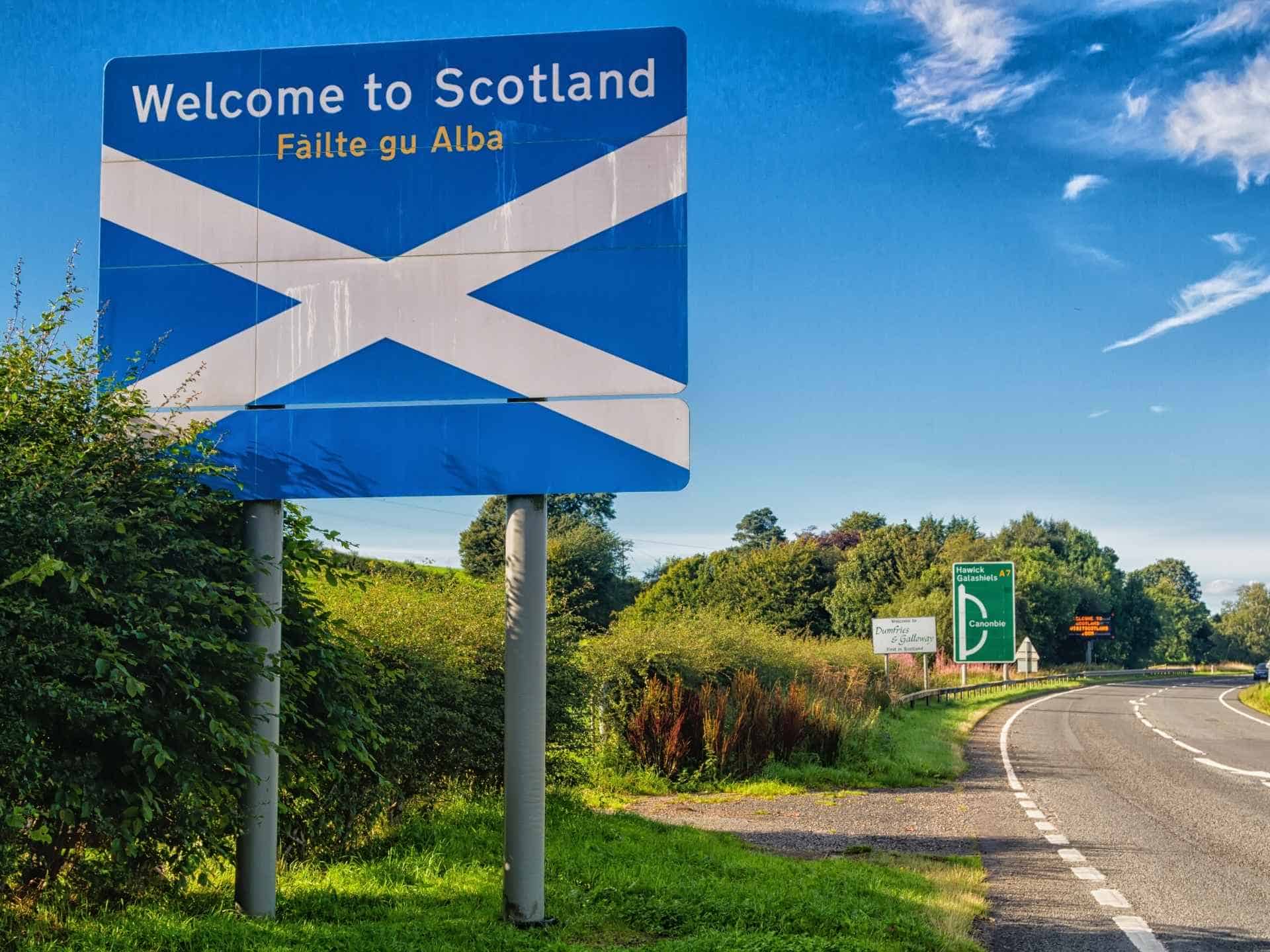
The road trip does not always begin when you cross the border.
A long motorway journey from elsewhere in the UK can leave little energy for a demanding Highland road on the same day.
Build the journey north into the itinerary by considering:
- An overnight stop on the way north
- A gentler first day
- A later start to the scenic portion
- A first base near Glasgow, Edinburgh or the Borders
- Professional vehicle transport for specialist cars or tightly limited schedules
Vehicle transport is a specialist option rather than a default recommendation. Use an established provider and account for collection, insurance and onward travel.
The aim is to arrive ready for the roads you came to experience.
Build your Scotland road trip with New Roads
Choosing the region is only the beginning.
New Roads can help turn a broad Scottish journey into a route built around your car, time and preferred driving style.
Tell New Roads about:
- Your starting point
- The time available
- The vehicle you drive
- Your preferred road types
- The balance between driving and stopping
- Accommodation style
- Ferries
- Petrol or charging needs, where supported
- Regions and attractions that matter most
For example:
“Plan a seven-day Scotland road trip from Glasgow for a low sports car, combining Glencoe, the Road to the Isles and the Cairngorms, with realistic daily driving, suitable parking and no unnecessarily narrow roads where possible.”
You can then refine the result:
- Add another night in one base
- Reduce motorway time
- Replace a ferry with a mainland route
- Add petrol or charging stops
- Remove a region that makes the trip too ambitious
- Create an alternative for poor weather
- Rebalance the route around confirmed accommodation
- Adjust the roads for the vehicle
With the current New Roads features, you can add stops, consider accommodation ideas, review vehicle-suitability information, save the journey in My Trips and export it through supported navigation options where available. The latest improvements, introduced in New Roads Gen 1.2, also include clearer road warnings, fuel and electric vehicle charging locations, plus one-click GPX export.
Always review the final itinerary before travelling. Navigation platforms may recalculate sections, while road conditions, ferry services and accommodation availability can change.
Less time planning. More time driving.
You can start on the free tier and build a Scotland road trip in New Roads around your car, time and preferred pace. Use it as a stronger starting point, then review the route, road conditions, bookings, petrol, charging and vehicle suitability before you travel.
AI can make mistakes. Always check routes, live road conditions, closures, ferry services, parking, accommodation, petrol, charging and vehicle suitability before travelling.
Scotland road trip FAQs
- What is the best road trip in Scotland?
There is no single best route. The NC500 is the most famous, but the strongest choice depends on the available time, vehicle, preferred landscapes and confidence on rural roads.
For many first-time visitors, a route through Glencoe, Fort William, the Great Glen and the Cairngorms offers the best balance.
- How many days do you need for a Scotland road trip?
Two to three days work for one compact region.
Five to seven days allow a more substantial Highlands, west coast or North East 250 journey. Seven to ten days are better for the NC500 or a larger route combining several regions.
- Is the NC500 the only Scotland road trip worth doing?
No. The Highlands, western coast, North East 250, Borders, south-west Scotland and islands all offer distinct road-trip experiences.
- What is the best time of year for a Scotland road trip?
Spring and autumn often offer a useful balance of daylight, traffic and accommodation demand.
Summer provides the longest days but also brings more visitors and midges. Winter requires greater flexibility because of short daylight hours and changing conditions.
- What are the driving conditions like in Scotland?
Main roads are generally straightforward.
Rural journeys may include single-track roads, passing places, livestock, cyclists, exposed weather and long gaps between services. Allow more time than the mileage alone suggests.
- Do you need to book accommodation in advance in Scotland?
Booking ahead is advisable in popular areas and during peak periods.
This is particularly important for the NC500, Skye, the western coast, islands and well-known Highland destinations. Confirm parking and charging when they are important to the trip.
- What are the rules on single-track roads in Scotland?
Use passing places correctly, never park in them, allow faster traffic to pass safely and be prepared to reverse when necessary.