French Riviera Road Trip Guide
Written by Zaid Hamid
A French Riviera road trip is built around the stretch of coast between Nice and the Italian border.
The roads link busy waterfront towns, quieter bays and hillside villages, with the Mediterranean never far from view. You can drive from Nice to Monaco in an hour on a clear run, but a better plan gives the route a few days, choosing the roads that suit the trip and leaving time to park up and explore.
The signature drive is the three Corniches – three roads at different heights above the sea between Nice, Èze, Monaco and Menton. Each offers a different way through the Riviera, from the coastal Basse Corniche to the higher Grande Corniche. France’s official tourism guidance highlights the three parallel roads east of Nice, passing villages including Èze and Roquebrune-Cap-Martin.
For a broader look at driving across the country, see our France road trip.
The French Riviera as a driving destination
The Côte d’Azur works well when you balance the coast with the roads above it.
The main coastal routes can be busy, particularly around Nice, Monaco and better-known beach towns. A good Riviera route mixes a few headline sections with early starts, a base where you can leave the car parked and time to explore the towns on foot.
Nice is a useful starting point, with a larger choice of hotels, restaurants and parking than many smaller coastal towns. From there, you can head east towards Villefranche-sur-Mer, Èze, Monaco and Menton, or turn inland for hill villages and quieter roads.
This is not a route to judge by average speed. Town traffic, limited parking, scooters and local access can all affect the pace of the day. Keep the daily mileage light and choose stops you genuinely want to enjoy.
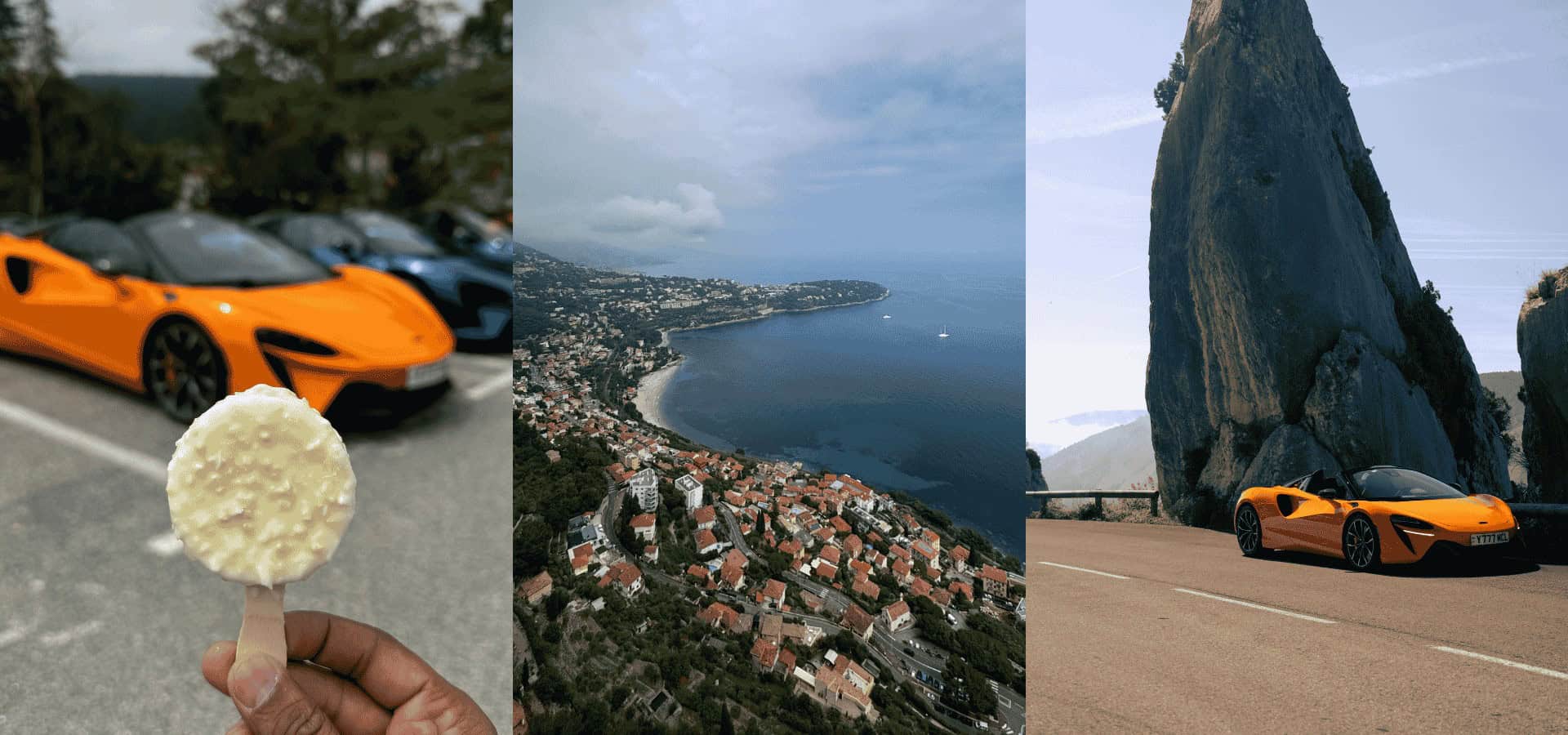
Having driven here in everything from a rented Fiat 500L, to much more serious machinery including a 992 GT3 RS and McLaren Artura, one of the things I love about the Riviera is that you do not need a supercar to enjoy it. Some of the best stretches are rewarding at remarkably modest speeds. Climb into the hills above Monaco and the combination of tight corners, elevation changes and views across the Mediterranean means there is little incentive to rush. Often the best part is simply finding somewhere safe to stop and taking in how quickly you have climbed away from the coast, preferably with a croissant or gelato to hand.
The three Corniches explained: Basse, Moyenne and Grande
The three Corniches are the heart of a French Riviera driving route.
The Basse Corniche stays closest to the sea, running through coastal locations including Villefranche-sur-Mer, Beaulieu-sur-Mer and Cap-d’Ail. It is the most direct coastal option and gives you regular glimpses of the water, but it also has more town traffic, pedestrian activity and limited space to stop.
The Moyenne Corniche sits higher up the hillside. It is a useful middle ground, with broader views across the coast and access to Èze. This is often the most practical choice when you want sea views without following every waterfront section through the busier towns.
The Grande Corniche is the high road. It climbs above the coast through La Turbie and the hills behind Monaco, with wider views towards the Mediterranean and, on a clear day, the coastline stretching towards Italy. It is the one to include when the drive itself is the priority, though the hill roads and village approaches need more thought if you are in a low, wide or long car.
Rather than driving all three roads back to back, use them to make a loop. Go east on one, spend time in a town or village and return on another when traffic and your plans allow.
If the drive itself is the priority, this is the Corniche I would choose. The D2564 around Col d’Èze and La Turbie gives you that classic combination of sweeping views, old stone walls and the Mediterranean appearing between the hills. It is also a road that rewards taking your time; the scenery and elevation changes are as much a part of the experience as the corners themselves.
La Turbie is also an ideal place to park up and enjoy the surroundings. La Gelatiera, in the centre of the village, is an easy stop for an artisan ice cream or coffee before getting back on the road.
If you are feeling a touch more extravagant, The Maybourne Riviera is hard to beat. Sitting high above Roquebrune-Cap-Martin on the route towards Menton, its views stretch across the Mediterranean towards Monaco, with a cake and pastry selection that provides a fairly convincing excuse to stop driving for an hour, or even the night should you want to blow the budget on a special evening.
Nice, Villefranche, Èze and Monaco
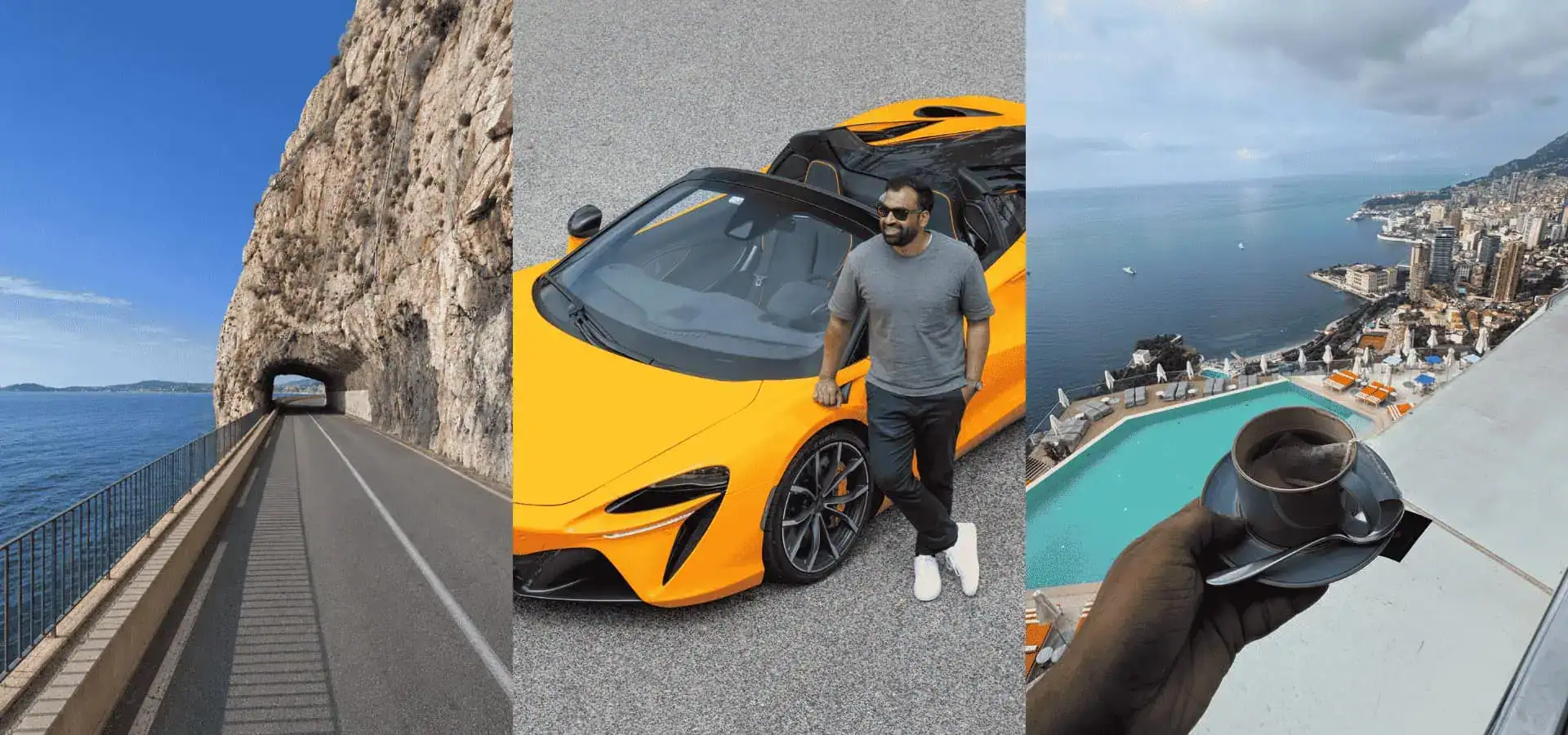
Nice gives the route an easy starting point. You can enjoy the old town and waterfront, then head east through Mont Boron towards Villefranche-sur-Mer, where the harbour and bay make a worthwhile first stop.
From here, Èze is a natural next move. The medieval village sits above the coast and offers the sort of views that make a longer climb worthwhile. Parking and access can be limited in busy periods, so check this before you set off and be open to exploring on foot.
Monaco is within easy reach, but a little planning makes the visit smoother. Traffic can build quickly, particularly around major events, weekends and the middle of the day. Parking is available in public car parks, but it is worth choosing one before you arrive.
Treat Monaco as a place to park and explore. The roads around it are part of the appeal, but it is best enjoyed away from the wheel.
Menton, the Italian border and beyond
East of Monaco, the route becomes a little calmer as it heads towards Roquebrune-Cap-Martin and Menton.
Menton is a strong final stop for a Riviera road trip, with its old town, gardens and position close to the Italian border. It can work as an overnight base if you want a less central alternative to Nice or Monaco, while still keeping the three Corniches within reach.
The coastal road continues into Italy, but Menton is a good place to pause before deciding whether to continue east or loop back through the hills. The roads around the border can be busy, so build in time rather than treating the final stretch as a quick run.
If you are continuing into Italy, check documents, insurance and local driving requirements before you cross. Read our Italy road trip guide for Italian inspiration.
Combining the Riviera with Provence and the south
The Riviera combines easily with a wider southern France road trip, particularly if you have a week or more.
Use Nice or the coast as one base, then head inland towards the hill villages and quieter roads behind the Côte d’Azur. From there, Provence, the Luberon and the Verdon give the trip a completely different feel, with vineyards, limestone hills and mountain roads replacing the busy waterfront.
If you want an inland route between the Alps and the coast, our Route Napoléon guide is the better place to start.
When to go, traffic and parking realities
Late spring and early autumn are often the most comfortable times for a French Riviera road trip. The days are still long, the weather often suits both driving and walking and the roads can feel more relaxed than during the busiest summer weeks.
July and August bring warmer weather, but also heavier traffic and greater demand for accommodation. Start early if you want to drive the Corniches, and avoid building the day around exact arrival times in Monaco, Èze or the busiest coastal towns.
One other thing worth allowing for is cyclists. The hills above the coast are hugely popular on two wheels and small pelotons are a common sight on the tighter roads. Give them space and be patient rather than looking for an optimistic overtake; visibility can disappear quickly around rock faces and blind corners.
Parking should be part of your plan. Confirm hotel parking before booking, particularly in Nice, Monaco, Èze and Menton. Public car parks can be useful for day visits, but availability reduces quickly in busy periods.
France also has low-emission zones and temporary pollution measures in some areas. Check local rules and Crit’Air requirements before driving into a major urban area.
Build your Riviera route with New Roads
A French Riviera road trip should match your car, the season and the way you want to explore the coast.
Tell New Roads where you are starting, how many days you have and whether you want to prioritise the Corniches, hill villages, Monaco or a wider route into Provence. It will then build a bespoke itinerary with driving routes, places to stop, suggested accommodation and external booking links, plus petrol or electric vehicle information where supported. Book accommodation and other travel services directly with the relevant provider.
Before adding narrower village roads or the higher Corniche sections, review the vehicle suitability report as an advisory check. You can adjust the route in the AI chat, save it in My Trips and export it to Google Maps or GPX where available.
Explore the features of New Roads, then build your own Riviera route.
AI can make mistakes. Always check routes, parking, access, weather, tides, local restrictions, accommodation and vehicle suitability before travelling.
Frequently Asked Questions
- What is the best French Riviera road trip?
A strong French Riviera road trip starts in Nice, follows one or more of the three Corniches through Villefranche-sur-Mer and Èze, then continues to Monaco and Menton. Give yourself three to five days to enjoy the coast and the roads above it without rushing.
- What are the three Corniches?
The three Corniches are the Basse, Moyenne and Grande Corniche roads between Nice and Menton. The Basse Corniche stays nearest the sea, the Moyenne Corniche offers elevated coastal views and the Grande Corniche follows the highest route above Monaco and Èze.
- Can you drive from Nice to Monaco?
Yes, you can drive from Nice to Monaco using the Corniche roads or the faster inland routes. The coastal drive is more scenic, while traffic, parking and local events can affect how long the journey takes.
- Is it worth driving the French Riviera?
The Riviera is worth driving if you plan around the roads and towns you want to experience. The three Corniches offer a memorable route, while early starts and confirmed parking make the busier coastal sections easier to enjoy.
- When is the best time to drive the Côte d’Azur?
Late spring and early autumn are often good times for a Côte d’Azur road trip, with comfortable temperatures and less traffic than peak summer. In July and August, start early, book parking in advance where possible and allow extra time around the main towns.