Best NC500 beaches: access, parking and route planning
The beaches of the NC500 do more than interrupt the drive. They change its pace.
One moment, the road is threading between rock, moorland and dark Highland headlands. The next, it opens onto pale sand, dunes and water shifting between slate, green and blue.
Some NC500 beaches make ideal twenty-minute stops. Others deserve several hours. Sandwood Bay requires most of a day and a substantial walk before the sea even comes into view.
The key is to choose beaches that fit your route, vehicle and available time.
This guide covers seven of the best beaches along the northern and western sections of the NC500, with practical guidance on access, parking, dogs, swimming and how each stop affects the wider journey.
For help planning the full loop, begin with our NC500 road trip guide.
Why beaches change the shape of an NC500 trip
A beach stop may look like a small addition on the map, but it can alter the entire day.
Some beaches sit close to the wider route and work naturally as a place to stretch your legs. Others involve single-track approaches, limited parking, uneven paths or lengthy walks.
A stop that takes twenty minutes in quiet conditions may take considerably longer during summer, particularly when a small car park is full or the approach road is busy.
The best NC500 beach stops are the ones that fit the day, not the ones that look closest on the map.
Think of the beaches in three broad categories:
Short scenic stops
These work well when you want to pause, take in the coast and continue without reorganising the day.
Ceannabeinne and Sango Bay can fit this kind of itinerary.
Longer beach visits
These deserve time for a walk, photographs or a slower break between driving sections.
Balnakeil, Clachtoll and Big Sand can work particularly well when they sit close to your overnight stop.
Main experiences
These should be treated as one of the day’s defining activities rather than an extra pin.
Achmelvich can require more time because of its single-track approach and parking pressure. Sandwood Bay requires a dedicated walk and should usually shape the entire day.
NC500 beach comparison
Ceannabeinne Beach
Best for: A convenient coastal pause
Route area: East of Durness
Time to allow: Short to medium stop
Access character: Close to the northern route
Planning note: Useful when you want a substantial beach view without a lengthy detour
Sango Bay
Best for: A beach stop while staying around Durness
Route area: Durness
Time to allow: Short to medium stop
Access character: Convenient for the village
Planning note: Works naturally with Smoo Cave and other local stops
Balnakeil Beach
Best for: Longer walks and open coastal views
Route area: West of Durness
Time to allow: One to two hours or longer
Access character: Beach and dune landscape
Planning note: Better suited to a slower Durness day than a rushed photograph
Sandwood Bay
Best for: A dedicated walking experience
Route area: Near Kinlochbervie
Time to allow: Half to full day
Access character: Approximately eight-mile return walk
Planning note: Do not combine it with an already ambitious driving day
Achmelvich Beach
Best for: A major Assynt beach stop
Route area: Near Lochinver
Time to allow: Medium to long visit
Access character: Single-track approach
Planning note: Treat it as one of the day’s priorities rather than a casual diversion
Clachtoll Beach
Best for: A slower coastal day around Assynt
Route area: Near Lochinver
Time to allow: Medium visit
Access character: Rural coastal approach
Planning note: Works best when staying nearby or deliberately exploring the area
Big Sand Beach
Best for: A relaxed break near Gairloch
Route area: Wester Ross
Time to allow: Short to medium visit
Access character: Convenient for a Gairloch-based itinerary
Planning note: A useful pause before or after the more mountainous roads around Torridon
Beaches around Durness and the north coast
Ceannabeinne, Sango Bay and Balnakeil sit within the same broad part of the route.
That makes the Durness area particularly useful for a slower day. Rather than adding three separate beach detours to an already full itinerary, you can choose one as the main stop and keep the others as flexible options.
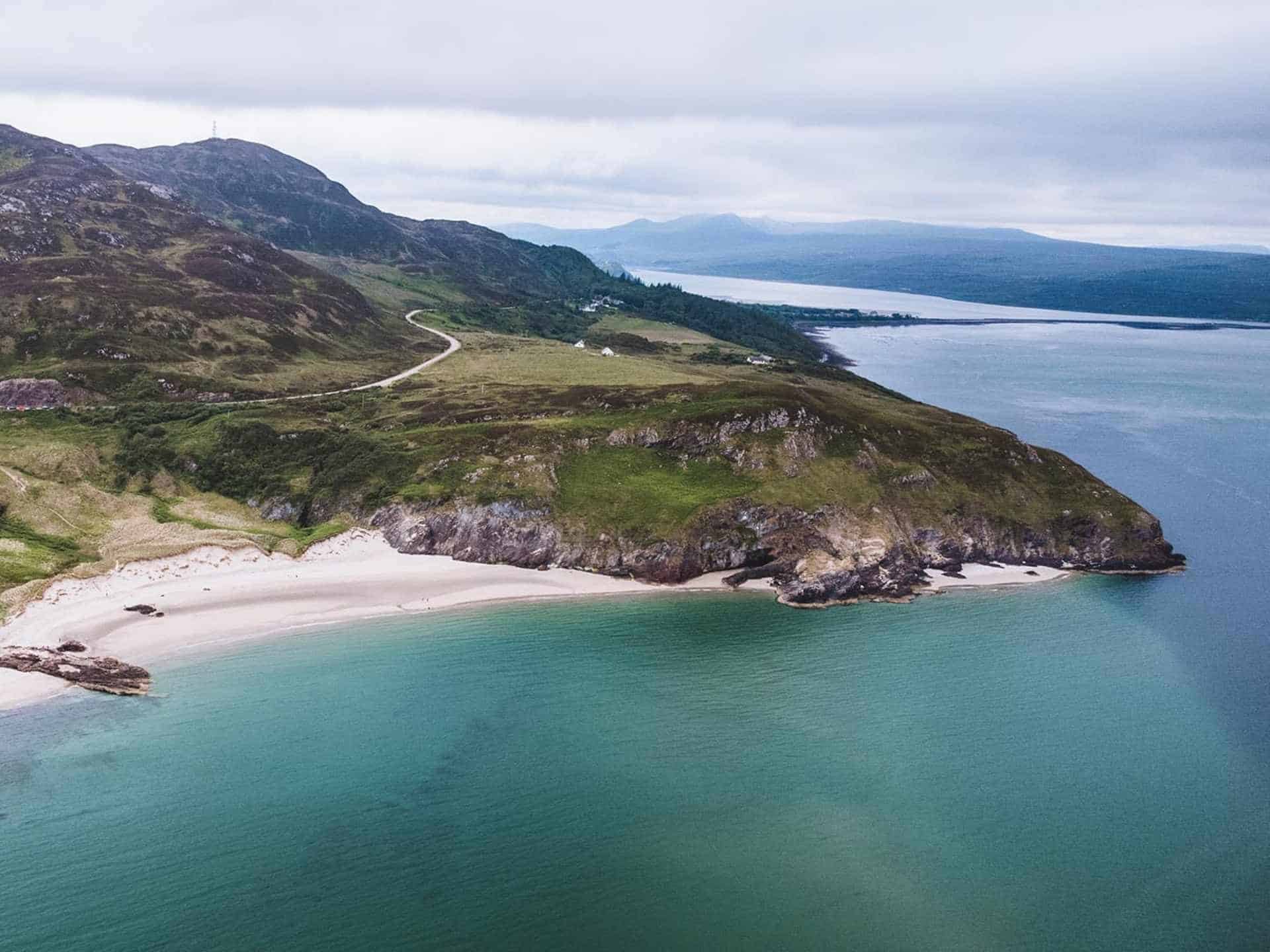
Ceannabeinne beach
Ceannabeinne sits close to the northern route, east of Durness.
The beach combines pale sand, open water and a broad coastal setting without requiring the same commitment as some of the more remote western beaches.
It works well as:
- A walking stop between driving sections
- A place to pause before reaching Durness
- A photography stop in suitable weather
- Part of a wider day involving Smoo Cave or Balnakeil
Access and parking
Ceannabeinne can be easier to include than beaches requiring a lengthy detour or walk, but parking capacity is limited.
During busy periods, the available spaces can fill quickly. Never park in passing places, across gates or on ground where the car may obstruct local access.
When the parking area is full, continue with the journey or return later.
Dogs
Check current local signage and keep dogs under close control. Coastal areas may contain livestock, wildlife and nesting birds even where formal restrictions are not immediately visible.
Swimming
Do not interpret the appearance of the water as confirmation that it is safe for swimming. Review the weather, tide, access and current local conditions before entering.
Best for: A convenient beach view, short walk and northern-route pause.
Sango Bay
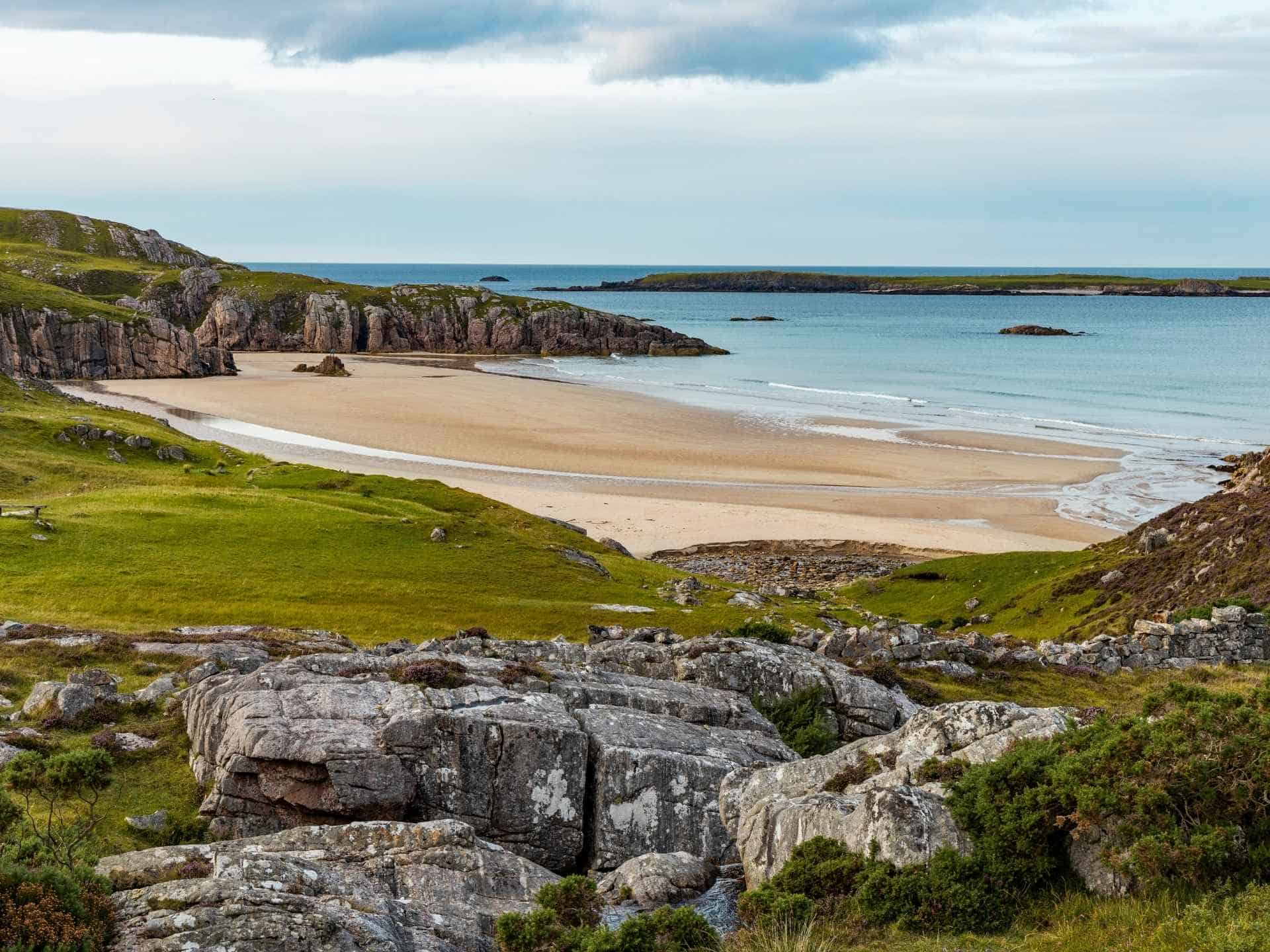
Sango Bay sits at Durness and brings a more enclosed, dramatic character than some of the wider north-coast beaches.
The combination of sand, rock and cliffs makes it easy to build into a stopover without reorganising the entire itinerary.
It works particularly well when:
- Staying in or near Durness
- Combining the beach with Smoo Cave
- Looking for an evening walk
- Planning a less demanding driving day
Access and parking
The beach’s location near Durness makes it one of the more practical options in this guide.
Parking, beach access and facilities may change, so check current local information rather than assuming every access point will be available.
Dogs
Follow local signs and keep dogs controlled around other visitors, wildlife and livestock.
Swimming
Sango Bay should not be treated as a supervised swimming location. Check tides, sea conditions and local warnings before considering entering the water.
Best for: Durness stopovers, shorter walks and a beach visit that does not dominate the day.
Balnakeil beach
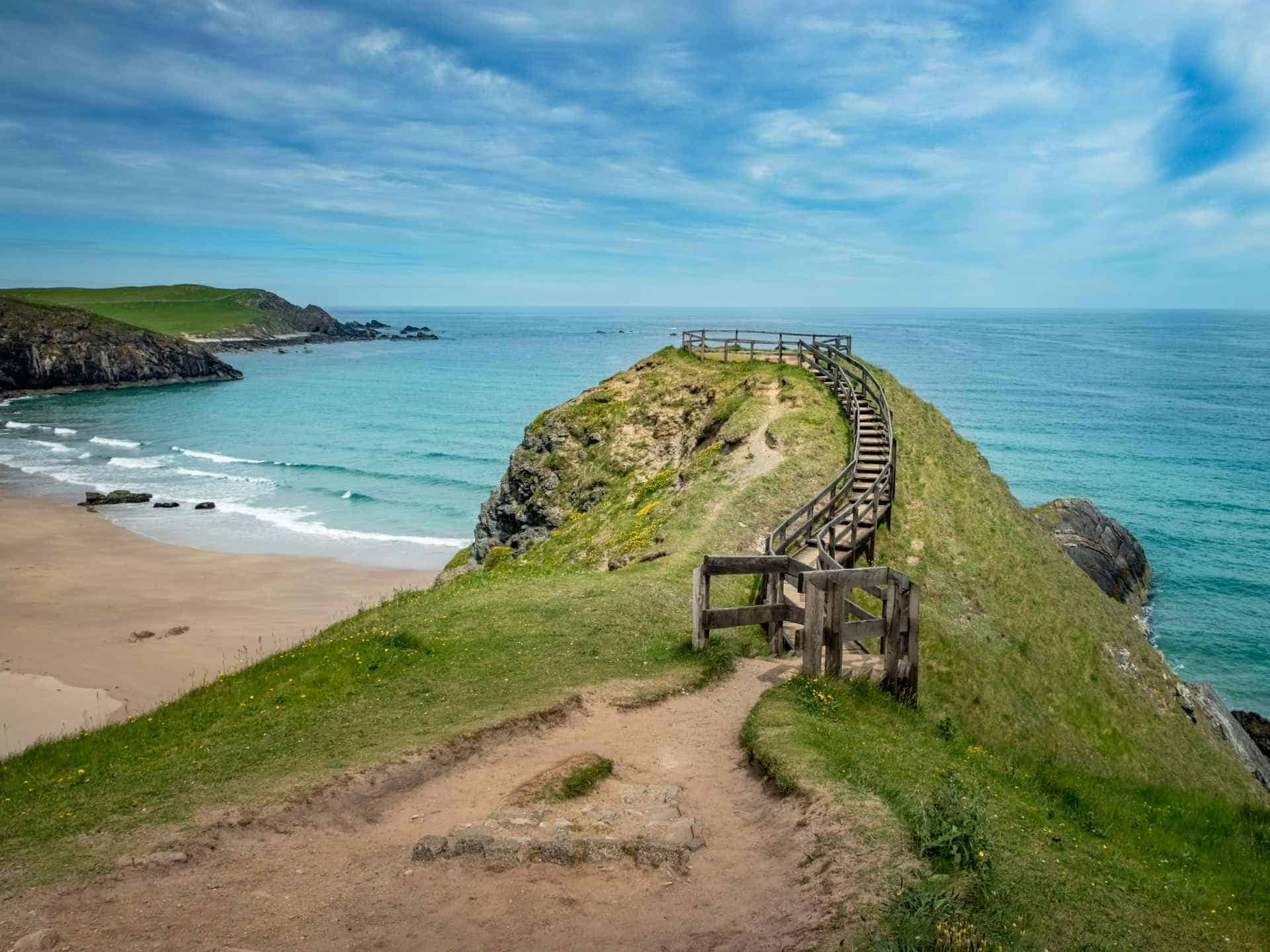
Balnakeil is one of the defining beaches around Durness.
The broad stretch of sand, dunes and views towards Faraid Head give it enough scale to reward a longer visit. It is less suited to a rushed five-minute stop than a proper walk or quieter afternoon.
The beach also pairs naturally with Balnakeil Craft Village and accommodation around Durness.
Access and parking
Parking is near the beach, but availability should be checked before travelling, especially in summer.
Use designated spaces and keep gates, roads and access points clear.
Dogs
Keep dogs under close control around dunes, livestock and wildlife. Follow all current signage and seasonal requirements.
Swimming
The open appearance of the bay can disguise cold water, currents and changing weather. Enter only when the conditions, location and your experience make it appropriate.
Best for: Longer beach walks, open views and a slower day around Durness.
Sandwood Bay: a day shaped around the walk
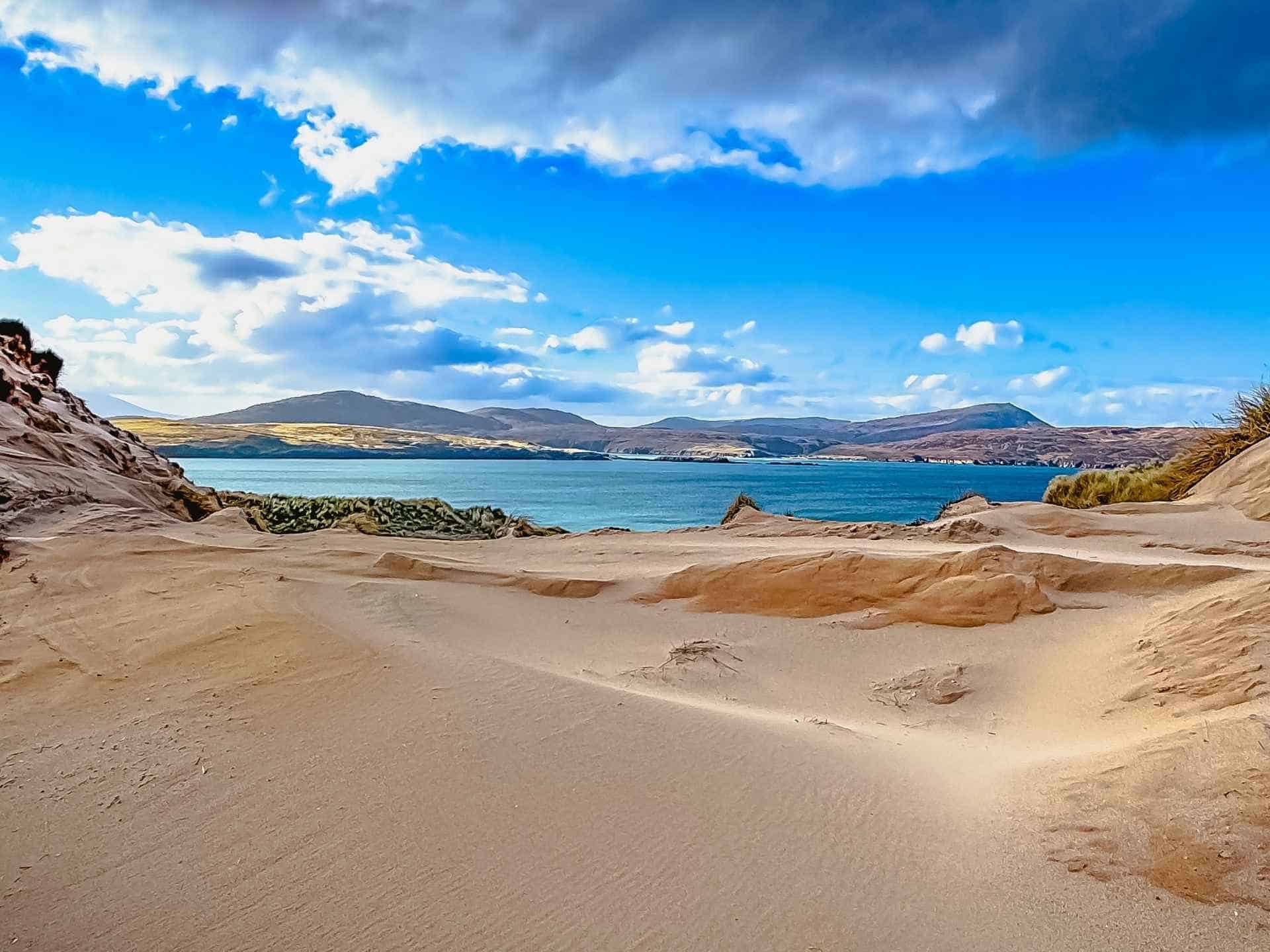
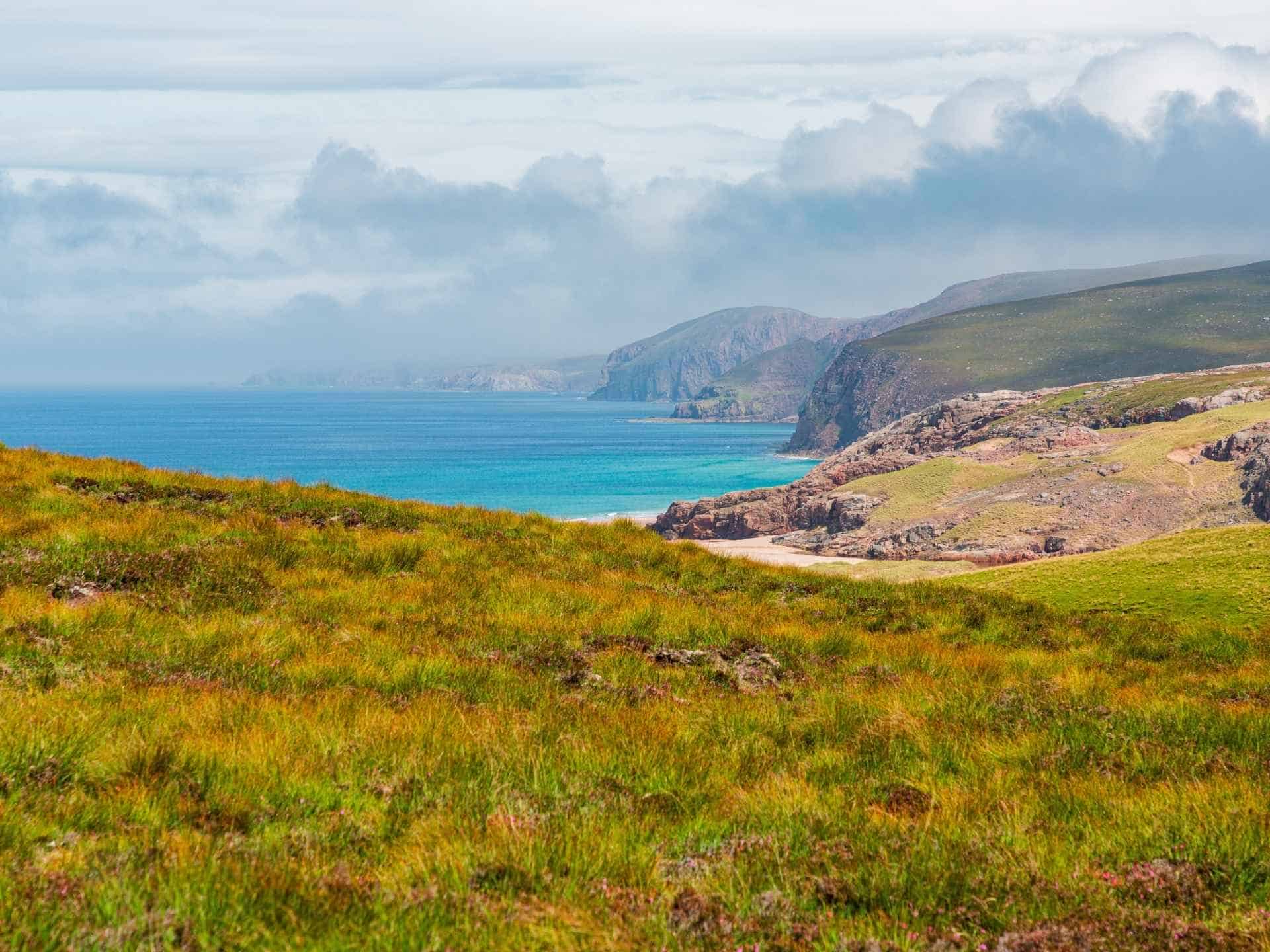
Sandwood Bay is different from every other beach in this guide.
It is not a roadside stop and should not be added to the end of a full driving day. The bay is reached by walking approximately 4 miles each way from Blairmore, creating an 8-mile return journey across exposed moorland.
The John Muir Trust advises that parts of the route are uneven and often wet. It also asks visitors to have an alternative plan when the Blairmore car park is full.
Time to allow
Treat Sandwood Bay as a half-day or full-day experience.
The walk, weather and time spent on the beach can occupy most of the day. Build the overnight accommodation around it rather than expecting to complete a long western driving section afterwards.
What to take
Bring:
- Appropriate walking footwear
- Waterproof and warm layers
- Food and water
- A charged phone
- A map or suitable navigation
- Enough daylight for the return
- A plan for changing weather
Dogs
Sandwood is part of an active crofting estate. Follow the Scottish Outdoor Access Code and keep dogs under close control, particularly around livestock.
Swimming
This is a remote beach without the reassurance of immediate roadside access. The conditions, cold water and distance from assistance require particularly cautious judgement.
Best for: Experienced walkers, slower itineraries and travellers prepared to exchange driving mileage for one significant coastal experience.
Assynt beaches near Lochinver
Achmelvich and Clachtoll are among the best-known beaches on the western part of the route.
They also illustrate why map distance can be misleading on the NC500. Smaller roads, limited parking and the desire to spend time by the coast mean these stops can occupy much more of the day than expected.
Achmelvich beach
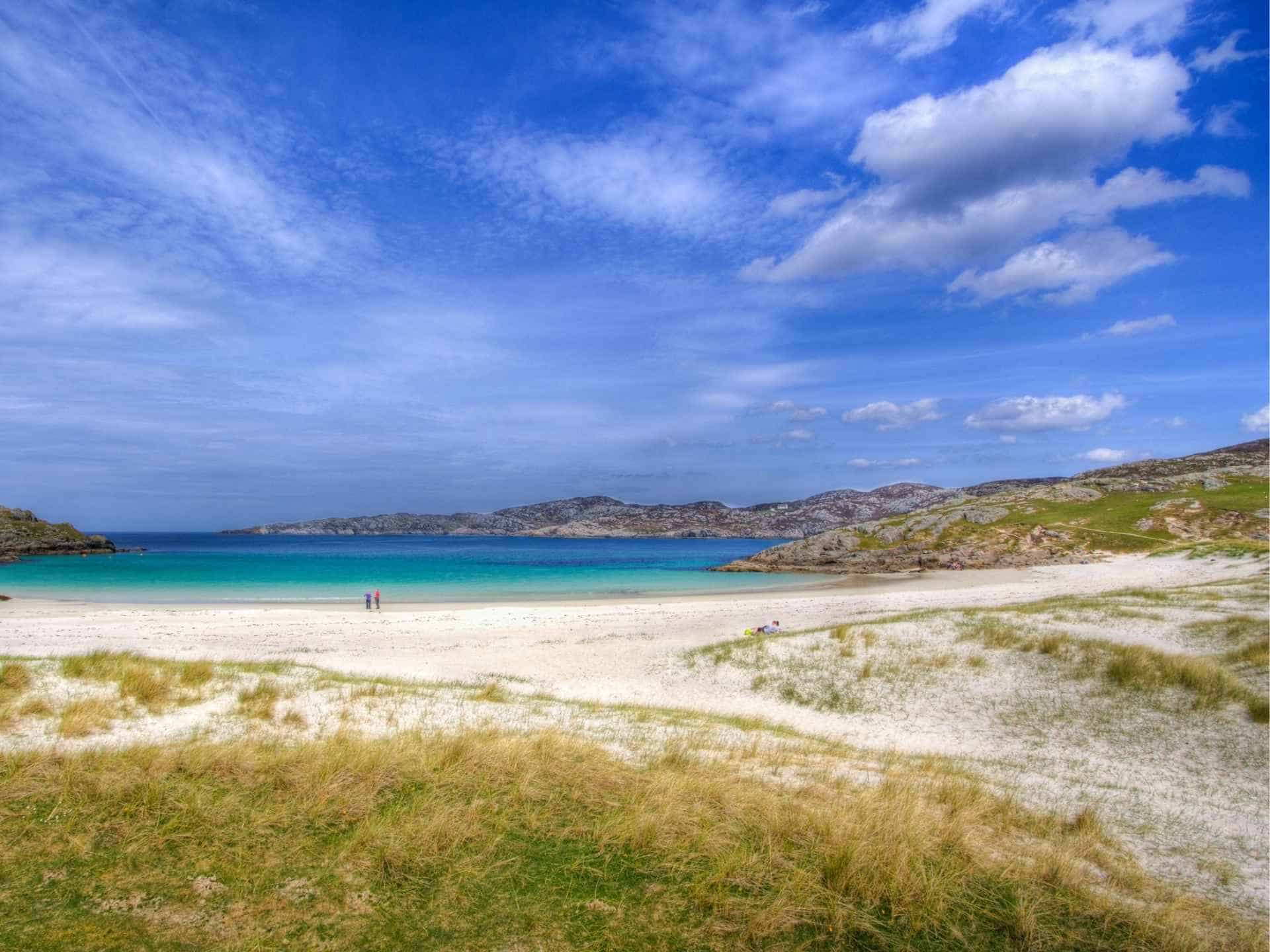
Achmelvich brings together pale sand, rocky coastline and clear water in a sheltered bay near Lochinver.
It is one of the headline white sand beaches on the NC500, but it should not be treated as an effortless roadside diversion.
Achmelvich lies around 3 miles north-west of Lochinver and is reached by single-track road.
Access and driving
The approach needs patience, particularly when traffic is travelling in both directions.
Consider:
- Whether you are comfortable reversing to a passing place
- The width and ground clearance of your vehicle
- How much time the approach may add
- Whether you have already planned too many stops that day
- The likelihood of parking pressure in good weather
A low or wide car may require additional care around verges, entrances and parking areas.
Parking
The beach is popular during summer and in good weather. Do not assume that a space will be available simply because the beach appears accessible on the map.
Make Achmelvich one of the day’s principal stops and keep an alternative nearby option in mind.
Dogs
Dogs must be kept on leads around Achmelvich because the surrounding land is croft land with roaming livestock.
Swimming
Achmelvich is often associated with water-based activities, but this guide does not provide beach-specific confirmation that the sea is safe on any given day.
Check current tides, weather, warnings and local conditions before entering.
Best for: A longer Assynt stop, coastal photography and travellers prepared to make the approach part of the experience.
Clachtoll beach
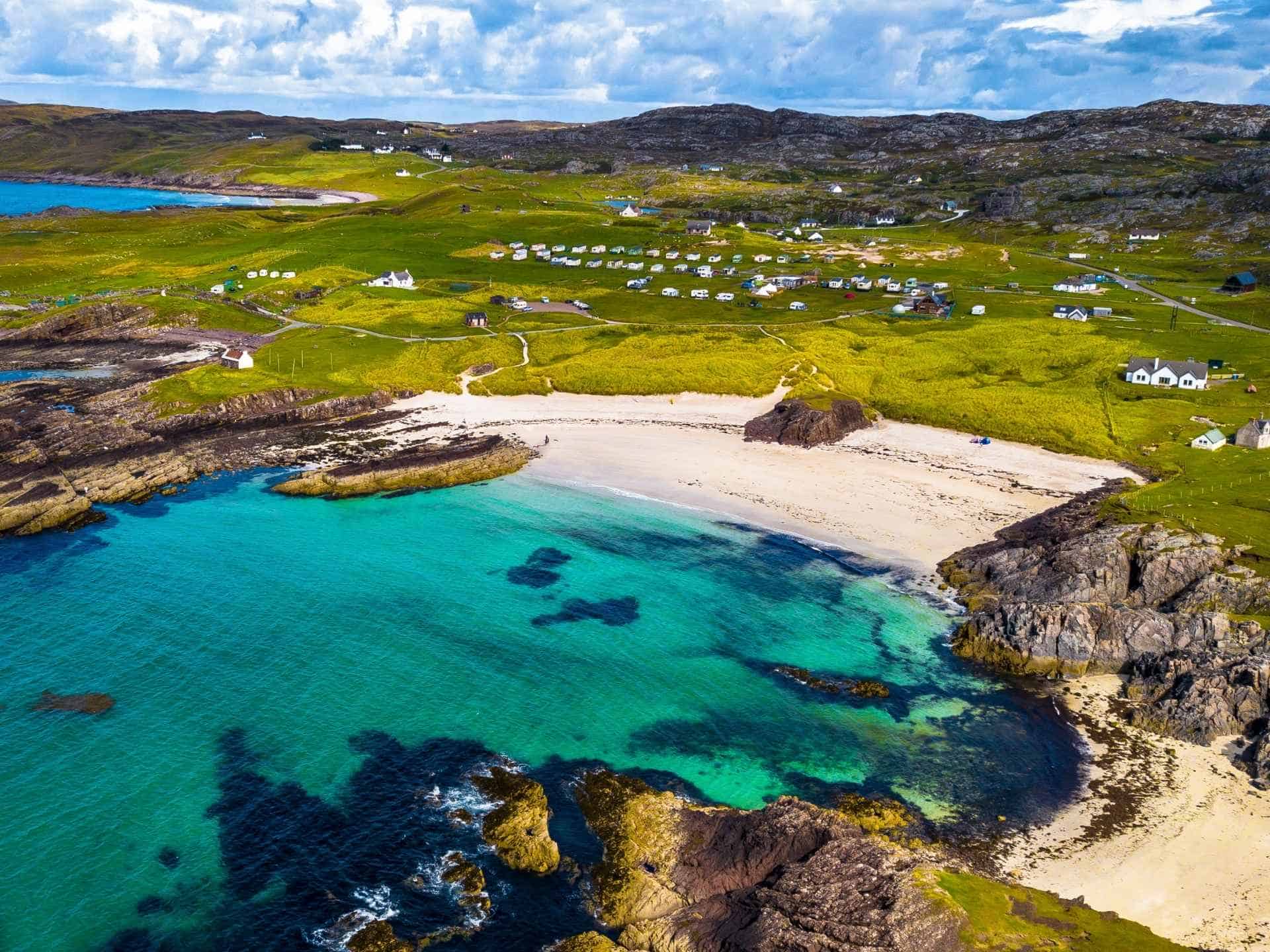
Clachtoll sits close to Achmelvich and Lochinver, with pale sand, rocky edges and a more enclosed coastal setting.
It works best as part of a deliberately slower day through Assynt rather than another stop added to a long journey between Durness and Ullapool.
Route planning
Consider Clachtoll when:
- Staying near Lochinver
- Building a day around the local coast
- Looking for an alternative when another beach is busy
- Planning fewer miles and more time outside the car
The roads around this part of the coast can be slower than their distance suggests.
Parking and access
Check current parking, access and facilities before travelling. Never use passing places as parking or block local roads and gates.
Dogs
Follow current signs and keep dogs under close control around crofting land, livestock and wildlife.
Swimming
Assess the beach on the day. Conditions can change quickly, and an attractive bay is not automatically a safe place to enter the water.
Best for: Families, coastal walks and a measured Assynt itinerary.
Big Sand beach near Gairloch
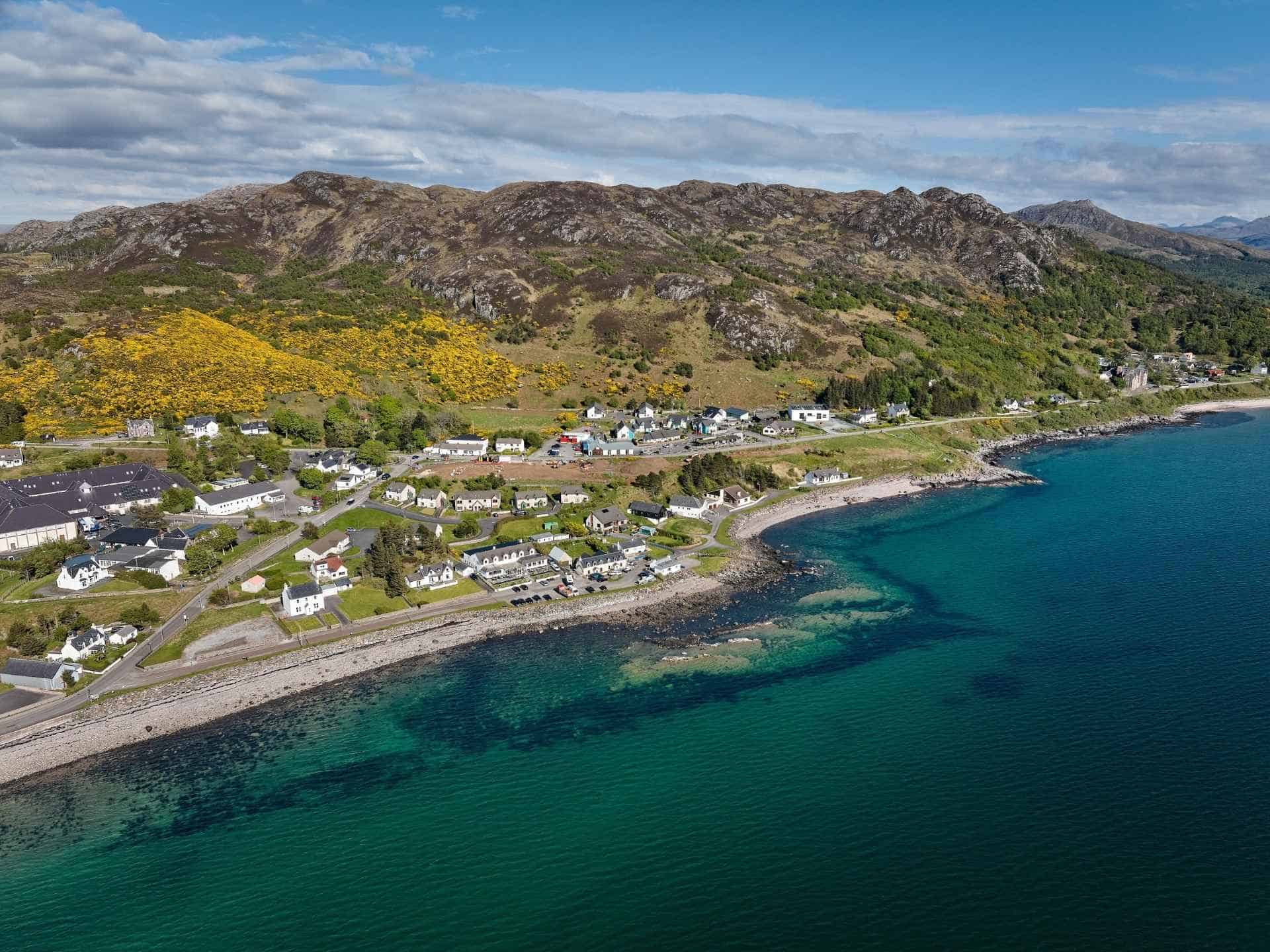
Big Sand provides a useful coastal stop further south in Wester Ross.
Its position near Gairloch makes it easier to combine with accommodation, food and other services than some of the more isolated beaches farther north.
The beach also offers views towards the Torridon landscape, creating a natural transition between the open coast and the more mountainous roads to the south.
Route planning
Big Sand works well:
- During a stay around Gairloch
- As a break between Ullapool and Torridon
- Before a more demanding driving section
- As a slower final stop before reaching accommodation
Facilities and parking
Nearby facilities around Gairloch can make this a more practical stop than some remote beaches. Confirm current access, parking and opening arrangements before relying on them.
Dogs
Official NC500 guidance currently describes Big Sand as having no general dog-walking restriction. Continue to follow local signs, keep dogs controlled around wildlife and other visitors, and check whether any temporary restrictions apply.
Swimming
Check tides, weather and local conditions before entering the water. Do not assume proximity to facilities means the beach is supervised.
Best for: A relaxed Wester Ross break, Gairloch-based trips and journeys towards Torridon.
Parking and access at NC500 beaches
Parking is one of the most important considerations when adding beaches to an NC500 itinerary.
Many coastal car parks are small and were not designed for heavy visitor demand.
Always:
- Use designated parking
- Keep passing places clear
- Avoid fragile verges and dunes
- Never block gates or access roads
- Leave room for emergency and working vehicles
- Move on when the parking area is full
- Avoid turning or reversing where visibility is poor
- Consider whether the vehicle suits the access road
Do not build an itinerary that depends on securing the final available space at several popular beaches.
Choose priority stops and prepare alternatives.
Visit responsibly
The beaches of the northern Highlands sit within sensitive landscapes and working communities.
Dunes, machair, croft land and wildlife habitat can be damaged surprisingly quickly when visitor pressure is concentrated in one place.
Help protect them by:
- Staying on established paths where possible
- Avoiding driving or parking on fragile ground
- Keeping dogs controlled around wildlife and livestock
- Following signs and seasonal restrictions
- Taking all litter away
- Using toilets and waste facilities responsibly
- Avoiding open fires and disposable barbecues where prohibited
- Respecting private homes, land and access
- Leaving the place as you found it
The journey is better when the people arriving after you can experience the same landscape.
Can you swim at NC500 beaches?
People swim and dip at beaches around the NC500, but no beach in this guide should be assumed as automatically safe.
Open-water conditions can include:
- Cold water
- Tides
- Rip currents
- Sudden changes in depth
- Submerged hazards
- Waves and strong winds
- Difficult exit points
- Limited access for rescue
Water Safety Scotland advises checking the weather and tides, going with another person, acclimatising gradually, using visible equipment and staying within your depth. Its guidance is also clear: when a swim does not feel right, do not enter the water.
Cold water shock can cause an involuntary gasp and rapid breathing. In an emergency, remain calm, lean back and float until you can control your breathing, then call for help.
Before entering the sea:
- Check the weather and tide
- Read all safety signage
- Do not swim alone
- Avoid rocks, piers and unfamiliar jumping points
- Identify a safe exit before entering
- Stay within your ability and depth
- Wear appropriate equipment
- Do not use novelty inflatables at the coast
- Keep children closely supervised
- Call 999 in an emergency
Incoming tides can also cut visitors off in bays and around rocks. Check tide times and remain aware of your exit throughout the visit.
A walk along the sand or a quiet stop beside the water can be every bit as rewarding as swimming.
Best NC500 beaches for swimming, walking and photography
Different beaches suit different kinds of stop. The trick is choosing the one that fits the day rather than trying to make every beach do the same job.
For walking, Sandwood Bay, Balnakeil and Big Sand are strong choices, provided you have enough time and the conditions suit the visit.
For photography, Ceannabeinne, Sango Bay, Achmelvich and Sandwood Bay can all work well, especially when the weather gives you clear light and enough time to stop properly.
For shorter stops, Ceannabeinne and Sango Bay are easier to build into a north coast driving day than beaches requiring a long walk or slower single-track approach.
For swimming, do not treat any beach as automatically suitable. Conditions, tides, water temperature, access, currents and your own ability matter more than how calm the sea looks from the sand.
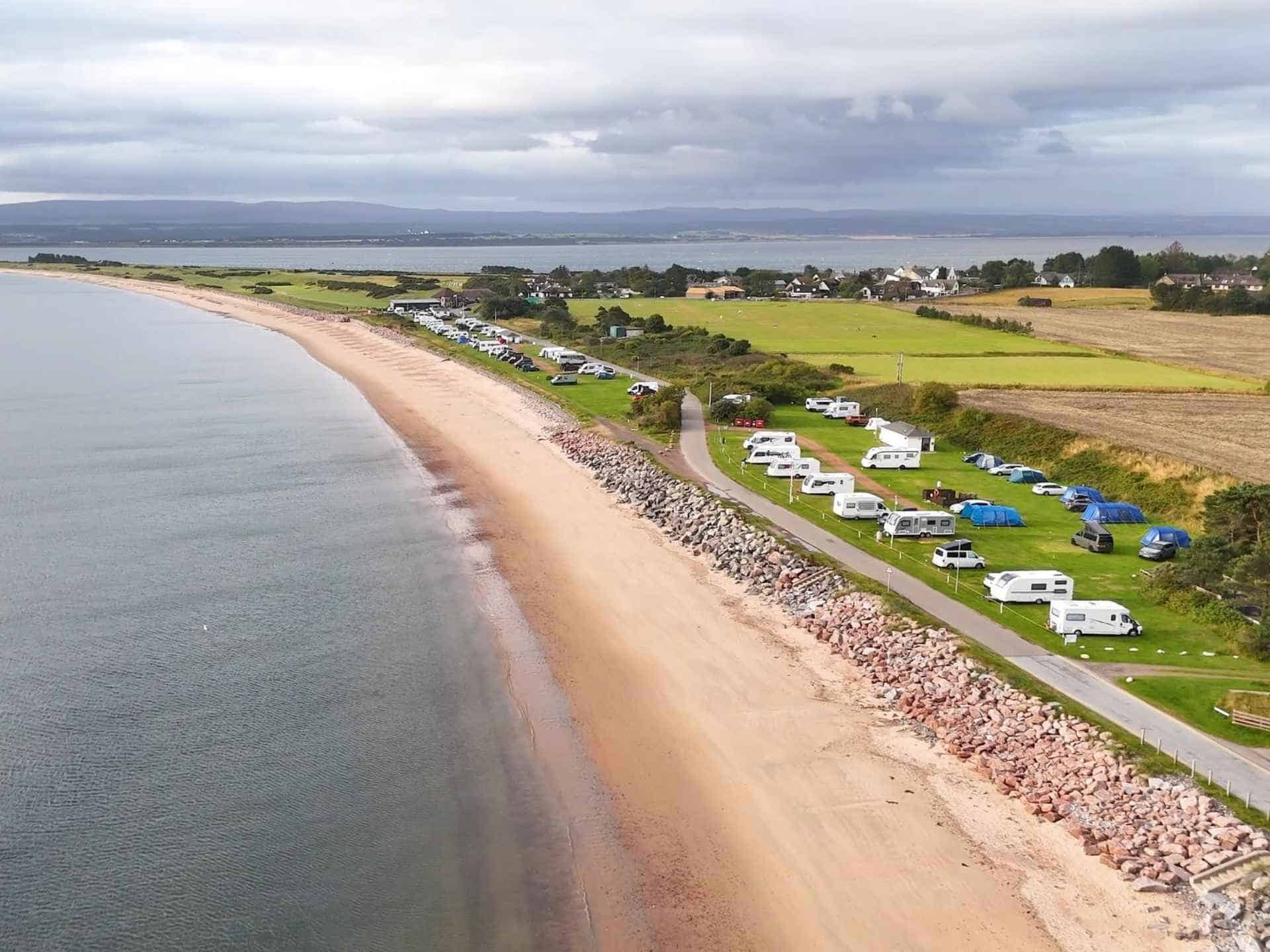
How to add beaches to an NC500 itinerary
The best approach is to choose a small number of beaches that fit naturally into the journey.
On a five-day NC500 trip
Select one principal north-coast beach and one western beach.
For example:
- Balnakeil or Ceannabeinne around Durness
- Achmelvich or Big Sand farther south
Keep additional beaches as alternatives rather than fixed commitments.
A five-day NC500 already involves meaningful daily driving, so every coastal detour needs to justify the time it adds.
Use this guide alongside the NC500 five-day itinerary to place the stops within realistic daily mileage.
On a seven-day NC500 trip
A seven-day route creates more room for beaches without turning every day into a race.
You might include:
- A slower Durness day
- A dedicated Assynt beach stop
- More time around Gairloch
- Sandwood Bay when the walk is a clear priority
Use the NC500 seven-day route planner to create a journey where the beach stops replace driving time rather than simply being added on top.
Build a beach-led day
The Durness beaches can form a natural cluster.
Ceannabeinne, Sango Bay and Balnakeil sit within the same broad area, allowing you to choose according to weather, parking and energy levels.
Achmelvich and Clachtoll can be combined into a slower Assynt day, although both still require careful time and parking planning.
Big Sand works naturally with a Gairloch overnight stop or a wider journey through Wester Ross.
Sandwood Bay should stand apart. Build the day around the walk rather than attempting to combine it with several other major attractions.
Plan your NC500 beach route with New Roads
New Roads can help turn a list of beaches into a route built around your car, available time and the detours you actually want to make.
Tell the AI chat:
- Where you are starting
- How many days you have
- Which beaches matter most
- What you drive
- How far you want to walk
- How much daily driving you prefer
- Where you plan to stay
- Whether you need petrol or charging stops
For example:
“Plan a seven-day anticlockwise NC500 road trip for a low sports car, including Balnakeil, Achmelvich and Big Sand, with realistic driving times, suitable overnight stops and enough time to enjoy each beach without rushing.”
You can then refine the itinerary:
- Remove a beach that adds too much driving
- Add a slower day around Durness
- Make Sandwood Bay the main activity
- Replace a stop when parking or conditions are unsuitable
- Add petrol or electric vehicle charging
- Reduce narrow-road driving where possible
- Add accommodation near the final beach of the day
With the current New Roads features, you can pin beach stops into the route, use vehicle information from My Garage, save the trip in My Trips and export the journey through supported navigation options where available.
Always review the itinerary before travelling. Parking, access, tides, weather and road conditions can change, while navigation platforms may recalculate the route.
Less time planning. More time driving.
Pin your chosen NC500 beach stops into a New Roads route and build the day around the drive, parking and time you actually have.
AI can make mistakes. Always check routes, parking, access, weather, tides, local restrictions, accommodation and vehicle suitability before travelling.
NC500 beach FAQs
- What are the best beaches on the NC500?
Standout beaches on the northern and western sections include Ceannabeinne, Sango Bay, Balnakeil, Sandwood Bay, Achmelvich, Clachtoll and Big Sand.
The right choice depends on the route, available time, parking, access and whether you want a short stop or a longer coastal experience.
- Where are the white sand beaches on the NC500?
Several of the best-known white sand beaches on the NC500 sit around Durness and Assynt.
Balnakeil, Ceannabeinne and Achmelvich are popular examples, while Clachtoll offers another option near Lochinver.
- Which NC500 beaches are worth stopping at?
Ceannabeinne and Sango Bay can be easier to include in a northern driving day than beaches requiring a substantial walk or longer single-track detour.
Current parking and access should still be checked.
- How long is the Sandwood Bay walk?
Sandwood Bay is approximately 4 miles from the Blairmore car park, creating an 8-mile return walk across exposed ground.
Allow at least half a day and prepare for uneven, wet terrain and changing weather.
- Can you swim at NC500 beaches?
Swimming may be possible in suitable conditions, but none of the beaches should be assumed safe without a current assessment.
Check weather, tides, currents, signage and exit points. Do not swim alone or enter when the conditions feel wrong.
- Are there dog-friendly beaches on the NC500?
Dog access and requirements vary by location.
Check current signs and keep dogs controlled around livestock, wildlife, dunes and other visitors. At Achmelvich, dogs must be kept on leads because the surrounding area is croft land with roaming livestock.
- Where can you park for NC500 beaches?
Parking varies considerably.
Some beaches have nearby parking, while others involve limited spaces or a longer walk. Never park in passing places, across gates or on fragile verges. When the parking area is full, use an alternative stop.
- Which beaches are near the north coast section?
Ceannabeinne, Sango Bay and Balnakeil are all within the wider Durness area.
They work particularly well when staying nearby or planning a slower northern day.
- Are NC500 beaches busy in summer?
Popular beaches and small parking areas can become busy during peak periods and good weather.
Build alternatives into the itinerary and avoid planning the day around the assumption that parking will always be available.