The best European road trips from the UK
A Europe road trip begins before you reach the continent.
Choosing the crossing, deciding how far to travel on the first day and working out where to stay will shape the rest of the trip. Get that right and the whole thing feels far less like a logistics exercise.
That is the appeal of driving in Europe from the UK. You can take your own car, pack what you need and build a route around the roads you actually want to drive. One trip might be a long weekend in northern France. Another could take you across the French Alps, through the Dolomites or north into Norway’s fjords and mountain roads.
The best European road trips from the UK are not always the longest. They are the ones that make sense for the time you have, the car you are taking and the sort of drive you enjoy.
This guide brings together three standout routes, along with the practical bits worth sorting before you set off. It is a starting point, not a substitute for checking current travel rules, local requirements and road conditions for every country on your route.
Getting there: ferry vs tunnel and your first miles in France
The first decision is simple: ferry or tunnel.
The Channel Tunnel suits drivers who want to get into northern France quickly and carry on towards the Alps, eastern France, Germany or Italy. You drive on, cross the Channel and can be heading south from Calais without working around a sailing time at the other end.
A ferry can be a better fit for a different sort of trip. It gives you more port options and can make sense if you are aiming for Normandy, Brittany or western France. It also gives you a proper break between the UK motorway miles and your first French road.
There is no single right answer. Think about where you want to be by the end of Day 1, not simply where you want to arrive in France. If you are heading for the French Alps or Italy, you may want to cover some distance early. If the trip is a shorter break, an overnight stop within easy reach of the port can make the whole journey feel more relaxed.
Le Mans is a strong first European road trip from the UK. It is far enough to feel like a proper driving holiday, but manageable enough for a long weekend. The first stretch south may be about covering distance, but the trip becomes more interesting once you leave the autoroute and start linking smaller towns, country roads and places worth stopping.
See our guide on how to drive to Le Mans for a practical starting point.
What you need to drive in Europe: documents and kit
The paperwork is not the exciting part, but it is worth getting right before you leave.
Take your passport, driving licence, original V5C and printed insurance documents. If you are taking a hired, leased or company car, check whether you need written permission to take it abroad. UK Government guidance also advises taking your vehicle log book, while rules may differ for leased, hired and company vehicles.
The kit you need can change by country and season. Requirements around warning triangles, high-visibility clothing, winter tyres, emissions zones, tolls and road charges are not the same everywhere. If your route crosses several borders, check each country rather than assuming the rules from your first stop apply throughout the trip.
Before you set off, check:
- Passport validity and entry requirements
- Driving licence, insurance and vehicle documents
- Breakdown cover and travel insurance
- UK vehicle identification requirements
- Local rules on safety equipment, tolls and emissions zones
- Seasonal tyre or chain rules for mountain areas
- Current travel advice, weather and road information for every country on your route
A little preparation means you are less likely to spend a good driving morning looking for the right equipment or changing a route at the last minute.
The headline routes: the French Alps, the Dolomites and western Norway
You could plan a different European road trip every year and still have plenty left to explore. The sensible approach is to choose a region, then give it enough time to feel like a trip rather than a list of places you have driven through.
Route des Grandes Alpes in France: Lake Geneva to Nice
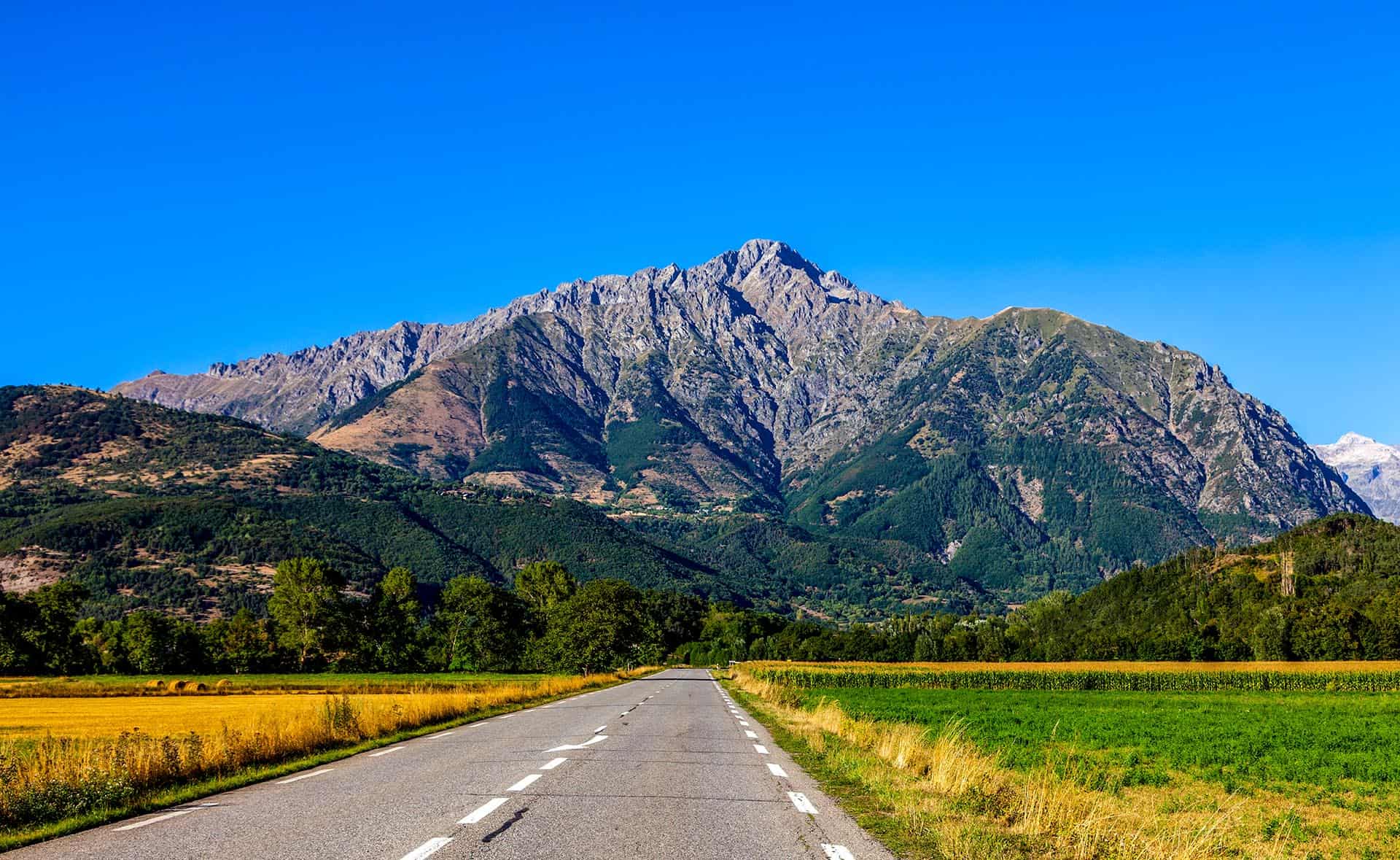
The Route des Grandes Alpes is a benchmark European driving road trip.
It runs from Thonon-les-Bains on Lake Geneva to Nice on the Mediterranean, crossing the French Alps from north to south. The main route covers around 720 km and includes some of the country’s highest roads, including Col de l’Iseran, Col du Galibier and the Cime de la Bonette at 2,802 m.
A strong version of the route would run:
Lake Geneva → Morzine → Beaufort → Val d’Isère → Valloire → Briançon → Barcelonnette → Col de la Bonette → Nice
What makes this route special is the way each day brings a different part of the Alps. You are repeatedly climbing, descending and moving into a new landscape, rather than spending long stretches simply joining roads together. There are high, open passes, tighter mountain sections, quieter valleys and a gradual shift towards the Mediterranean as you approach Nice.
This is a route that deserves at least a week, preferably longer. The highest passes can stay closed well into late spring, and weather can change quickly even in summer. Keep the mileage sensible, check pass information before each driving day and allow room for a detour if a road is closed or conditions are not right.
If you want a shorter French route that still links the Alps with the coast, see our route Napoléon road trip guide. It offers a different way to work south through the mountains towards the Côte d’Azur.
The Dolomites Grand Tour: Italy’s complete driving experience
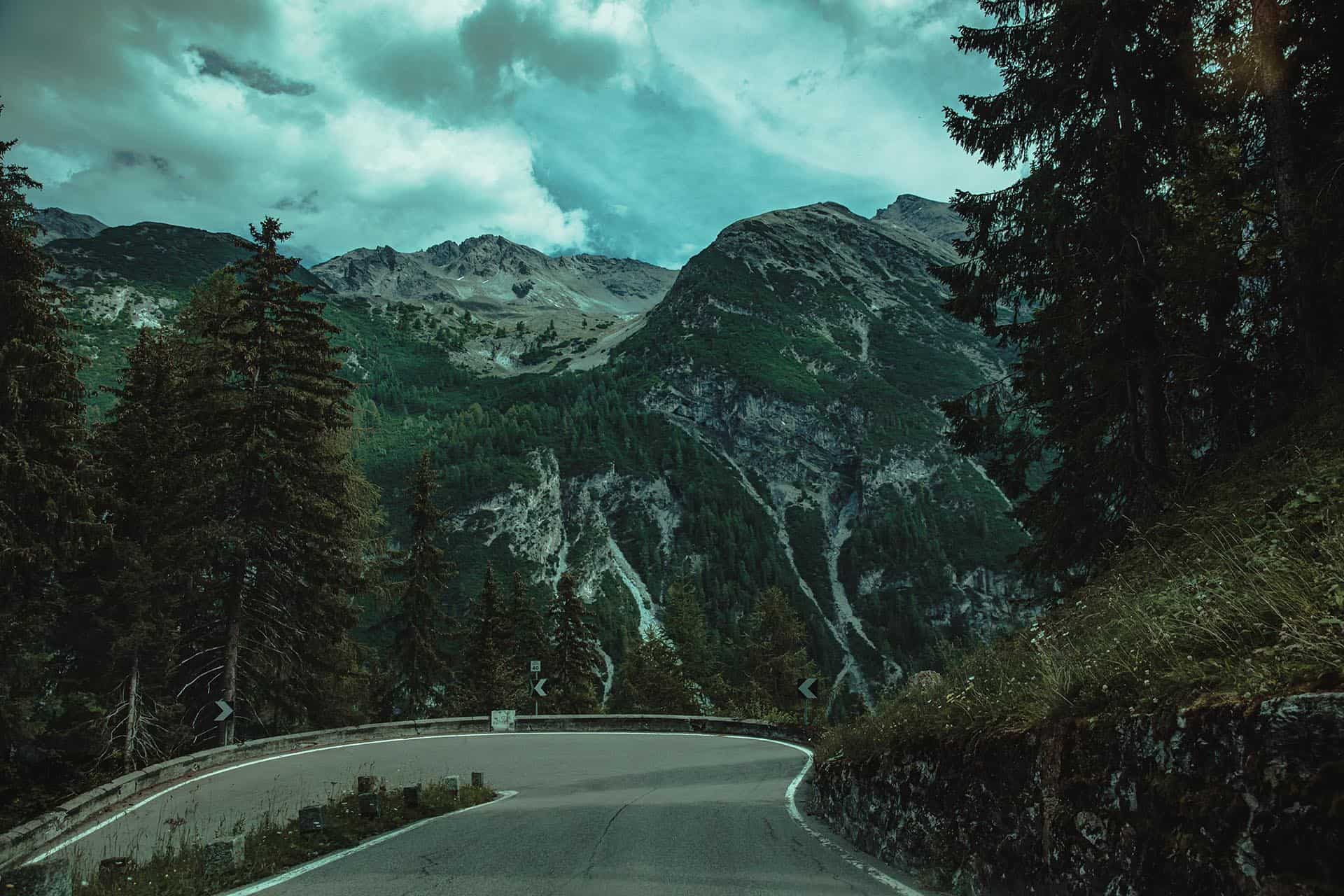
The Great Dolomite Road is a brilliant starting point for exploring the wider Dolomites.
The historic Great Dolomite Road follows the SR48 through the heart of the region, connecting areas around Bolzano, Canazei, Passo Pordoi, Passo Falzarego and Cortina d’Ampezzo. It is a great place to start, but a fuller Dolomites trip works better as a circular route of around 350 to 500 km based around Cortina, Arabba, Canazei and Alta Badia.
A proper Dolomites Grand Tour combines:
Passo Gardena → Passo Sella → Passo Pordoi → Passo Falzarego → Passo Giau → Cortina → Lago di Misurina
The scenery is extraordinary, but the wider experience is what makes this route work so well. You have high passes, hairpins and huge views, alongside authentic Italian restaurants, attractive towns and top-tier hotels that make you want to stay another night rather than immediately move on.
June or September are often good months for a Dolomites trip. August is often the busiest month, with more pressure on parking and accommodation. If you are taking a low, wide or heavily loaded car, check the access road to your accommodation, pass-top parking and the smaller roads before adding them to your plan.
For a wider regional overview, see our Dolomites road trip guide. If you have limited time, our piece on you don’t need five days in The Alps can help you consider a shorter European escape.
Western Norway Scenic Road Trip: fjords, ferries and high roads
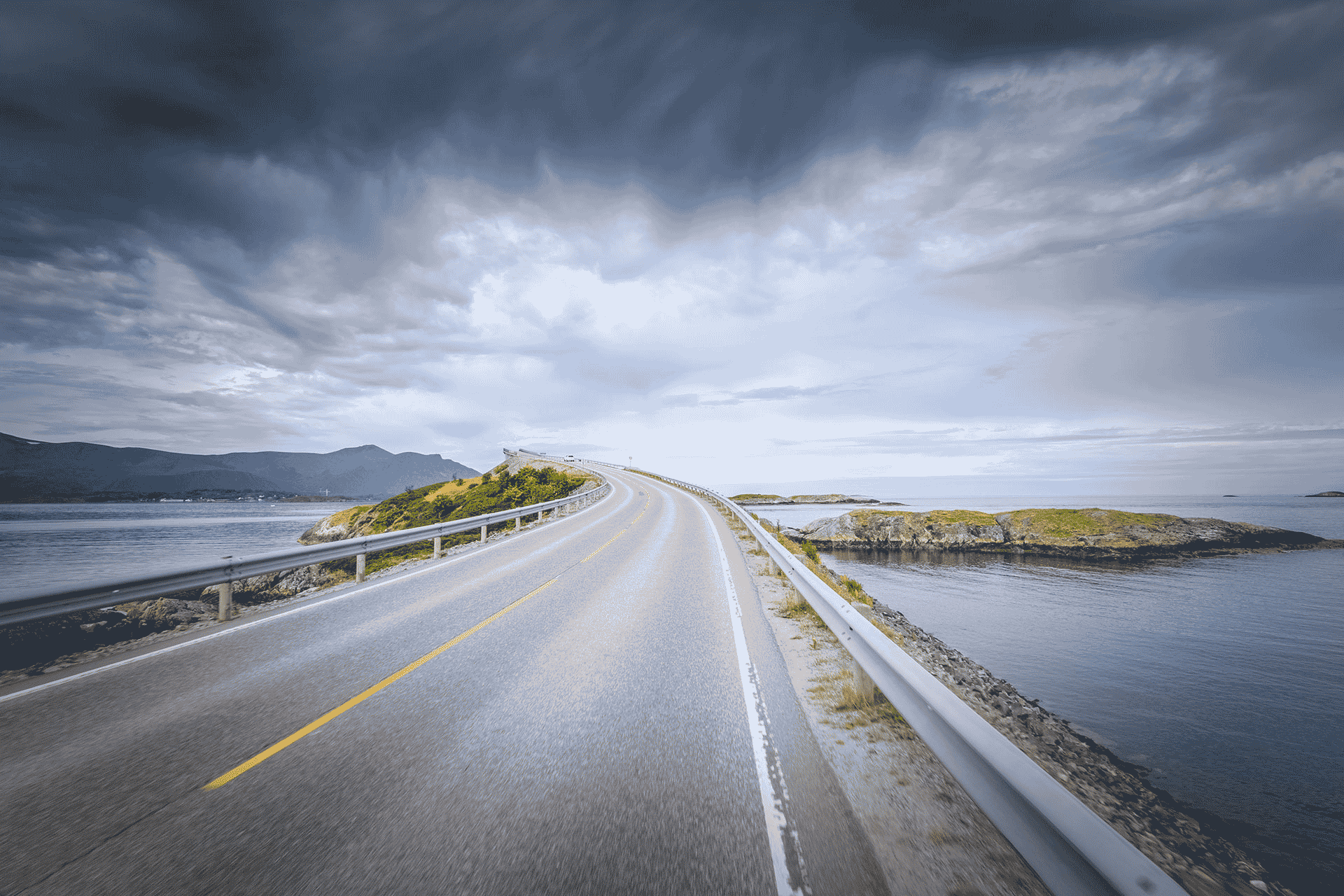
Western Norway is best approached as a sequence of great roads, rather than a single famous stretch.
The Atlantic Road gets plenty of attention, but it is only 36 km long. It becomes much more rewarding when it’s part of a five to eight-day route that joins several of Norway’s National Scenic Routes with mountain roads, waterfalls and fjords. Check out Norway’s 18 National Scenic Routes.
A strong western Norway route runs:
Bergen → Flåm → Aurlandsfjellet → Lom → Geiranger → Trollstigen → Åndalsnes → Atlantic Road → Ålesund
This is a road trip where the scenery can keep changing the plan. You may leave Bergen in rain, climb into clearer mountain air, cross a fjord by ferry and finish the day somewhere that feels completely different from where you started.
The Geiranger-Trollstigen route alone covers 104 km between Langvatnet and Sogge Bridge. It includes high mountain scenery, deep fjords, waterfalls and Trollstigen’s famous hairpins. The Atlantic Road makes a fitting final stretch, crossing the islands and reefs of Hustadvika via seven bridges between Kårvåg and Bud.
Distances in Western Norway can take longer than they look on the map. Ferry timetables can shape the day and mountain roads may be affected by weather or seasonal closures. It is also likely to cost more than France or Italy.
The upside is a European road trip unlike anywhere else. Book key stays and crossings where you need them, then leave space for the viewpoints and unexpected stops that make western Norway so memorable.
Choosing by time: a long weekend, one week or two weeks
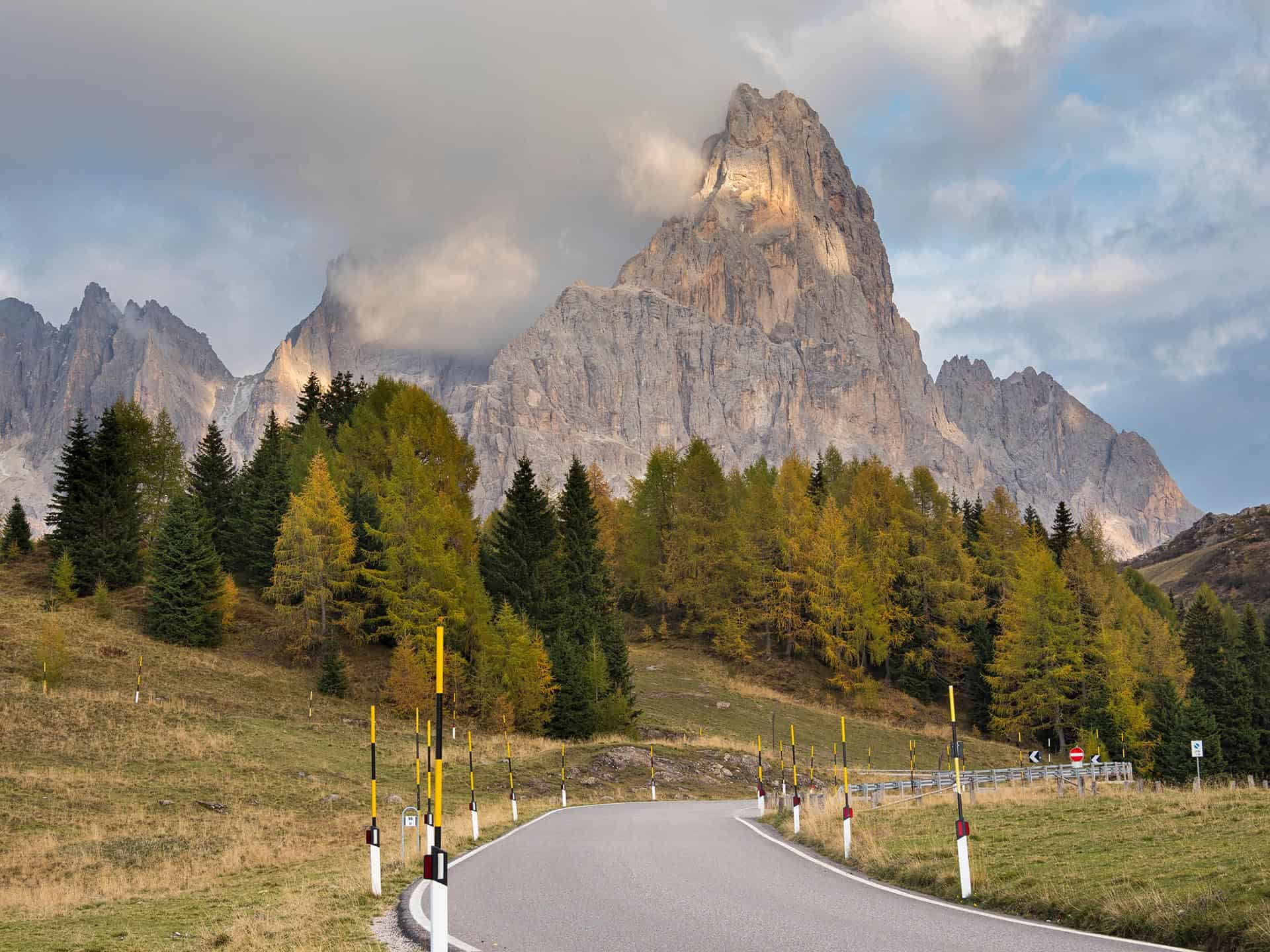
The best Europe road trip from the UK is the one that gives you enough time to enjoy it.
A long weekend
A long weekend is ideal for northern France, Le Mans, Normandy, Belgium, Luxembourg or western Germany. You can cross the Channel on Friday, cover some motorway miles and still spend the next day or two on roads that feel very different from home.
Keep the route tight. One or two overnight bases are plenty. The Route des Grandes Alpes, Dolomites Grand Tour and western Norway all deserve more than a few days.
One week
One week opens up the Route des Grandes Alpes or a focused Dolomites trip. It gives you enough time to get beyond the first long motorway day, settle into a region and enjoy a few days where the drive is the reason to be there.
For the French Alps, a point-to-point route from Lake Geneva to Nice makes sense. In the Dolomites, a circular route with two or three nights in one base can work particularly well. It keeps luggage moving to a minimum and lets you build your days around the passes you are most keen to drive.
Two weeks
Two weeks gives you room to combine regions without long-distance driving every day.
You could cross France, drive the Route des Grandes Alpes and continue into Italy for a Dolomites loop. Or make western Norway the main event, allowing enough time for the drive north, ferries, mountain roads and the journey home.
This is when your car really shapes the trip. A comfortable estate or grand tourer may suit the longer European miles and plenty of luggage. A smaller sports car may be especially enjoyable on French or Italian passes, while an electric vehicle needs a route that works around charging in mountain areas and more remote parts of Norway.
Costs and practicalities from the UK
The cost of a European road trip from the UK varies wildly, so it is better to think in categories than aim for one fixed number.
Your main costs are likely to be:
- Ferry or Channel Tunnel crossing
- Fuel or electric vehicle charging
- Tolls, road charges and emissions-zone requirements
- Accommodation
- Food and drink
- Parking
- Activities, attractions and mountain lifts
- Travel insurance and breakdown cover
- Country-specific equipment
- Ferries, particularly in western Norway
A French Alps or Dolomites trip can involve tolls, mountain accommodation and higher fuel use than you may expect. Western Norway can be more expensive again, particularly once ferries, food and accommodation are part of the calculation.
Book key overnight stays early if your route relies on them, particularly in the Alps, Dolomites and Norway during the summer season. Keep some flexibility, though. A change in weather, a pass closure or a road you want to drive again can alter the original plan.
Do not rely on one payment method either. Tolls, parking, fuel stations, ferries and local systems can all work differently from home. Check current country requirements before travelling, including road charges, seasonal equipment rules and any ferry booking requirements.
Build your European route with New Roads
A European road trip has plenty of moving parts. The crossing, first night, mountain roads, fuel stops, hotels and route home all need to work together.
New Roads helps you build a bespoke road trip around your car, the time you have and the sort of drive you want. Tell the AI chat where you are starting in the UK, where you want to go and how long you have. It can shape an itinerary with roads, places to stop, accommodation suggestions and petrol or electric vehicle information.
You can adjust the route based on your preferences, review the vehicle suitability report as an advisory check and save the plan in My Trips. When you are happy with it, export your route to Google Maps or GPX where available.
Explore New Roads features, then start planning the cross-Channel route you have been talking about for years.
AI can make mistakes. Always check routes, parking, access, weather, tides, local restrictions, accommodation and vehicle suitability before travelling.
European road trip FAQs
- What are the best European road trips from the UK?
The Route des Grandes Alpes, a Dolomites Grand Tour and a western Norway route linking the National Scenic Routes are three standout choices. The right trip depends on whether you want Alpine passes, mountain roads or a longer journey through fjords and ferries.
- How do you take a car from the UK to Europe?
You can take your car by ferry or through the Channel Tunnel. Check your passport, driving licence, original V5C, printed insurance documents and country-specific rules for every country on the route before travelling.
- Ferry or tunnel for a European road trip?
The Channel Tunnel works well when you want to arrive in northern France and head south or east straight away. A ferry can be a better fit for routes beginning in Normandy, Brittany or another area closer to your arrival port.
- How long do you need for a Europe road trip from the UK?
A long weekend is enough for northern France or Le Mans. Allow at least a week for the Route des Grandes Alpes or the Dolomites, while western Norway is best enjoyed over five to eight days once you are in the region.
- What do you need to drive in Europe?
You will usually need a valid passport, driving licence, insurance and vehicle documents. Equipment, toll, emissions-zone and seasonal requirements vary by country, so check official guidance before you travel.
- What is the best first European road trip from the UK?
Le Mans or northern France are good first options because they are manageable from the Channel crossing and easy to shape into a long weekend. The French Alps, Dolomites and western Norway are better suited to longer trips with more time for practical planning and the drive itself.
- Which European road trip is best for driving roads?
The Route des Grandes Alpes offers a brilliant point-to-point journey across the French Alps, while the Dolomites Grand Tour gives you a compact mix of famous passes, Italian towns and mountain stays. Western Norway is less about hairpins and more about the full route through fjords, waterfalls and high roads.
- How much does a European road trip from the UK cost?
It depends on the crossing, distance, fuel or charging, accommodation, tolls, ferries and season. Build the route first, then estimate the main costs and leave room in the budget for parking, meals and changes to your plans.